



Today flowering plants rule the world, not least in the Floral Marquee at RHS Flower Show Tatton Park, taking place from 20-24 July, but how did they evolve into the thousands of plant species we have today?
One designer at this year’s show wants to educate visitors on the phenomena of plant evolution and celebrate the adaptations plants have developed over the past 450 million years.
Michael Vinsun’s ‘Plant Evolution’ features primitive varieties like mosses and liverworts along with modern day species like rhododendrons and grasses, the latest plant family, to showcase the different stages of plant evolution.
About the garden, Michael said: “I’ve just completed a course on arboriculture which sparked my interest in plant evolution. When I found out that ‘evolution’ was the subject of this years ‘Themed Gardens’ I jumped at the opportunity to design a garden highlighting the historical development of the plant kingdom. I think it is important that we have a better understanding of how plants have changed and adapted over time so we can better appreciate them.”
In the garden, mosses and liverworts which dominated the plant kingdom 320 million years ago and thrive in damp conditions are planted in a gorge either side of a stream to represent their original habitat.
Also featured are a variety of popular species of vascular plants, which were next to evolve, like ferns. Unlike mosses, ferns remain popular with gardeners today with Bean Place Nursery, Brownthwaite Hardy Plants Ltd, Hardy ferns, and Shady Plants selling a wide variety at this year’s show.
Michael has chosen a large Ginkgo biloba, one of the oldest living tree species in the world which dates back almost 300 million years ago, to represent the next stage of plant evolution – plants that reproduce by seed, which also includes conifers.
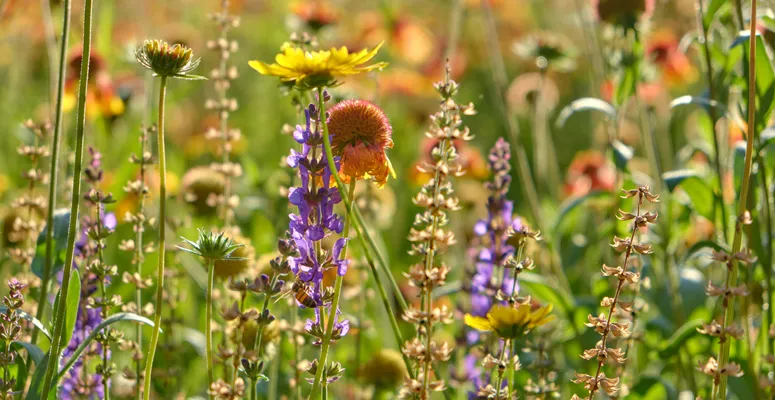
Flowering plants, a vital next stage in the evolution of plants, are the visual mainstay of the design and include ‘Echinacea (coneflowers), Helenium (sneezewort), Hemerocallis (daylilies), Kniphofia (red hot poker), Lavandula, and Rhododendrons which stand out amongst the greens of the primitive mosses and ferns.
Gardeners today continue what nature started, breeding new cultivated varieties and transforming their individual patches of land into beautiful garden spaces.
Finally, the garden features grasses, the newest plant family which evolved a mere 40 million years ago.
Michael added: “As our climate continues to change there is no doubt that plants will continue to adapt in order to survive. Large stained glass panels representing DNA slides reinforce this message and provide a sculptural element to the garden.”
Michael’s garden was named Best Evolution Garden and awarded a Silver Medal at this year’s RHS Flower Show Tatton Park. Tickets are available at:www.rhs.org.uk/tatton














0 Comments