



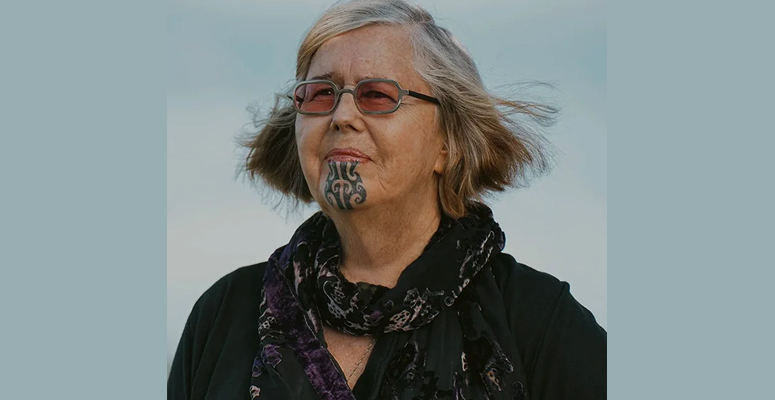
Barcham Trees recently welcomed Dr Kathleen Wolf to its Cambridgeshire nursery to lead a seminar on the subject of how trees provide better human habitat based on the extensive evidence of the human health and wellness benefits. Dr Wolf is a research social scientist at the College of the Environment at the University of Washington, based in Seattle USA, and a collaborator with the USDA Forest Service on Urban Natural Resources Stewardship research. She conducts studies to understand the human dimensions of urban forestry and urban ecosystems, based on the principles of environmental psychology.
Kathleen Wolf believes trees and forest provide us with many benefits, which tend to remain in the background, and that ‘nearby nature’ in the form of city trees and urban greening are vital to human health and wellbeing. She presented plenty of compelling evidence in support of this.
The World Health Organisation has promoted a broad definition of health since 1946: it is a state of complete physical, mental and social well-being, and not merely the absence of disease or infirmity. Trees are not a panacea for health issues in communities, but they are nevertheless important, and the green environment should be seen as part of the health solution. “Trees are in the background, but science now tells us they provide benefits across the life source from cradle to grave,” said Kathleen.
She then looked at the determinants of health. These include our individual lifestyle factors, social and community networks, plus general socio-economic, cultural and environmental conditions. In the matter of evidence about the links between human wellness and nearby nature, what do we know about city trees and nature and their ability to improve our health?
Beginning with our earliest days, Kathleen cited the research of Donovan et al, published in Health and Place (2011), which found a 10 per cent increase in tree canopy cover within 50m of a house resulted in a lower number (1.42 per 1000 births) of low-weight births. This finding has been replicated in studies in Spain and Canada, and although we do not know the causal reasons, a low birth weight often has immune system, respiratory and mental capacity implications through the entire life of a person.
As children grow and develop, adults need to support them in their experience of nature. In his book Last Child in the Woods, Richard Louv describes nature deficit disorder. Kathleen remarked we no longer have ‘free range children’ who are free to roam about and explore in nature. There could even be a good reason not to worry when children ingest soil. It contains Mycobacterium vaccae, which increases the level of serotonin in the body and may help to alleviate depression.
College students with more natural views from their bedroom windows scored higher on tests of capacity to direct attention and rated themselves as able to function more effectively, according to Tennessen and Cimprich in the Journal of Environmental Psychology (1995).
High school campuses where the classroom and cafeteria had window views with greater quantities of trees and shrubs are positively associated with standardised test scores, graduation rates and fewer occurrences of criminal behaviour. (Matsuoka 2010, Landscape and Urban Planning).
Looking at adults, and based on the work conducted by Rachel and Stephen Kaplan at the University of Michigan on Attention Restoration Theory, desk workers with no view of nature from their workplace reported 23 per cent more ailments than those with a natural view in the previous six months. Perhaps we should design better office environments, and there are monetary benefits of being close to trees and nature.
Trees can apparently even help to reduce crime. According to Donovan and Prestemon’s article in Environment and Behavior (2012), larger trees in a public right of way are associated with lower crime rates, but smaller, while view-obstructing ones are linked to increased crime. In the American Journal of Epidemiology (2011), Branas et al found that when four ‘vacant lots’ were greened in Philadelphia, there were consistent reductions in gun assaults across the four areas and consistent reductions in vandalism in one area.
In Japan forest-bathing (Shinrin-yoku) is popular, and these extended forest walks have spiritual elements. Those who walk often experience lower cortisol – a stress indicator – reduced nervous system activity, increased immune function, lower pulse rate and lower blood pressure. A Japanese study discovered elderly people who live in green, ‘walkable’ neighbourhoods tend to have less illness and lower mortality rates than those who do not, while a Scandinavian review of multiple studies has found light exercise eases cases of mild to moderate depression.
In 1984 Roger Ulrich published his report on the effects of a nature window view on recovery from surgery. Patients who had a view of trees, versus those viewing a brick wall, tended to have shorter stays, less severe pain, fewer complications and better emotional well-being than those who were deprived of one. Hospitals are now installing healing gardens, and they are popular not only with patients, but also with their visitors and hospital staff.
Kathleen reminded delegates that there are more than 40 years of evidence showing the connection between nearby nature and human health and wellness. She has also become interested in how we might evaluate questions about the deeper experiences of nature – how do we measure them and how much time is needed with nature? Science and the sacred is an important blend, and something we would perhaps do well to consider.
By Colin Hambidge















0 Comments