



The Island of South Georgia in the sub-Antarctic was once thought to hold the greatest concentration of breeding seabirds on earth – it was a sanctuary and breeding ground for hundreds of different species. However, after discovery by Captain Cook in 1775 the island attracted sealers and whalers who unwittingly brought rodent stowaways on their ships.
Those rats and mice had a catastrophic impact on the seabirds of South Georgia, who had evolved in the absence of furry predators and who nested on the ground or in burrows. Rodents spread quickly across the habitable parts of the island, eating the eggs and chicks of the seabirds. As the island’s glaciers began to rapidly melt towards the end of the 20th century, yet more of the island was accessible to rats, putting the endemic South Georgia pipit and the South Georgia pintail at risk of extinction and threatening the permanent loss of tens of millions of seabirds denied a place to breed safely.
The situation on South Georgia looked dire until a small Dundee charity came to the rescue. In this free public talk, Professor Tony Martin, Professor of Animal Conservation at the University of Dundee and former Director of the South Georgia Heritage Trust’s Habitat Restoration Project, recounts the remarkable story of the charity that funded and undertook the largest ever island eradication, making it a world leader in island conservation.
The South Georgia Heritage Trust took on this enormous task with no prior experience of this type of operation, raised £8 million, bought three helicopters and embarked upon a six-year project to tackle the problem.
Talking about the project, Professor Martin, who was awarded the Zoological Society of London Conservationist of the Year 2016 for his work on the project said: “South Georgia in the Southern Ocean has no access by air and is several days sailing from the Falkland Islands, across some of the most tempestuous seas on the planet. As with so many islands, the location and remoteness that makes South Georgia attractive to wildlife are the very characteristics that made it so tough for us seeking to protect that wildlife from damaging invaders introduced by humans.
“Directing this monumental project for SGHT was the most daunting challenge of my life. To achieve the desired result within a restricted budget and timescale, and to keep everyone safe, required the input and advice of experts from around the world, and a brilliant team of people to plan, organise and carry out the work.
“My talk will cover the development and execution of the 6-year project, and the extraordinary people, both at home and on South Georgia, who made it happen. It is a story of hope overcoming despair, of broken helicopters and grinding fatigue, and ultimately of relief and exultation as the island’s wildlife showed immediate signs of recovery after the last bait pellet was dropped. In what is no more than a brief moment in the long history of South Georgia, two centuries of profound human-induced damage to the island’s wildlife appears to have been reversed. Millions of birds are now expected to reclaim their ancestral home, and the future of the unique, delicate South Georgia pipit looks to be secure.”
The lecture, taking place on Monday 10 July, is free to attend and runs from 6.15 until 7.30 in Lecture Theatre 3, in the Dalhousie Building, University of Dundee, with an introduction by UK Environment Minister Lord Gardiner.
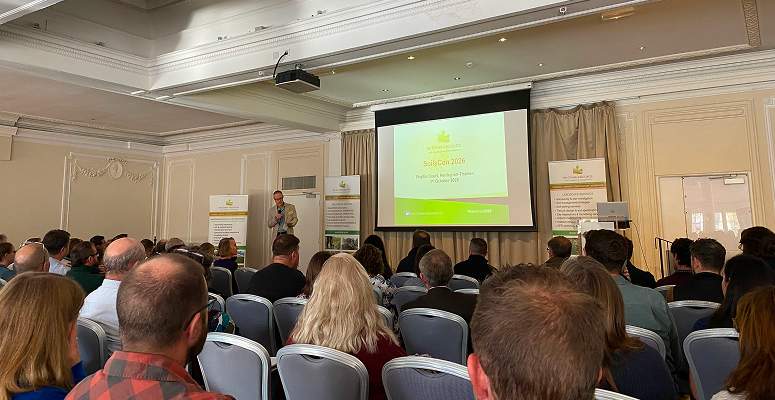
The talk takes place as part of a major conference convened and hosted by the South Georgia Heritage Trust and the University of Dundee. Called Island Invasives 2017, it will take place between 10-14 July, bringing together some of the key practitioners in this field. They will be sharing conservation stories, information and best practice, their presentations offering a global picture of the state of the world’s islands whose ecosystems often hang in the balance due to the impact of invasive species.
Lord Gardiner, the minister responsible for invasive species in England, said: “Invasive non-native species threaten the survival of plants and animals around the world and conferences like this are vital for sharing global expertise and bringing countries together to tackle the problem.
“We are helping our overseas territories protect their precious plants and wildlife and the UK will keep investing and working with the international community and other partners to defend biodiversity at home and abroad.”
Topics being covered range from biosecurity and plant invasions to rat eradications and tackling mass extinctions. Speakers will explore how achievements in this field can be scaled up to meet the global conservation challenges brought about by invasive species.








0 Comments