



Olivia Collington, the new co-director of Collington Winter Environmental, shares why she’s decided to build her own ecology team within the family business and how the Biodiversity Net Gain initiative is already having an impact on her work
 Social distancing is not an issue for Olivia Collington. The chartered environmentalist can visit vast sites on her own without coming anywhere near within two metres of another person. This has meant that work has been continuous throughout lockdown – which is fortunate, considering this is when she decided to leave multidisciplinary firm e3p, where she was associate director, and start up her own ecology department alongside her mum’s landscape architecture practice.
Collington Winter Environmental now offers both landscape architecture and ecology services across the UK. The word ‘Environmental’ was added to the company’s name recently, but Collington has always stood alongside Olivia’s maiden name, Winter, with the intention that this would, at some point, be a family business.
“My mum, Jane Winter, set up Collington Winter Ltd back in 2015, running the landscape architecture side whilst I worked in various multidisciplinary consultancies,” explains Olivia. “Then I decided to join the business and we rebranded – it’s exciting that it’s finally coming to fruition”
“It’s exciting that it’s finally coming to fruition.”
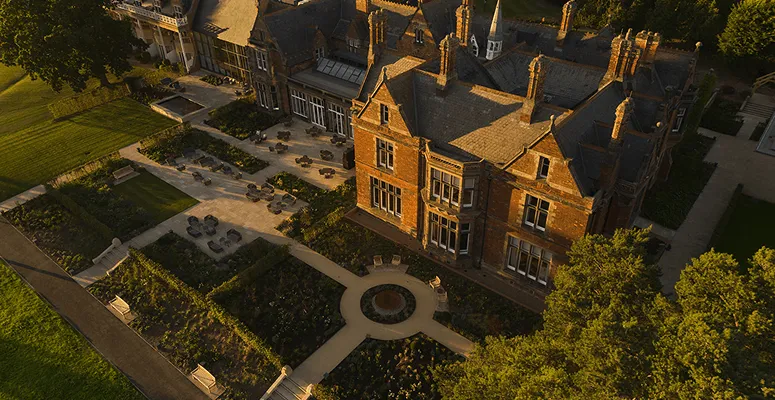
Olivia’s mum’s specialism lies in historic landscapes; she’s worked on large estates throughout the UK and with public body Historic England. “She does quite large-scale management plans, whereas my expertise in ecology comes from working with residential housebuilders, though I have worked on some historic sites. So, we’re bringing our skills together now to provide a service for everybody.”
Having been taken to site visits when she was younger, where she would meet ecologists, Olivia has always been aware of the profession. But it wasn’t until she undertook ecology modules whilst studying biology at Northumbria University in Newcastle that she decided to pursue it as a career. She gained work experience at a consultancy in the Peak District before starting a part-time job at a consultancy called EcoNorth in Manchester whilst finishing her final year of university. “I loved the mixture of being out on site, out in nature, whilst also the client-focused consultancy side. It felt like the perfect balance.”
“We’re bringing our skills together now to
provide a service for everybody.”
Once Olivia had graduated, she started at multidisciplinary consultancy REC and worked her way up to senior ecologist over three years. “I became team leader, responsible for nationwide delivery of ecology for the whole company.
“Once I left REC, I joined another multidisciplinary company in Manchester – e3p – where I’ve been for the last two years as associate director. I brought ecology into that company and started it from scratch; I built a team, expanded the client base, and now I’m starting on my own. It’s the next challenge, I suppose.”
Olivia continues to be based in Manchester, while her mum is based in Dumfries, Scotland. With her expertise in growing a team, this is exactly what Olivia intends to do at Collington Winter Environmental, hoping to expand both the landscape architecture and ecology divisions. But there are challenges when looking to hire. “It’s about finding the right people. When it’s a family business, there’s a different dynamic to a corporate outfit. But I can see massive growth. I’ve founded and grown teams in the past in this field and I know that you can get up to six or seven people in a team easily. That’s definitely where our aspirations are.”
“When it’s a family business, there’s a different dynamic to a corporate outfit.
But I can see massive growth.”
It’s not just business expansion Olivia is working towards. With Biodiversity Net Gain set to become mandatory following its inclusion in the Environment Bill earlier this year, Olivia says many of the large housebuilders are already incorporating it into their projects which is going to have huge benefits.
“The policy in the past has been no net loss of biodiversity, which hasn’t really worked because we’ve still lost a lot of biodiversity, so making sure we get a good percentage is really key. The main thing [about Biodiversity Net Gain] is that it’s going to be measurable; even at the planning stage, we’re having to say what we’re doing for net gain and how much net gain we’re going to get.
“But this has to be monitored and managed for years [after the project has been completed]. This is where it’s going to have the biggest impact – new housing developments can put in new habitats at the moment, but will they still be there in 10 years’ time? Will they have been managed and be of a good quality? Probably not. Going forward, because the new habitats are going to have to be managed and monitored, we’re going to see long-term biodiversity net gain as well. It’s a really good initiative, and I think we’re going to see more like it coming through.”
“Going forward, because the new habitats are going to have to be managed and monitored,
we’re going to see long-term biodiversity net gain as well.”
This does mean an ongoing cost being associated with creating these habitats, as an ecologist will likely have to be appointed on a regular basis to survey the biodiversity. But, as Olivia says, “the gains you get out of it are brilliant”.
Olivia has been following the development of Biodiversity Net Gain for the last two years, attending a training session on the policy in London hosted by the Chartered Institute of Ecology and Environmental Management. “I learned how the calculations would be done, the principles behind it, the good practice guidelines. And since then, I’ve completed a few more training sessions so that I’m up to date with current guidance. It’s been interesting to see over the last two years how much it’s gained traction.”
When it comes to Biodiversity Net Gain, and other aspects of schemes, Olivia says having the perspective of an ecologist as well as a landscape architect helps to have a more holistic approach to projects. “Whilst it might not be necessary to have it in-house, it’s good for landscape architects to have a strong relationship with ecology consultancies because the two disciplines go hand in hand. It’s crucial that landscape architects have a good understanding of ecology and why we might recommend certain things, and also that ecologists have a good understanding of what landscape architects do so that we can help make their lives a bit easier as well.”
It might not be “necessary”, but having the two disciplines under one roof at Collington Winter Environmental undoubtedly gives the mother-daughter team an advantage that’ll see the company reach its aspirations to expand in no time.







0 Comments