



What can we expect from The Landscape Service over the next year?
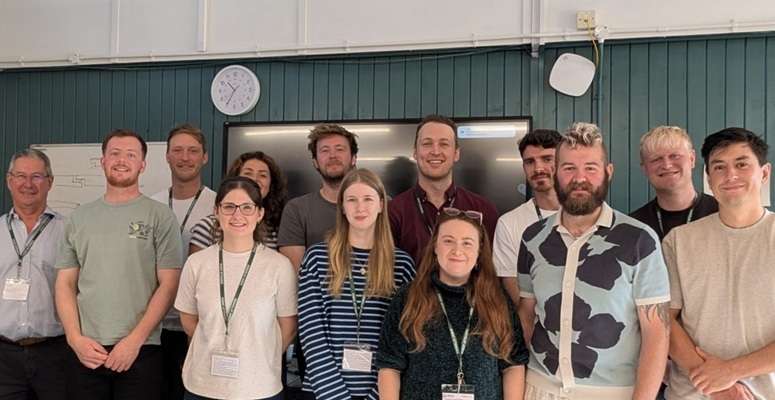
Luke: We’re celebrating five years of The Landscape Service and we think this could be our biggest year yet. James joined the company in September 2021, and he’s been working on updating areas in the company ever since.
James: We’re both really excited for the large scale and private residential projects we have coming up this year – especially for a biodiversity enhancement project we’re doing on the sandbanks in Dorset. We can’t wait to get our pencils to paper to start creating and transforming more unusable spaces into operative and exciting outdoor areas.
What projects are you working on now?
Luke: Currently, we’re 50% commercial and 50% residential. We’re working on public spaces and health and leisure projects to affordable and high-end housing where our focus is on luxury, modern, and sustainable design.

James: One of the biggest projects we’re working on currently is called Curtis Fields, in Weymouth. We’re working closely with architects, the local authority, ecologists, and highways consultants to put together a landscape design package. Curtis Fields is the development of 600 houses – we’ve had to break it down into a number of phases. We completed 250 homes in phase one, and we’ve now moved on to the creation of 300 houses.
Are you seeing more clients opt for sustainable design?
James: Certainly, and we’re trying to encourage this option and raise awareness too. Many clients are interested in creating a space where they can grow their own veg, so much so, we think we could get to a point in the near future where everyone will be wanting outside growing space.
Luke: There is a lot of focus on having the green and eco-friendly garden, but we are encouraging clients to think about how the garden is built too. Has the transport involved been environmentally friendly? Have materials been locally sourced?
James: Ultimately, it comes down to cost. As a designer, I want to create amazing gardens, but the trick is doing it in the most cost-effective way. For us, it’s important to educate the client, especially given how important nature is in tackling climate change. If the client cares more, they are more willing to part with their cash for the sustainable option. If they care less, we have got to focus on making our design and build cost effective.
What is important for The Landscape Service’s projects to achieve?
James: We incorporate lots of thought, theory, and research into every design we create to ensure we design something we believe in. It doesn’t need to be rushed, and taking the extra time to design something is really worthwhile – if we aren’t comfortable with a design, we’ll allow for more time. Our priority is the client and it’s essential they’re happy with our service and what we have designed.

Have you noticed any reoccurring trends?
James: In the residential sector, there is a greater understanding for what outdoor spaces and gardens can offer. We’ve seen huge demand for swimming pools, outdoor kitchens, and glass dining tables, but overall, people are leaning more towards low maintenance gardens.
The pandemic has inspired people to search for designs that allow for more personal engagement with their garden. Over the past two years we’ve noticed that clients are experimenting more with their spacing, and many are approaching us with more of an open mind towards creativity as opposed to wanting what’s in their head down on paper quickly. Ensuring things are kept modern and well-designed is important to clients due to their interest in raising their house prices.
Luke: In the commercial sector, we’ve found that property developers are beginning to care more for outdoor design and sustainable options. Beforehand, developers were focused on the cheapest option, but lately they appear to be realising just how much value outdoor space can add. Places sell well if the outdoor design is carried out properly and this has encouraged developers to get more creative.
What do you expect from the industry over the next year? What changes do you hope to see?
James: The use of more native plants could increase. Making design eco-friendly, finding alternatives and more sustainable and locally sourced product is likely to increase, and I see the idea of ‘growing your own’ increasing in popularity over the next year too.
I think planning policies will adapt and develop. Recently, we completed projects in Croydon where the rules require all developers to be as sustainable and green as possible. We have thought in depth about how our projects will feel and last, added more native plants, and ultimately this feels more sincere and allows for great design.
It’s certainly a challenge and involves innovation, but we support local authorities pushing the green route.

You recently launched your new website. What updates did it include?
James: The website needed to display our vison, match the brand, and give us a voice. We needed a great platform to showcase our projects (past and present) and now the website looks cleaner, crisper, and more professional than ever. I’ve been writing content about projects, developments, and planning, to horticultural therapy and new tech we can use in the industry.



0 Comments