



Falling leaves, dropping temperatures, and shorter days create a perfect storm of challenges for landscape water features. Left unmanaged, autumn’s combination of organic debris and cooling water can trigger equipment failures, structural damage, and costly water quality issues. The good news? A structured autumn maintenance approach prevents these problems whilst protecting the substantial investments that water features represent.
Managing autumn debris
Leaf fall presents the most visible autumn challenge for water features. Decomposing organic matter affects water quality, clogs filtration systems, and can damage pumps if left unmanaged. Even small amounts of debris create problems when they settle and break down, releasing tannins that discolour water & hard landscapes, and nutrients that fuel unwanted algae growth.
Physical barriers such as netting, provides the first line of defence, particularly for features surrounded by deciduous trees. Skimmer baskets and pre-filters need checking daily during peak leaf fall, with debris removed before it breaks down into smaller particles that bypass filtration systems.
Water quality and equipment care
Autumn brings significant changes to water chemistry that require different management approaches than summer maintenance. Water treatment protocols need adjusting for seasonal conditions, with chemical dosing rates that worked during summer often proving excessive in cooler weather.
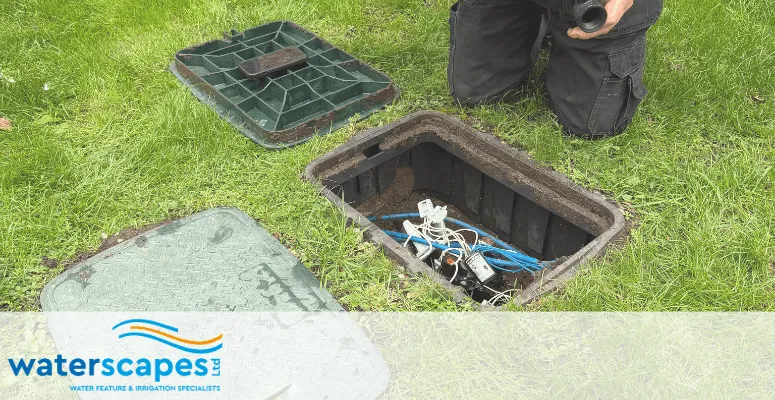
Mechanical equipment requires careful attention before winter weather arrives. Pumps, filters, and circulation systems that have operated continuously through summer need inspection and servicing whilst conditions remain favourable for maintenance work. The decision whether to continue running water features through winter depends on multiple factors including feature design, local climate, and operational requirements.

Structural inspection
Autumn provides the ideal window for identifying and addressing structural issues before winter weather exacerbates them. Small cracks or failing seals that pose minor problems during mild weather become serious concerns when water freezes and expands. Professional inspection during autumn allows time for repairs whilst conditions remain suitable for remedial work.
Leak detection proves easier during autumn than winter, when frozen ground and reduced evaporation rates complicate diagnosis. Even minor leaks waste significant water over winter months and can cause substantial damage to surrounding structures and landscaping.
The sustainability angle
Proper autumn care delivers measurable sustainability benefits beyond immediate operational improvements. Features maintained to high standards consume less energy through optimised pump operation and require fewer chemical treatments due to stable water quality. The environmental case for preventive maintenance extends to equipment replacement cycles, with well-maintained pumps and filtration systems operating effectively for decades rather than years.
Professional partnership
Determining the right balance between in-house maintenance and specialist support depends on feature complexity and available expertise. Effective maintenance partnerships develop when facilities teams and specialists understand their complementary roles. Day-to-day tasks like debris removal suit in-house management, whilst technical diagnostics and structural assessments benefit from specialist expertise.
The distinction between cost and investment becomes clear when comparing autumn maintenance expenses against winter repair bills. Water features that receive appropriate autumn attention perform reliably through winter and into the spring.
Connect with Waterscapes
For specialist water feature design and seasonal preparation services, visit our website or connect with our team directly: maintenance@waterscapes.co.uk










0 Comments