




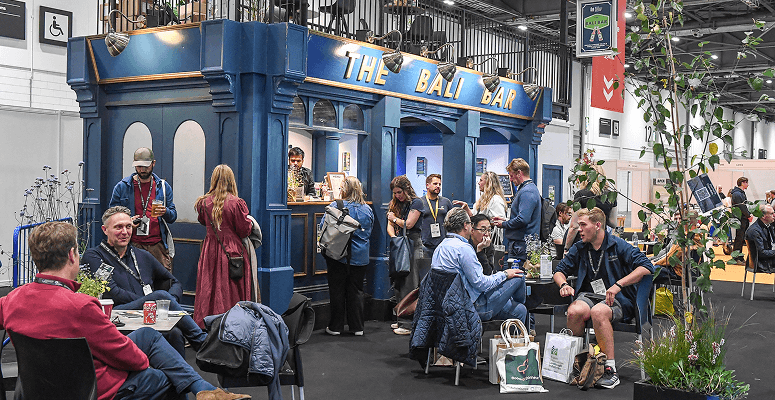
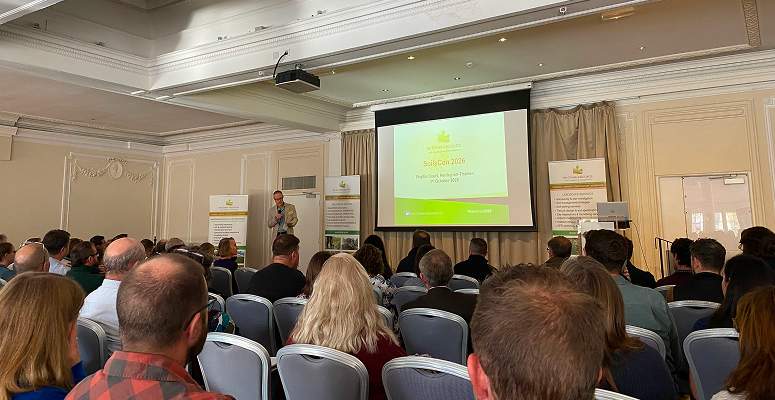
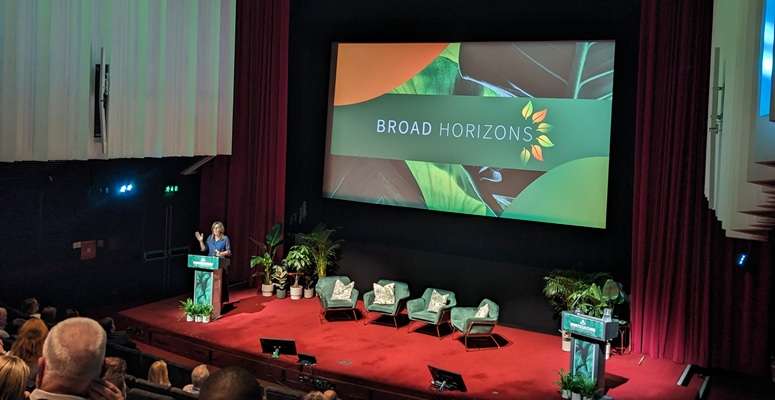
Take action and stand tall – that was the overriding theme of the 2026 BALI National Landscape Conference, which took place on Thursday 26 March at The Royal Society in London. There are challenges to overcome, from the economic climate to the skills shortage – but the landscaping industry also has a plethora of opportunities that it needs to grab with both hands.
Here are just a handful of the key takeaways from the day:
- The conflict in the Middle East is taking its toll, from the hike in energy and fuel prices to the impact on the supply chain. That’s after a series of blows to the economy in recent years, such as the pandemic and the ongoing war in Ukraine.
- But the conflict can’t go on at the same intensity and we’re likely to see a managed de-escalation, says Luke Mayberry, an investment strategist at Barclays Private Bank. There’s no benefit to escalation; president Donald Trump will want to resolve the conflict quickly ahead of mid-term elections, and Gulf countries such as Saudi Arabia are putting pressure on him to do so. It’s also exaggerating Iran’s economic issues and they do not have the military capability to continue.
- We’re in a period of accelerating technology – some good, some bad, says economist Trevor Williams. So, as an industry and as organisations, we will have to adapt to faster change, as adoption of technology is crucial. Robotics and automation could help to ease the pressure on labour shortages, for instance, and digital scheduling could improve productivity. “AI is the biggest technological evolution we’ve seen in decades” and there’s going to be sustained growth in this sector, says Mayberry.
- There are plenty of opportunities and reasons for growth in the sector, including urbanisation and the need for more climate resilient spaces, as well as clients looking to protect their property value in economically uncertain times and the increasing demand for outdoor living, according to Williams. “The landscape industry has got the opportunity to grow faster than the national average.”
- Build partnerships with developers and local authorities, advises Williams. The 1.5 million homes that Labour is looking to build within its five-year term all need landscapes, which then all need to be maintained.
- Regulation such as biodiversity net gain (BNG) is making it must-have. “BNG is not a burden; it’s the biggest opportunity for our sector – go out there and seize it,” says Helen Nyul, director of ecology at Verna. It depends on skilled landscape professionals to design, deliver and maintain the landscapes, after all. The government might have been somewhat inconsistent, such as changing how it applies the legislation to small sites – but BNG is here to stay, and it will soon be rolled out to national infrastructure projects.
- But there needs to be a focus on “right plant, right place, for the right future,” she says. The landscapes need to be successful to have the desired outcome, as well as to protect those working on these landscapes from reputational damage. Push back on specifications that don’t consider the 30-year management term too.
- Regulations are a “double-edged sword,” says Williams. They help to create order and sustainability and to level the playing field, but too much regulation can spark an increase in costs, barriers and complexity. It is necessary, though, as not enforcing these rules can lead to poorer outcomes.
- “The way that you can improve output is to specialise,” says Williams. This could be in climate resilience or biodiversity. Those who understand habitat design, creation and management, for instance, will be in demand. Upskilling staff in these areas could give you the edge in tender opportunities. “Invest in your people – they’re your competitive advantage,” says Nyul. Consider an in-house ecologist, if you can. If not, build a partnership with an ecology consultancy and create a framework together.
- Look for “more robust streams of income,” suggests Williams – such as those from long-term maintenance contracts. These will enable businesses to make better decisions on costs. BNG creates 30-year management contracts which can deliver that long-term recurring revenue, for instance, but it can also create new service lines for your company such as habitat management which can then lead to specialist pricing, suggests Nyul.
- We need to be more aggressive about the importance of landscape architecture, argues Sir Tim Smit KBE, co-founder of the Eden Project. We need to “yell, rebel, yell” about the profession. “Those who don’t commission you will have something missing.”
- Horticulture needs to be repositioned. It should be branded as being part of the health service, says Smit. The scientific evidence for the health and wellbeing benefits of nature are “rock hard” now. We need to “be brave to steal those words.” After all, landscape is “a life support system” rather than a nice-to have, he argues – and the ignorance of horticulture in politics is “treasonous.”
- The industry needs to showcase its data-driven value. It needs to prove its carbon friendly nature and businesses need to promote their carbon impact. This could bring in those who want to feel part of something bigger, who want to contribute to a better world, says Williams. Promoting services such as habitat management to deliver BNG create a sense of purpose and could differentiate you to potential applicants, adds Nyul.
- “There’s a real war for talent,” says Andrew Fitzmaurice, CEO of recruitment agency MorePeople. Companies need to differentiate themselves. They “need to go above and beyond in this arms race” and explain what a career at their company could look like, communicating this externally for the purpose of recruitment.
- People don’t leave because they don’t like the organisation; they leave because they don’t have a good enough relationship with their manager, reckons Gamiel Yafai MBE, CEO and founder of Diversity Marketplace. So, companies need to be better equipping managers. Listening, letting staff make decisions, and showing them how to do things all show support, says Landform Consultants’ foreman, Anna McLoughlin.
- “One size doesn’t fit all,” though, says Oak View Landscapes’ managing director, Paul Downer. Look at people as individuals as well as part of a team, and consider how different people – such as those who are neurodivergent – might need a different approach. There needs to be a blame-free culture where staff feel empowered. Make people feel significant in your organisation and that their contributions are valuable – talk about the impact that they’ve had.
- Make people aware of the next step in their progression, which doesn’t need to be a promotion. It could be the opportunity to take part in or oversee a project, for example. This could help to manage unrealistic progression and pay expectations, suggests Fitzmaurice.
- You have to do what’s right for your business, he says – and that includes not being apologetic if you do not offer remote working, which can make it difficult to separate work and home life and can be lonely. You can make provisions and flexibilities, but you can’t please everyone, he says.
- Know your numbers, says accountant Kim Sones. Have strong financial reporting and regularly review your cashflow on at least a weekly basis. This can help to make better-informed decisions for the business. Put aside a cash buffer and have a board meeting every month to review your finances – even if it’s just with yourself as the director.
- Check your profit margins on each job – and if it’s not what you were hoping for, review it to try to understand what went wrong and what you can learn from this, says Elmtree Landscapes’ managing director Paul Lynch. Avoid being strong-armed by main contractors into long-term fixed prices too. Lynch, for instance, only fixes prices for one year.




0 Comments