




Most irrigation failures don’t show up when a system is turned on. They show up in late June, when plants are under stress, beds are scorching, and the contractor is being asked why. By the time it’s visible, the damage is already done.
For estates managers, grounds contractors, and the landscape architects who specified the system in the first place, that’s an avoidable position. Commercial irrigation isn’t a seasonal switch. It’s a managed asset that needs monitoring through the warm months, not a single visit in spring and another in autumn.
This article covers why systems fail under warm weather, what ongoing checks should include, and where the real costs sit when monitoring is treated as optional.
The myth of the spring switch-on
A typical commercial site gets its irrigation commissioned in late March or early April. Dripline and sprinklers are checked, controllers are programmed, the system runs through its zones, and everyone signs it off. Then it’s left alone until something goes wrong.
The problem is that conditions change through the season. Plants mature. Evapotranspiration rates climb. Heatwaves hit. Beds that were fine on a March schedule are under-watered by July, while overplanted areas are getting twice what they need. The schedule that was right at commissioning is rarely the right schedule by midsummer.
Ed Harwood, maintenance contracts manager at Waterscapes, sees the same pattern repeatedly:
“Most of the call-outs we get in July and August aren’t from systems that broke last week. They’re from systems that drifted out of spec over six or eight weeks, and nobody was checking. By the time the client notices, the planting is already stressed.”
A spring commissioning visit confirms that the system runs. It doesn’t confirm that the system is keeping up with what the site needs as conditions change. That’s a different question, and it needs asking more than once.
The faults that only show up under load
Plenty of irrigation faults pass a quick switch-on check. They show up later, when the system is running at full demand and small problems become visible.
Slow leaks are the classic example. At the low pressures of a brief test run, a small split in a lateral line stays sealed. Run the same zone for thirty minutes in 28-degree heat and water starts pooling. Solenoid valves that opened fine at startup can stick partially shut during the demanding months. Drip lines that have been damaged over the colder months might only fail when emitters are working hard. Backup batteries in older controllers fail unnoticed, and a single power cut leaves the controller reset, so programmes run at the wrong time of day. Power surges can corrupt settings or damage the unit outright.
Then there are the faults that aren’t really faults. Partially blocked nozzles delivering 70% of design output. Misaligned heads spraying onto paths instead of beds. Filters quietly clogging until pressure drops below what the zones need.
On one commercial site we surveyed in early July, the system had been signed off as fine in March. By the time we got there, three zones were running at around 70 per cent of design output because of nozzle wear and a partially clogged manifold filter. The planting hadn’t visibly failed yet, but it was close. Nothing on that site had broken outright. It just hadn’t been monitored.
“The faults that cause the most damage are the ones that don’t fail outright,” Ed says. “The system still runs, water still comes out, but it’s running at 60 or 70 per cent of what it should be. That’s enough to lose plants over the course of a hot summer. You only catch it if someone’s actually looking.”

Pressure, flow, and zoning drift
A separate problem affects sites that have been built out or replanted over time. The original irrigation system was designed for a particular layout, with pressure and flow calculated for the zones in place. Then beds get extended, planting schemes change, new sections get added, and the system gets stretched to cover them without anyone revisiting the hydraulic design.
The signs are familiar. Some zones run too long because they’ve been asked to cover more area than they were sized for. Pressure at the furthest heads drops below what they need to throw properly.
Dry patches appear in places that should be fine. Water bills creep up. The contractor tunes the schedule, the client tunes the contractor, and nobody addresses the underlying issue.
One estate we surveyed had extended its main beds twice over five years, with the irrigation tied into the existing zone rather than redesigned around the new layout. By the time we looked at it, the furthest heads were running at less than 60 per cent of their design pressure, while the closest beds were being watered for far longer than they needed.
Good zoning, properly sized for the planting it serves, is what stops this. So is reviewing the system periodically as the site changes, rather than treating the original commission as permanent. A condition survey will pick up zoning drift quickly. Most maintenance routines won’t.

The real cost of failure
The visible cost of irrigation failure is plant replacement. Mature shrubs lost to drought stress. Specimen trees needing replacement and reseeding. Beds replanted in autumn at the client’s expense, because the contractor missed the problem in July.
One client came to us in September after losing several mature specimen trees. The cause was a slow leak in a single zone that had run undetected for weeks. The repair itself was straightforward and inexpensive. The replanting and the warranty dispute that followed weren’t.
The less visible costs are usually larger. Repeat call-outs eat into maintenance margins. Warranty disputes between specifier, contractor, and client get awkward and slow, especially when nobody can produce a record of what was checked and when. Estates and facilities teams that lose confidence in a contractor stop renewing the contract. Specifiers get blamed for systems that were poorly maintained, which damages relationships with both the client and the contractor.
The most expensive position to take is “we’ll deal with it when something goes wrong”. By the time something has gone wrong visibly enough for the client to notice, the cost has already moved from a small repair to a multi-line invoice with planting on it.
What ongoing monitoring should cover
The practical answer is straightforward. Through the warm months, a commercial irrigation system needs eyes on it monthly at minimum. More often for high-value sites or systems running close to capacity.
A useful monthly check covers run times against current conditions, visual inspection of each zone under operation, pressure at the furthest heads, controller programming and battery backup, filter condition, and any backflow prevention requirements. Records matter. The basics worth capturing are the date of the visit, the zones tested, observations against current conditions, anything adjusted
in programming or hardware, and any items flagged for follow-up. That same record answers most warranty questions before they become disputes.
Smart controllers and remote monitoring help, particularly for distributed sites. Weather-based scheduling reduces overwatering. Leak detection alerts catch problems faster than waiting for the planting to react. None of it replaces somebody walking the site and watching the system run.
“Remote monitoring tells you the system is doing what it’s been told to do,” Ed says. “It doesn’t tell you whether what it’s been told to do still matches what the site needs. That’s a judgement call, and it needs someone on the ground to make it.”
For grounds maintenance contractors, building monthly irrigation checks into the service agreement is the practical answer. For estates and facilities clients, asking for a written record of those checks is what holds the contractor to it.

Designing systems that are easier to maintain
There’s a related point that sits with specifiers. Commercial irrigation systems get a lot easier to maintain when they’re designed with maintenance in mind from the start.
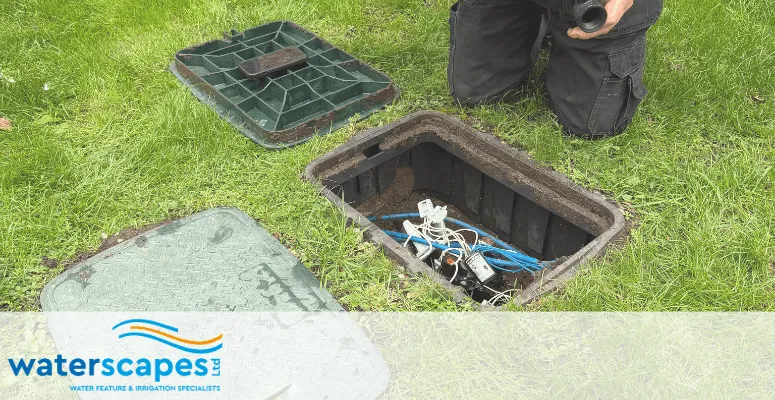
Sensible zoning that reflects how the planting will mature. Accessible valve boxes that don’t require lifting paving every time a solenoid needs checking. Controller placement that doesn’t put the kit in a flooded basement. Documentation that gets handed over to the maintenance contractor, not lost between the installer and the facilities team. None of this costs much at design stage. All of it saves money for the lifetime of the system.
Landscape architects who think about this early get fewer warranty calls and better long-term outcomes for their clients. The systems that age well are usually the ones that were designed to be looked after.
When patching stops being worth it
The other question worth asking is when an aging system stops being worth patching. Signs of an irrigation system that’s reached the end of its useful life include repeat fault patterns, controllers that can’t be programmed for current planting, hydraulic limitations the original designer didn’t anticipate, and parts that aren’t supplied any more. Patching past that point usually costs more than a planned upgrade.
Most sites are nowhere near that decision. Most of the value sits in catching the smaller things early, through monitoring that takes the system seriously as a managed asset rather than a piece of plant that runs on autopilot.
Book a condition survey with Waterscapes to assess your irrigation system and get costed recommendations for the season ahead.





0 Comments