




For the trade, Chelsea is less a flower show and more a working document. The plants and the planting palettes matter, but so do the structural decisions, the material choices and the partnerships on display. Here is what stood out this year.
1. Cladding has moved from finish to feature
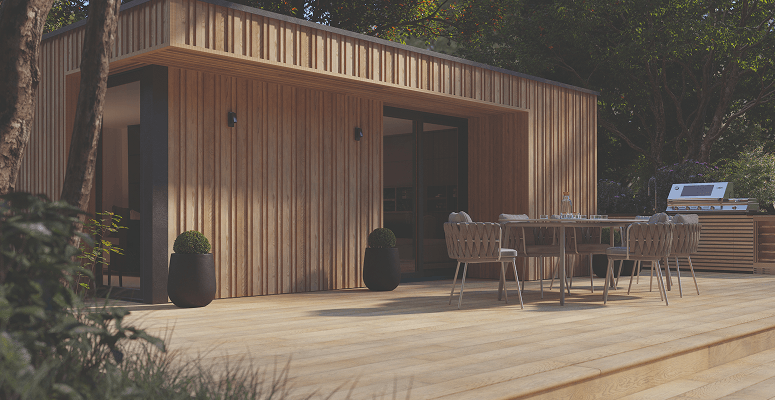
If there was one material story running through Chelsea 2026, it was the growing confidence with which designers are using cladding as a primary design element rather than an afterthought. Vertical surfaces are being treated with the same intentionality as flooring, with profile, shadow and tone doing real compositional work. Millboard’s Board & Batten+ appeared on one of Matt Keightley’s Spacelift gardens as a deliberate structural choice, not a background material. For landscapers, that shift matters: Clients who have seen Chelsea are increasingly likely to arrive with opinions about cladding, not just decking.
2. Collaboration is becoming a competitive differentiator
Two of the most talked-about trade exhibits this year were built on multi-partner models. Garden House Design’s Main Avenue stand brought together Millboard and Cubic Outdoor Living for the first time, delivering a 5-Star RHS Award in the process. BALI’s Hive exhibit drew together member businesses and industry suppliers around a single brief. The takeaway for contractors and designers is practical: projects built on well-managed supplier relationships tend to produce stronger outcomes, and Chelsea is increasingly a showcase for that model rather than the individual genius of one designer.

3. The AI conversation has arrived, whether you are ready or not
Matt Keightley’s Spacelift gardens prompted more genuine trade conversation about AI-assisted design than any keynote or conference panel has managed in recent years. The tools are already in use across the industry at various points in the workflow, from visualisation to planting design to client presentations. Chelsea gave the topic a public and credible moment. The more useful question for practitioners is not whether AI belongs in landscape design, but how to position your expertise, material knowledge and site judgement as the things it cannot replicate.
4. New colourways are arriving at the right moment
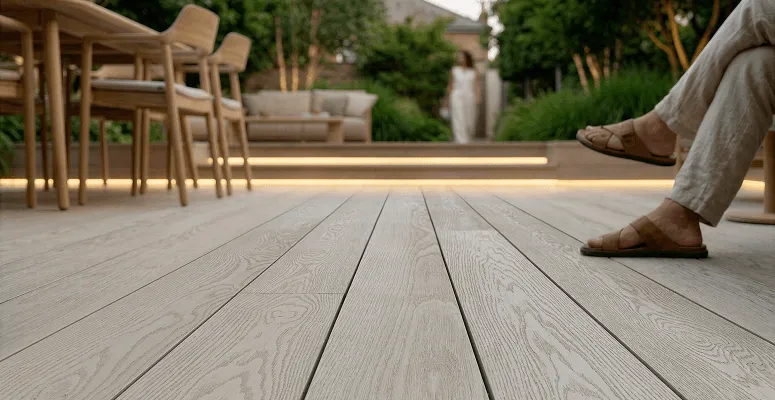
Palette in hard landscaping has become significantly more sophisticated over the past few years, and Chelsea 2026 reflected that. Millboard’s new Ashwood colourway in Shadow Line+ cladding featured on BALI’s Hive exhibit, designed by Matt Evans of The Garden Room Studio. Ashwood sits in cooler, softer territory that works particularly well alongside pale render, natural stone and the kind of considered planting schemes that dominated this year’s show. If your upcoming residential pipeline includes schemes where clients are asking for something quieter and more refined, it is worth getting samples in front of them now.
5. Permanence is the brief clients are bringing
The dominant mood across the show gardens this year was one of intention and durability. Spaces designed to be lived in across seasons, built with materials chosen for longevity rather than novelty. That is not a new direction, but 2026 felt like a point of consolidation rather than a trend still forming. For landscapers, the practical implication is that clients are more open than ever to conversations about lifetime cost and performance, rather than upfront price alone. If you are not leading with that in your proposals, you may be leaving the most compelling part of your argument on the table.

6. Trade partnerships are reshaping how products reach specification
BALI’s decision to use Chelsea as a platform for showcasing member businesses and endorsed products alongside a new material launch reflects a broader shift in how trade bodies are engaging with specification. It is no longer purely about professional development and networking; it is about visible endorsement of quality and innovation in a context that clients also see. For landscapers operating within professional frameworks, that alignment has practical value: it shortens the credibility conversation with clients and provides a shared reference point that carries weight beyond your own recommendation.
7. Chelsea still sets the reference points clients bring to their briefs
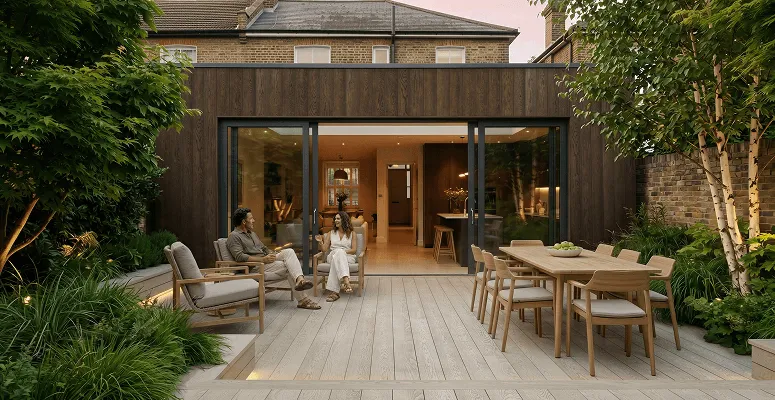
Whatever your view of the show, its influence on the residential brief pipeline remains significant. The schemes and material choices on display in May circulate through client conversations for the following 12 to 18 months. From this year, expect to hear more about jewel-toned planting with restrained hard landscaping, layered vertical surfaces, and outdoor spaces conceived as extensions of interior architecture rather than a separate category. The landscapers who attend, or who follow the trade coverage closely, tend to arrive at those client conversations better prepared. That preparation, more than any single product or trend, is what Chelsea is actually for.
Millboard products featured across multiple exhibits at RHS Chelsea 2026, including the Garden House Design stand on main avenue and as product partner on BALI’s Hive exhibit. Full details at: millboard.com/latest-news.









0 Comments