



Weather extremes, due to climate change, are putting gardens and landscapes under pressure at the National Trust.
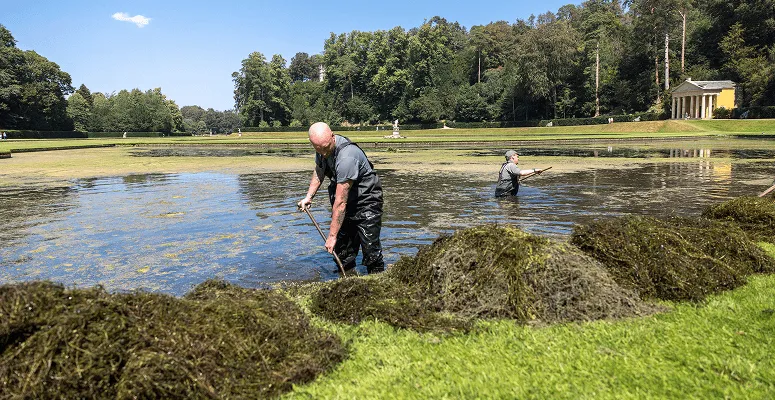
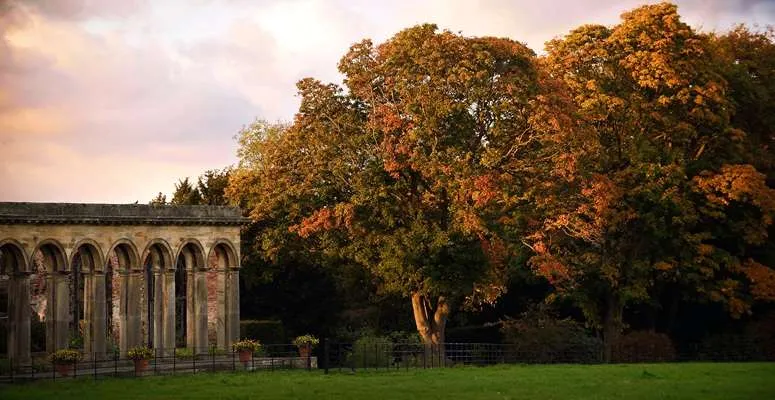
At Fountains Abbey and Studley Royal Water Garden in North Yorkshire, cared for by the National Trust, the summer’s heatwaves have led to a boom in pond weed in the World Heritage Site’s ornamental ponds, lakes and canals.
Removing pond weed is a typical summer job for the charity’s gardeners, but this year’s repeated heatwaves have made it a weekly task.
Justin Scully, general manager at Fountains Abbey and Studley Royal says:
“The garden’s creators couldn’t have imagined the challenges that climate change is bringing us. But as custodians, our job is to safeguard this beautiful place so that people can keep enjoying it, just as they have for more than 250 years.”
The cascades dotted through Studley Royal Water Garden have also slowed to a trickle because of the prolonged hot, dry weather.
Scully says:
“But in winter, due to the impact of more extreme rainfall, water rushes over the cascades, which can result in flooding. These ‘feast or famine’ conditions are why our Skell Valley Project – a £2.5m scheme led by the National Trust and Nidderdale National Landscape to look at ways of addressing the flood risk – was so important. It has helped protect the abbey and other heritage features from the threat of flooding and helped make them more resilient.
“We’re continually adapting to the impacts of climate change on this special place. While the water levels may be low, the site still looks beautiful – a credit to the remarkable design of the historic Water Garden, and to our teams who care for it today.”


In early July, another plant took advantage of the heat, with hundreds of pink common orchids appearing for the first time around the historic ruins and riverbanks.
Mark Newman, National Trust archaeologist and author of Wonder of the North, Fountains Abbey & Studley Royal, says:
“We know that the ground within the abbey has been changed over centuries through excavation, landscaping and natural processes. These changes could help explain why the orchids have appeared in particular places, but we can’t be certain. That’s what makes Fountains Abbey so compelling – there are still discoveries waiting to be made.”
Elsewhere, the heatwaves have revealed parchmarks. At Hardwick in Derbyshire you can see the ‘ghostly’ outline of a historic parterre.
The “E.S.” parterre planting in Hardwick Hall’s West Courtyard was not removed all at once, but the historic record indicates that the planting beds were backfilled by the early 1920s.
The design had been laid out in 1833, remained visible throughout the 19th century, and is believed to have disappeared during early 20th‑century landscaping works.
Although removed from view, the layout can still appear as parchmarks during hot weather, and geophysical surveys in 2023 confirmed the surviving traces beneath the lawn.











0 Comments