



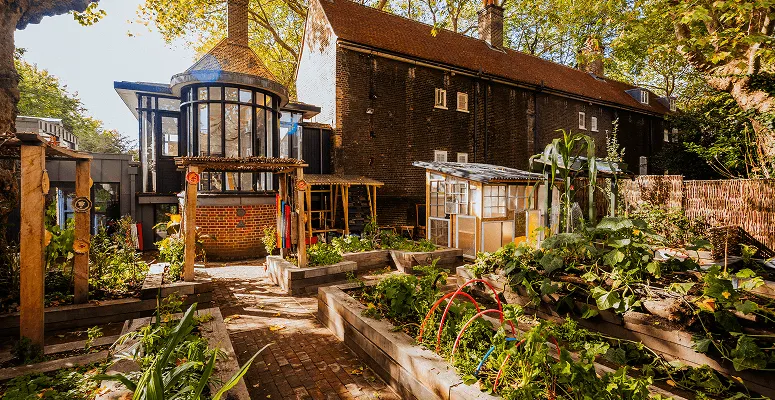
The only Museum of the Home in the world, the Hoxton-based organisation champions accessible community space for children and young people.
What once sat as disused land at the back of the museum, the area has been recently transformed into the site’s Discovery Garden. Designed to provide a wellbeing space for children and young people, the permaculture and play garden is now a community space amid a lack of child-friendly outdoor space in the area.

Free to access and open to the public six days a week, the museum is a place to learn about how the world lived in the past, how people live today and how a changing climate could spark a rethink into the ways people live everyday.
Head gardener Bryn Hutchinson, despite working at Royal Botanic Gardens in Australia and National Trust sites across the UK, has always found himself drawn towards community projects, gardens and organisations. Embarking on this role earlier in the year, he acts as a prominent figure as the garden opens to the public. He says:
“Museum of the Home wanted to have an outdoor space that they could engage with the local community as well as school groups and children with gardening, elements of permaculture and sustainable, biodiverse gardening.”
Benefits of green space to mental health and wellbeing is there and it’s growing, Hutchinson explains, and he realises how much people gravitate towards the outdoors. “As we come into some more heat waves, the importance of green space and a place to cool down and relax only grows. Feeling connected to nature is also important,” he says.
A connection to nature can be created at a young age, too. When cultivating the Discovery Garden, “part of the key reason behind creating the garden as a collaborative project was to have some of the local schools involved in the design element,” Hutchinson explains. Some of the structures have been directly created by children, “which means there is a continuous relationship with some of the local community groups.”
The groups of children that visited the garden during the early stages will continue to act as ambassadors as it grows.

Not only a community space, the garden acts as a reminder of the planet’s changing climate. “The museum is a key reminder that the planet is our home, too. We’re trying to reflect that into our practices and garden management,” explains Hutchinson. He adds:
“We’re using this as an opportunity to think about what works and what doesn’t work, and how we can make our gardens resilient. This will feed into our design, which can be used as an educational moment as well for the population and the community around here.”
Sustainable and innovative techniques have been used across the garden, for example using materials that are already on site through reusing green waste from dead hedging for habitats, new walls or hedges. “This is a tradition of managing the land that we have here already. It’s a form of interpreting things from the past,” Hutchinson states.
Much like what is displayed inside the museum, it is strongly reflected in its outdoor spaces. “We’ve got everything from a 17th century room to a future room, which can be reflective of the garden spaces,” he adds.
As the garden blooms, it will always remain unfinished. From new growth to new children, “we’re manage it according to needs, desires and wants of the particular generation of people that are around it,” says Hutchinson.
Find out more about the Discovery Garden and Museum of the Home here.






0 Comments