


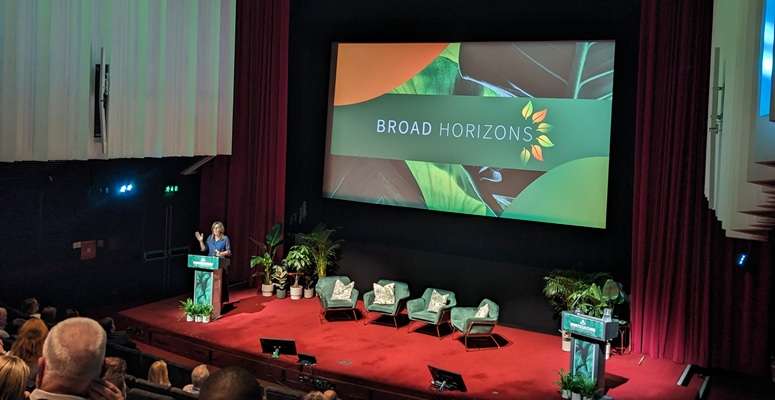
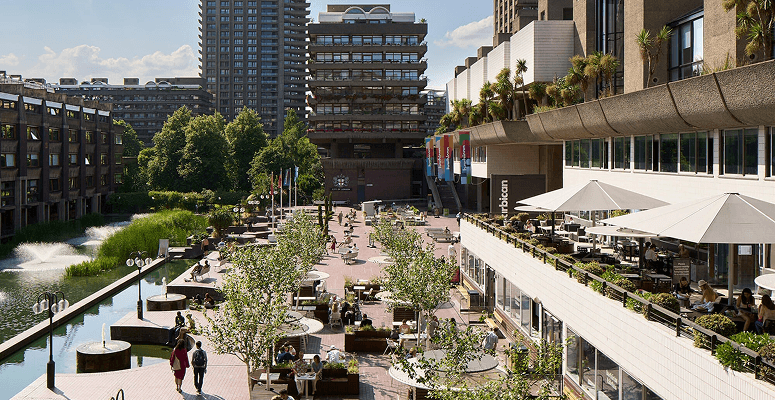
The Horticultural Trades Association’s (HTA) Horticulture, The Conference took place at London’s Barbican Centre on Thursday 24 September 2026. The Conference aims to inform and support environmental horticulture businesses as they prepare for the future.
Industry experts, political figures, a meteorologist, an economist, and experts in global foresight, communication, and organisational behaviour make up the speaker lineup.
Here are Pro Landscaper’s key takeaways.
The opportunities within the volatility
Although there are constant uncertainty in the geopolitical sphere, Pippa Goodman, leading expert in global foresight from NextUp, said there are also opportunities. Devolution, which puts “power in every postcode”, Goodman said, could create more localised opportunities in terms of creating spaces that are better for well being.

Ageing, health and livability also strengthen the case for plants and green spaces as social infrastructure. Singapore introduced an national Age Well programme and central to this is therapeutic gardens with a target to create 30 by 2030. Goodman shared 14.5% is the potential proportion of UK GDP for public health spending by 2073-74, compared to 7.9% today.
Climate volatility may reshape what can be grown and how the sector operates, but Goodman added that the growing adaptation investment could increase demand for plants landscapes and nature-based solutions. She advising leveraging the focus on cooling as new research across nearly 9,000 global cities has shown trees counter nearly half of the extra heat caused by dark roofs, asphalt and concrete.
A changing climate
We know all too well after this summer that the weather is getting warmer, but Laura Tobin, Fellow of the Royal Meteorological Society, stressed the impact of this. This year, for the climate change stripes, a new burgundy colour had to be added because it was so hot.

Compared to our climate in 1990, by 2070 winters will be between 1 and 4.5°C warmer and up to 30% wetter. Summers will be between 1 and 6°C warmer, up to 60% drier and between 4 and 7°C warmer. An increase in 4°C would mean hot days where temperatures exceed 25°C are likely to become more frequent at 37 days per year compares to 10 days per year at present. Cold conditions will likely become less frequent at 12 days per year compared to 50 days per year at present. Heavy rainfall is likely to increase, and occurrences of severe drought will increase becoming 146% more frequent. The warmer winters also mean the growing season is extended by over a month requiring year-round lawn care in some southern areas.
Nature’s Rights Bill
On a panel discussion, Baroness Bennett argued that the climate threat is a threat to food security and that the government needed to be more transparent with the public about that. Bennett recently launched a Bill to recognise Nature as a legal subject. Among its goals are to establish and protect the rights of Nature and establish a legal duty of care for public bodies, businesses, and individuals. It is currently in the committee stage.
Bennett added that the reason it is difficult to get joined up thinking is that the treasury is “all about money” and believes it has no attachment to the physical world and that Defra is one of the lowest ranking cabinets.
To prioritise nature, regulation could come through rental properties, as they need to be attractive and healthy places.
Broad Horizons programme launched
The horticulture development scheme, for HTA members, “Broad Horizons” is a fully funded, year-long programme to see business across the sector, understand how Westminster policy making works and how to influence it, how to market and promote their business and how to recruit, create and retain successful teams. It will be open for applications on 5 October.
HTA Chief Executive Fran Barnes says:
“The businesses that thrive are the businesses that invest in their people… The best ideas often come from seeing things differently. The best leaders are usually people who have broadened their horizons, challenged themselves and learned from others.”
Economic outlook
Matthew Swannell, associate director at Oxford Economics, shared that GDP growth will remain modest in 2027. He suggests that the growth in 2026 will be around 1.2%. It is predicted this will be lower in 2027 but higher in 2028. He added that energy bills are set to rise, putting pressure on consumers and businesses. Planning reforms and housing supply will also remain constrained.
Horticulture is not a “nice-to-have”
Opening Horticulture the Conference 2026 at London’s Barbican, Barnes said the extreme conditions had underlined the need for more gardens and parks, trees, green infrastructure and resilient landscapes. While she supported the prime minister, Andy Burnham, highlighting the importance of the hard hat, Barnes stressed that gardening gloves are equally as important.
Rejecting the idea that gardens and green spaces are luxuries, Barnes says:
“2026 has underlined the fact that horticulture is not just a nice-to-have. It’s gone beyond being quite important. It’s now tipped into an absolute requirement for a government to plan for. The future is going to need what you grow and sell. For shade, for flood mitigation, for biodiversity and for our health.”
Barnes Fran added that recognising the value of environmental horticulture also meant creating the conditions for businesses to invest in it for the long term.
“Businesses need certainty to make confident decisions to invest… We’re not asking for certainty about the weather. None of us can control that. Nor certainty about global events. None of us in this room can control those either. But it is legitimate to ask for certainty about the things government can – and does -control. Taxes. Regulation. Environmental policy. Employment policy. Planning. Trade.”
Attract, engage and retain workers
Dr Anthony Klotz, professor of organisational behaviour at the UCL School of Management, explained that in order to attract, engage and retain workers employers should invest in them – through good pay, benefits, development and working conditions – and notice and respond when jolts cause workers to pause and rethink their relationship with work.
Klotz also argued that employers shouldn’t be afraid to hire someone who has “job hopped” as research suggests they get up to speed more quickly. Similarly, he advised to keep an open mind when it comes to “boomerang” employees who leave the company and come back as they too will get up to speed more quickly.
Grower of the Year announced
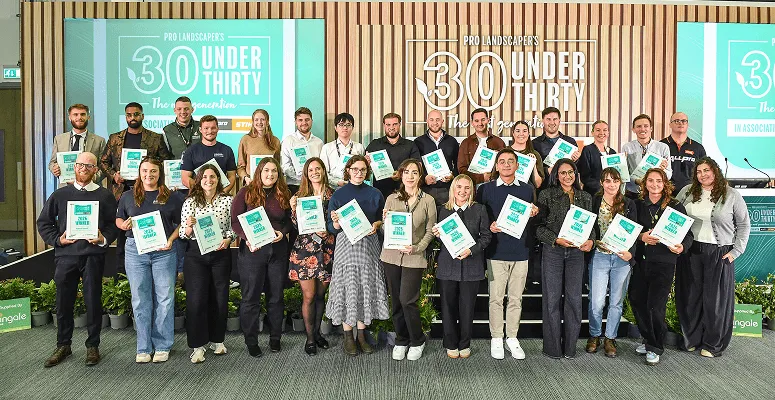
Allensmore Nurseries Ltd scooped the title of overall Grower of the Year.
Eleven other awards were presented across six categories, with Allensmore also receiving top honours for Employer of the Year, Peat Transition Initiative of the Year, and Sustainability Initiative of the Year.
Frank P. Matthews Limited was recognised with the Best Use of Technology Award, and Robin Tacchi Plants received high praise from the judges, winning the Biosecurity Initiative of the Year award.












0 Comments