From 2 November 2026, biodiversity net gain (BNG) will become mandatory for new nationally significant infrastructure projects (NSIP) in England.
Department for Environment, Food & Rural Affairs (Defra) has published guidance setting out how BNG should be considered throughout the design and consenting process. The guidance builds on the final biodiversity gain statements and initial guidance published earlier this year.
The first phase of BNG reforms for smaller sites, including the 0.2 hectare exemption, came into force on 6 August 2026.
Work is underway on the second phase of reforms which include:
an exemption for development whose primary objective is to conserve or enhance biodiversity
a targeted exemption for development that enhances parks, playing fields and public gardens
Defra is also set to make some changes to the statutory biodiversity metric. These include measures to address some of the specific challenges that BNG can pose for brownfield developments with open mosaic habitat, and changes to the way spatial risk is assessed for area habitats by using Local Nature Recovery Strategy areas only.
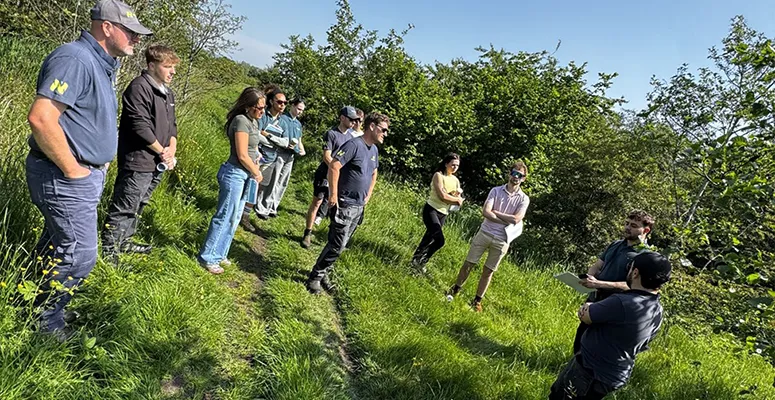
Naturespace brought its nationwide franchise network together for a dedicated Continuing Professional Development (CPD) programme focused on habitat management and sustainable grounds maintenance.
The specialist biodiversity net gain (BNG) CPD Day for its franchise network, worked alongside the Trustgreen Ecological Team to develop a deeper understanding of habitat management requirements and best practice techniques.
The training covered ponds and wetlands, grassland habitats, scrub environments and woodland areas.
Owen Barton, co-founder and director of Naturespace, says:
“The success of biodiversity net gain depends on far more than simply creating habitats. The real challenge is ensuring those habitats are managed correctly over the long term so they continue to deliver meaningful benefits for wildlife and local communities. By investing in specialist training and ecological knowledge across our franchise network, we are ensuring our teams have the practical skills needed to support developers, landowners and management companies with sustainable habitat management for years to come.”
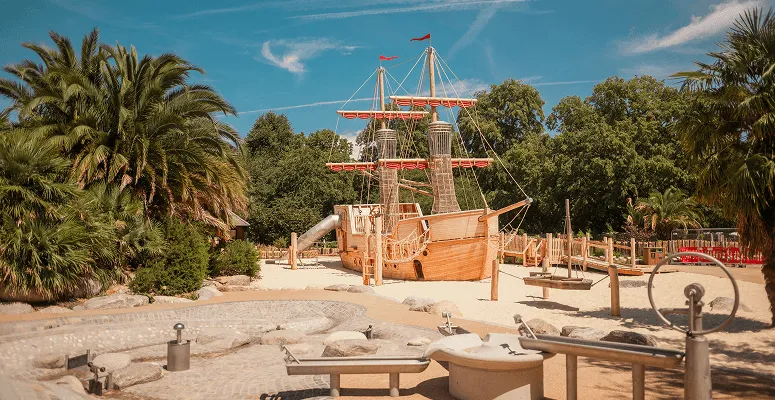
First opened in 2000, the Diana, Princess of Wales Memorial Playground in Kensington Gardens has undergone a £3m renewal.
The Peter Pan inspired playground has been refurbished to include new equipment such as a 12-metre Galleon moored on a sandy beach, a treehouse and crocodile-themed waterplay area.
The playground’s team has been led by Royal Parks senior landscape architect Rhona Harley, working alongside principal contractor Ground Control.
Every aspect of the playground now has improved inclusivity and accessibility, featuring wheelchair accessible slides and areas inside the treehouse and Galleon, picnic benches and waterplay areas.
Sustainability has also been an important feature of the newly refurbished playground. New wooden play equipment uses timber from sustainably managed European forests, constructed by Timberplay, while the new waterplay feature allows runoff water to be collected and used for irrigation.
Surrounded by an array of biodiverse planting and landscaped areas, the playground also creates a space for wildlife, too.
Andy Williams, park manager for Kensington Gardens, comments on the new playground:
“This playground has been thoughtfully designed so that children of all abilities and interests can find something that appeals to them. Children can once again splash, swing, climb and hide in this almost two-acre playground set amongst sub-tropical planting.”
Open to the public from today, the playground has a capacity of 450 people, featuring toilets and a access to the cafe.
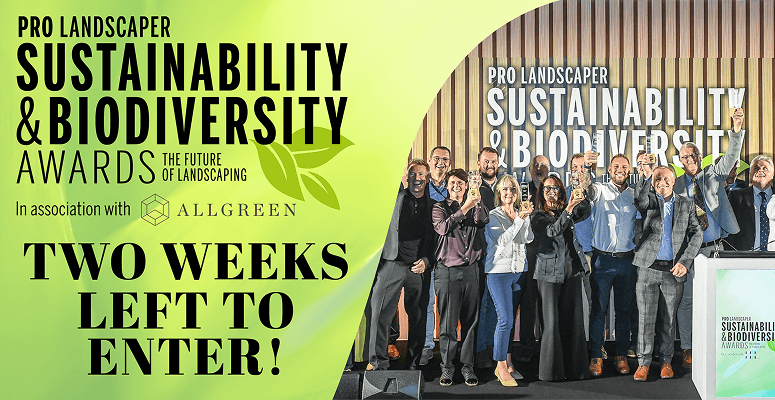
Entries for the Pro Landscaper Sustainability & Biodiversity Awards 2026 are almost closed.
First launched in 2023, the awards are on a mission to showcase the most important initiatives across the UK landscaping sector, from leading organisations, design, construction, product supply and the people involved.
With just two weeks to go, entries will close on 10 August.
The list of categories can be found here, featuring two new categories: Ecology Team or Company and Housing Association.
The shortlist will be announced during the week commencing 31 August, followed by an awards ceremony celebrating both winning and shortlisted entrants after FutureScape on 13 October taking place at the Farnborough International Exhibition & Conference Centre.
Royal Botanic Gardens, Kew’s State of the World’s Plants and Fungi 2026 report understands that while the biodiversity crisis has not yet been fully understood, rapid data and technology advances such as AI offer hope.
The sixth State of the World’s Plants and Fungi report was published on 16 June 2026, which brings together 400 scientists across 40 countries to explore how technology is transforming the race to save nature.
“The report argues technology can be nature’s ally, with digital tools exposing critical gaps in scientific knowledge and highlighting where action is most urgently needed to safeguard plants and fungi,” begins Kew.
For example, in Costa Rica, researchers increased the country’s known fungal diversity by nearly 20% by combining published records with digitised collections, providing new insights into how climate influences fungal distribution and establishing critical baselines for future research.
Professor Alexandre Antonelli, executive director of Science at Kew, comments on the report:
“The digital revolution is breaking down the barriers of physical distance and access, catalysing more equitable collaboration at a truly global level. While documenting and protecting all life on Earth remain formidable challenges, digitisation and accompanying technologies make me increasingly hopeful that we’ll succeed.”
Kew explains that AI can ‘learn’ how to identify challenging plants such as sedges and peat mosses that have microscopic distinguishing features, helping taxonomists identify species more quickly and pinpoint those that could be new to science.
The report comes as Kew completes a groundbreaking project, funded principally by the UK government through Defra, digitising all 7.4 million herbarium and fungarium specimens in its collections.
It finishes with a plea to improve, connect and share biodiversity globally, which can be one of the fastest and most cost-effective ways to strengthen conservation efforts.
Read about the environmental concerns surrounding the use of AI within horticulture in Pro Landscaper’s March issue.
The 25-year masterplan, Unlocking Highgate Cemetery, and The Friends of Highgate Cemetery Trust have been awarded £6.7m by the National Lottery Heritage Fund to commence phase one.
Aiming to restore the cemetery to a living landscape that continues to evolve, the masterplan also looks to retain its historic character and significance which has been influenced by international design competitions, public consultants and working in partnership with Camden Council and Historic England.
Carefully managed over the years, the changes will include essential infrastructure work such as improved drainage.
Dr Ian Dungavell, chief executive of the Friends of Highgate Cemetery Trust, comments on the announcement:
‘We are thrilled to have the support of The National Lottery Heritage Fund. This grant is a vote of confidence in plans that will preserve what makes Highgate Cemetery special and respect the needs of grave owners, while opening it up to many more people.”
He also says, “we will address the damage caused by climate change, ash dieback and invasive growth, all of which threaten the Cemetery’s landscape and habitats,” while enhancing biodiversity and introducing accessible pathways.
The cemetery has been cared for and looked after by volunteers for 50 years, but with new partnerships comes new activities and the ability to open the cemetery for all.
Designs of the historic site by Highgate Village involve restoring several structures, adding five new buildings alongside new landscaping by Gustafson Porter + Bowman.
Vista London has unveiled plans for a greener South Bank, a cultural hub in the heart of London.
The landscape design will be spearheaded by bath-based landscape architects Grant Associates, featuring landscaped terraces and balconies which will provide easy access to fresh air and greenery throughout the day.
A wetland roof will be positioned with bird nesting boxes to encourage nature into the centre of the site, while new walking routes will connect Upper Ground with Queen’s walk and the river Thames.
Across the site, extensive planting will be evident, amounting to a 60% biodiversity net gain, “helping to create a healthier place to send time,” says Vista.
The 640,000m2 site will include workplaces, retail spaces, green space, a rooftop restaurant and bar.
Completion for a greener South Bank is expected during the second quarter of 2029.
Landsmith Associates has developed the landscape masterplan for the proposed lowland peat research centre at Honeygar farm.
Working in collaboration with ecological planting designer Flavia Goldsworthy and architect Poynton Bradbury Architects and Clementine Blakemore Architects, the masterplan has been designed by Somerset Wildlife Trust.
Located on the Somerset Levels near Westhay, the farm will be transformed as a national centre for lowland peat research, innovation and public engagement.
The transformation covers the 1.8 hectare farmstead within a wider 81-hectare landscape undergoing ecological restoration.
The centre will also support research into peatland restoration, carbon recovery and climate resilience to help develop new approaches to managing lowland peat landscapes across the UK.
In order to reconnect the farmstead with its wider peatland landscape, the masterplan reinterprets the landscape structure by organising buildings, circulation and outdoor spaces along the ridge.
It will also draw on the distinctive geomorphology of the Somerset Levels and the Burtle landform.
A key objective is to reduce the ecological footprint of the existing farmyard. Approximately 30% of existing hardstanding is removed and replaced with permeable landscapes, planting and water systems that restore ecological function and improve infiltration.
Sarah Jones-Morris, director of Landsmith Associates says “the landscape design goes beyond biodiversity net gain,” by “placing ecology, water and learning at the heart of the farmstead while reusing existing structures and materials to support peatland restoration and education.”
Existing farm buildings will be retained and site materials reused within paths, seating and habitat structures to allow for the cultural memory of the farmstead to remain legible within the evolving landscape.
A new 100% affordable neighbourhood is set to come to Birley Fields in Hulme, Manchester with a focus on green community space and biodiversity.
Following a two-stage bidding process, Glenbrook has been named as the preferred developer to take forward the development programme.
Glenbrook intends to feature new garden space, improved biodiversity and ensure that existing trees will be retained and celebrated. Senior development manager Jamie Sutton comments:
“As a developer, we are acutely aware of the responsibility we hold in delivering such an important scheme, one that provides considered architecture and public realm whilst responding to the needs of the wider community.”
Engagement in early 2025 with local residents and stakeholders looked to create long-term community involvement, which highlighted the importance of improved cycle and pedestrian routes, affordable housing and the need for a low-carbon, net-zero-ready buildings.
Alongside a range of green and public spaces, the development plan includes a total 293 affordable homes.
A clear strategy has been set out for achieving a biodiversity net gain, including a combination of on-site enhancements and ecological assessment.
The scheme is also set to create 71 new full-time jobs, support 90 additional roles and provide a Hulme bursary through Regeneration Brainery to provide an employment pathway into the construction industry for local young people.
Entitled ‘Beautiful Biodiversity’, the garden intends to demonstrate that ecological integrity and refined aesthetics are not competing priorities, but natural partners.
Created collaboratively between SGLD members Eliza Gray and Bo Cook, the installation invites visitors to reconsider how beautiful planting and materials can work hand-in-hand with biodiversity.
Built by Landesign, the garden will feature Zinc planters, limestone, reclaimed timber, the design increase planting density per square metre while creating a textual landscape.
A diverse range of habitats will be integrated across the garden, including log piles, leaf litter, aggregates, a gabion bench and manmade insect habitats.
Cook says the “random colour palette, messy edges, and scrubland style that tends to be associated with biodiverse landscapes is wonderful, but we want to show that aiming for a biodiversity rich garden needn’t mean having something overwhelming, or that requires a large space. It can be balanced as well as environmentally friendly.”
Gray also comments:
“We want to demonstrate that biodiversity doesn’t have to look wild or chaotic.“With careful design, thoughtful plant selection and considered materials, you can create a garden that feels refined and uplifting — while genuinely supporting wildlife.”
The design pair are also exploring the possibility of introducing a soundscape to create a more immersive experience.
Land Use Consultants (LUC) has received approval for the transformational Clifden town regeneration plan in Galway, Ireland.
A popular tourist destination, Clifden is set to undergo the Clifeden Town Centre Enhancement Project, led by LUC and Galway County Council to improve the quality of public spaces.
Proposals also include a more people-friendly town centre, access to waterfront areas and new green spaces to benefit residents and visitors.
From the revitalised Beach Road Quay and a new Harbour Park, LUC says the transformation will “boost biodiversity, create welcoming public spaces and celebrate the town’s unique heritage.”
Approved by An Coimisiún Pleanála, the plans can now move forward in seeking funding for a comprehensive scheme that will reshape the area in Galway.
Yesterday in the House of Commons, the Government announced its intention to exempt smaller developments from biodiversity net gain (BNG) obligations.
Under the new rules, developments below 0.2 hectares — instead of the previously expected 0.5 — will be exempt from delivering the mandatory 10% uplift required for BNG.
Many land-based professionals are taking to LinkedIn to voice their satisfaction over the reduced development size, accrediting the move to the large scale lobbying that has been taking place over the recent months.
The Wildlife Trusts however warns that these exemptions could still result in at least an estimated 60% of all planning applications bypassing the legislation requirements.
Craig Bennet, chief executive of The Wildlife Trusts comments:
“We should be working to rebuild our natural infrastructure alongside new housing and built infrastructure, not engage in tired old performative politics that trades one off against each other.”
The Government also announced that it will be launching a consultation in the new year for the exemption of smaller residential developments on brownfield land.
As well as additional undetermined changes to how BNG is applied to smaller and medium developments moving forward.
BNG for Nationally Significant Infrastructure Projects is still scheduled to roll out in May of next year, with a suggested easement of access to offsite units.
Construction for Grow in Merwede, a new city district in Utrecht, the Netherlands, begins as part of a joint initiative between Synchroon and AM, a part of Royal BAM Group.
Forming part of urban renewal activities in Utrecht aimed at sustainable development, the new district will highlight routines for health, movement and social contact with an emphasis on biodiversity and green spaces.
Architecture company KCAP, Monk Architecten, Studio Nauta, and Flux Landscape Architecture are responsible for the design.
A courtyard garden will be included to support nature-related and social activities, alongside 575 new homes.
Completion is expected by 2029, with a bigger objective to deliver around 6,000 homes in the coming years.
Awarded the Green Flag Community Award in September, Better Bankside received the highest marks available across all 18 judging categories.
In October, the BID scored 86/100 for London In Bloom, in turn receiving a Gold Award and category winner of the urban community award which was a collaborative entry between Better Bankside, the Bankside Open Spaces Trust (BOST) and Southwark Council.
During the same month, the same collaboration achieved the Britain in Bloom Silver Gilt in the RHS’s Town Award category.
Nicole Gordon, chief executive of Better Bankside explains “greener and happier are two of the three ambitions in Better Bankside’s manifesto,” adding:
“Our hat-trick of awards is testament to our hard-working Urban Gardener Dan Lea, our Better Bankside team and our collaboration with business members and community partners, including the Bankside Open Spaces Trust and Southwark Council.”
Better Bankside’s ongoing urban greening work will continue to improve biodiversity and the overall green landscape within the BID area.
Wyevale Nurseries has unveiled a special logo in celebration of its 95th anniversary.
Established by Harry Williamson in 1930, the Hereford-based nursery has grown into a leading wholesale supplier of British sown and grown trees and plants.
Heather Williamson, the founder’s granddaughter and current Wyevale chairman says “it has been an honour to have been part of the fabric of British horticulture for 95 years”.
As the family-run business makes preparations for its 100th birthday in 2030, it begins in celebrations with the new 95th anniversary logo. Williamson comments:
“It’s very exciting to be so close now to our 100th anniversary, which is just over four years away. We’re so proud of our achievements – there are so many.”
From supporting rewilding projects and biodiverse planting schemes, Wyevale Nurseries is also an active member of industry organisations such as the British Association of Landscape Industries (BALI) and Confor.