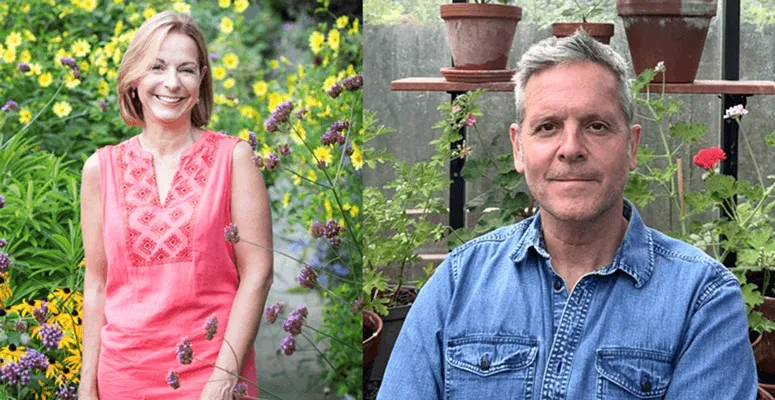
Garden and landscape designer, James Scott FSGLD MBALI of The Garden Company,shares his top six tips fornatural stone.
1. Design hard landscaping around function Every project begins with understanding how clients want to use their garden. Only then can the extent of hard landscaping be determined. For example, terraces should be sized around activities, furniture and circulation rather than simply filling available space. A dining terrace need only be large enough to accommodate its intended use.
2. Prioritise balance, not quantity Naturalistic gardens often contain less paving, but every hard landscape element must work hard to provide structure, movement and a sense of place. Not every journey through a garden requires expansive paving. Thoughtfully designed paths often provide a more appropriate solution, reducing the visual impact of hard landscaping while enhancing the experience of moving through the space.
3. Design paths with purpose Naturalistic gardens are best experienced from within. Paths guide movement through the landscape, revealing seasonal interest and shifting perspectives. Every route should lead somewhere meaningful, whether a seating area, sculpture, specimen tree or other focal point. Paths should feel generous enough to use comfortably, without dominating the space. Well-placed destinations encourage people to pause and engage with the garden.
4. Blur the boundary between hard and soft landscaping Where paving is used, it should integrate seamlessly with the planting. Introducing planting pockets into terrace layouts, surrounding seating areas with generous borders and allowing planting to soften edges all help create an immersive experience. Use gravel and mineral mulches, planting pockets and generous borders to soften edges and create seamless transitions throughout the garden. The result is a garden that feels more natural without compromising functionality.
5. Balance sustainability with practical realities Consider local, reclaimed and reused materials where possible, weighing environmental benefits with performance, availability and budget to achieve the best overall outcome.
6. Visit quarries and work closely with suppliers A deeper understanding of stone sourcing and processing leads to more informed specification and better project outcomes. Having worked with many of the same natural stone specialists since establishing my practice in 1991, I’ve gained a deeper understanding of how different stones are formed, extracted and processed, enabling more confident material selection.
Experienced suppliers can also identify opportunities to use quarry surplus and offcuts for bespoke features, such as modern rockeries, improving both sustainability and value. These discussions often uncover creative solutions that benefit all parties.
Make sure you read the September issue of Pro Landscaper magazine for James Scott’s trends piece where he describes why natural stone and naturalistic gardens make the perfect pair.
Award-winning garden designer Jo Thompson has been appointed head of garden design studies at the London College of Garden Design (LCGD).
Joining Thompson at the college is another award-winning garden designer, Duncan Cargill, who will take post as deputy head of garden design studies.
The pair will lead the course from September 2026. Thompson comments:
“It’s a huge honour to be asked to take on this role at the London College of Garden Design. The college has been incredibly influential in fostering new design talent over the last twenty years, and I am really proud to now have the opportunity to work with them.”
Cargill also comments:
“I am passionate about helping students bridge the gap between education and practice, giving them the confidence, skills and knowledge needed to build successful careers.”
Nina Baxter, director of LCGD, says the “outstanding designers” will bring “combined expertise, creativity and generosity as mentors will ensure that our students continue to receive an exceptional learning experience that reflects the evolving demands and opportunities of the garden design profession.”
The garden design diploma is the college’s flagship professional training programme.
Drawing on recent experience in Japan, Dave Green shares key considerations before taking on international work.
When I first applied to design a show garden for Fukuoka Flower Show in Japan, I was focused on the opportunity rather than the reality. It had always been something I aspired to do, and when the garden was accepted, the excitement was immediate. What I hadn’t fully appreciated was the scale of preparation required before even stepping on site.
One of the first challenges was that the show itself was new, meaning many processes were still being defined. This required flexibility on both sides and a willingness to work through uncertainty, and this can sometimes feel uncomfortable but is essential when working in an unfamiliar setting. As a designer, a key early priority was finding a local contractor to work with. Despite having visited Japan before, I had limited industry contacts, so I relied on introductions facilitated by the show organisers. This led to a collaboration with a Fukuoka-based landscaping company, but understanding their structure, approach and capabilities took time and careful communication.
Budget was another early reality check. The initial construction quote came back over budget, making it clear that compromises and adaptations would be required. Regular communication became essential — we held frequent online meetings and exchanged detailed drawings, photographs and models to ensure clarity. Cultural differences also influenced decisions. For example, sourcing reclaimed materials, something relatively accessible in the UK, proved challenging locally, requiring alternative solutions using sustainably sourced timber.
3D aerial screenshot of show site. Credit: @shosaku
Financial planning is another area that should not be underestimated. In this case, funding was only available after the project was completed, meaning costs had to be covered upfront. This introduced an element of financial risk that, in future, I would aim to manage more carefully through clearer contractual arrangements and staged payments.
Thorough research before travelling is also always invaluable. Understanding the city, transport systems and local infrastructure helped me feel more prepared on arrival. I found an online 3D model of the pre-event show site which was particularly useful in understanding levels, orientation and context and along with photos and articles helped build a clearer picture of how the show might operate.
Practical preparation also extends to personal organisation. Working abroad often means travelling light, so prioritising essential tools and equipment is key. I also relied heavily on local suppliers and services, including online ordering platforms, to fill gaps once work was underway.
Equally important is setting up support systems. Working in an unfamiliar environment can feel isolating, particularly when language and cultural differences are present. Having a local team to assist with orientation, alongside maintaining regular contact with family and colleagues at home, made a significant difference.
Finally, preparing your business for your absence is crucial. I arranged freelance support to maintain ongoing projects, communicated clearly with clients, and ensured systems were in place to manage international payments and currency exchange.
Working abroad offers incredible opportunities, but success often depends on the preparation that happens long before you arrive.
Looking back, I took on a considerable amount of risk, and while the experience has been hugely rewarding, it has highlighted the importance of planning, communication and clarity when working internationally.
The Royal Horticultural Society (RHS) has announced the largest garden created at one of its shows is coming to RHS Badminton Flower Show in July.
Award-winning designer and landscape architect Tom Stuart-Smith has been tasked with the 2,400m2 Feature Garden, which celebrates the life and philanthropic work of Julia Rausing.
The Julia Rausing Garden, built by Crocus, features meandering paths for visitors to be fully immersed in its planting.
Stuart-Smith, fresh out the RHS Chelsea Flower Show headlines, celebrated a Gold medal for The Tate Britain Garden, built by Crocus, just weeks ago, now he readies himself for another RHS show in July. He comments:
“It is an honour and a joy to design a garden to celebrate the legacy of Julia Rausing, whom I knew well. She loved gardens, and this is a tribute to her work supporting garden projects and causes across health, welfare, and the arts.”
After the show, the herbaceous plants will be sold to raise funds for Hortatio’s Garden, supported by the Julia Rausing Foundation.
The garden announcement is joined by another, whereby plantsman and Form Plants founder Jamie Butterworth and singer Will Young link up to create a planted exploration into the human mind with Out of the Shadows.
Formed of three planted cubes, the garden takes visitors on a journey from introspection and isolation to openness and the embrace of possibility through planting inspired by Carl Jung’s ‘Shadow Self’, as discussed in Jeffery Jellicoe’s Landscape of Man.
RHS Badminton Flower Show will take place from 8 – 12 July 2026.
Award-winning firm Harry Holding Studio is searching for a new senior garden designer or landscape architect to join the London office.
Currently setting up an office in Hay-on-Wye, the studio needs an experienced, multi-skilled member of staff to take a leading role in the office based in Notting Hill.
Offering a hybrid set-up, the role will be split between office and home. According to the job advertisement, “for the right person, there is scope for it to grow, taking on more responsibility over time, including a leading role in our London studio as it develops.”
Working across London, the UK and internationally, the new hire will help run projects end to end, deliver design quality and help shape how the company works and grows.
For more details on the role, please request our full job description and person specification. To apply, send your CV and portfolio, along with a short covering note explaining why you would like to join Harry Holding Studio, to harry@harryholding.co.uk. Applications close 19 June.
As Pro Landscaper searches for this year’s winners of its 30 Under 30: The Next Generation initiative, existing alumni have been displaying their skills at RHS Chelsea Flower Show 2026.
Over the years, 30 under 30 alumni, from garden designers, landscapers and suppliers, have had award-winning gardens at Chelsea. This year is no different.
Here is a list of Pro Landscaper 30 Under 30 award winners at Chelsea 2026:
Harry Holding
Owner and founder of Harry Holding Studio, Holding co-designed The Eden Project: Bring Me Sunshine Garden with Alex Michaelis. Built by Landscape Associates, the Silver-gilt medal winning garden was also given the Environmental Innovation Award.
Chloë Webster
Webster, designer at Harry Holding Studio, also worked on The Eden Project: Bring Me Sunshine Garden.
Jake Catling
Catling, director of The Landscaping Consultants, built Frances Tophill’s RHS and The King’s Foundation Curious Garden. The feature garden celebrates rich diversity of plants and their impact on people’s lives, helped brought to life by King’s Trust ambassador Sir David Beckham.
Jamie Butterworth
Butterworth of Form Plants based in Surrey supplied to a selection of gardens this year, such as the RHS x CITI Season of Abundance garden, as well as hosting presentations on Tophill’s feature garden.
Olly Gregson
Gregson, director of Hardwood Landscapes, which built Max Parker-Smith’s Journey Beyond the Tracks: From Adelaide to Perth garden, returned to Chelsea with the garden designer after working on the RHS x UBS Moments of Reflection feature garden together within the Great Pavilion last year.
Christina Cobb
Within the All About Plants category, Cobb made her Chelsea debut with the Cleary Gottlieb: Time for Creativity garden, built by Shovel and Spade Landscaping. Awarded a Gold medal, the garden’s centres a bespoke glasshouse created by local business, Signature Oak Buildings.
Ashleigh Aylett
Aylett picked up Best All About Plants Garden with the Woodland Trust: Forgotten Forests Garden at RHS Chelsea Flower Show 2026. Built by CJ Landscapes, the garden has been sponsored by both Project Giving Back and the Woodland Trust as a means of shining a light of the UK’s ancient woodland.
Ollie Pike
Founder of Pike Studio, landscape architect Pike designed The Whittard of Chelsea Garden within the container garden category, built by Peak Landscapes. After showing success across other RHS shows including RHS Tatton Flower Show 2024, his garden was given a Gold medal.
Fraser Sheridan
Designed by Joe and Laura Carey, the Addleshaw Goddard: Flourish in the City garden celebrates the hidden gemstones of London that quietly stitch together to offer sanctuary, freedom and community. Headed up by Sheridan for the second time, the Addleshaw Goddard garden picked up RHS Small Show Garden of the Year and a Gold medal.
In recent years, garden design has become increasingly preoccupied with meaning. Designers are asked not only to create beautiful places, but to respond to climate change, biodiversity loss, social justice, accessibility, heritage, wellbeing, and political narratives. These are all important concerns, and rightly so.
Yet there is a growing question within the profession: in trying to solve everything, has garden design begun to forget how to be a garden?
For much of history, the primary aim of garden making was aesthetic. From Persian paradises to Italian Renaissance terraces, from English landscape parks to modernist courtyards, the garden was first and foremost a visual and spatial art.
Proportion, composition, rhythm, texture and light were the designer’s core tools. Meaning existed, certainly, but it was embedded within form rather than used to replace it.
Today, however, many contemporary schemes are led by narrative before design. Project statements speak of rewilding, sustainability targets, social engagement strategies and conceptual frameworks long before they mention beauty, pleasure, or delight.
Planting is justified through ecology, materials through carbon impact, layouts through community use. All of these considerations are valid, but the danger lies in allowing them to dominate the creative process to the point where the visual and emotional quality of the garden becomes secondary.
There is a noticeable shift in the language of design. Where once we spoke of harmony, balance, elegance or atmosphere, we now speak of resilience, mitigation, inclusivity and messaging.
These are the words of policy and planning rather than of art. When every project must carry a moral or political justification, the simple act of making something visually powerful can feel almost indulgent, even suspect.
Environmental responsibility is perhaps the strongest driver of this change. Designers are expected to demonstrate ecological value, reduce maintenance inputs, increase biodiversity and respond to climate uncertainty.
These aims are essential, yet they can lead to cautious, worthy, and sometimes visually unresolved landscapes. Meadows replace borders, rough planting replaces structure, and informality replaces composition. The result may be environmentally sound, but not always aesthetically convincing.
There is also a growing tendency toward over-intellectualisation. Some projects seem designed more to be explained than to be experienced.
Lengthy concept statements describe memory, identity, politics or trauma, yet the physical space itself can feel awkward, unresolved or visually weak. A garden should not require an essay to be appreciated. Its meaning should be felt through form, not defended through text.
This is not an argument against environmental or social responsibility. Nor is it a call to return to past styles. The best historic gardens were never only decorative; they reflected the values of their time just as contemporary landscapes must reflect ours.
But those gardens also understood that beauty is not a luxury. It is the very thing that makes people care about places in the first place.
Perhaps the challenge for garden design today is not to abandon political or environmental thinking, but to rebalance it. A garden can be sustainable and still be composed. It can address climate change and still possess elegance. It can carry meaning without losing clarity.
If garden design has lost its way, it may not be because it cares too much about the world, but because it sometimes forgets that its greatest contribution to the world has always been the creation of places that move us visually, emotionally, and spatially. When aesthetics becomes an afterthought, the garden risks becoming a statement rather than a work of art.
People from across the entire industry, from garden designers to landscapers and suppliers, are being urged to take part in the State of the Nation industry research survey.
With submissions closing on Saturday 31 May, the research will be utilised in creating key industry insight that can be used to prioritise and realise growth opportunities alongside navigating challenges.
Day one of the recently announced Landscaping Leadership Forum, hosted by Pro Landscaper Premium Plus, will include the unveiling of the survey. Those taking part will be in the chance of winning one of three complimentary tickets to the forum. Find out more information on the 2-day event in June: Landscaping Leadership Forum.
Taking approximately 10 minutes to complete, the survey can be accessed here.
Parkinson’ UK – A Garden for Every Parkinson’s Journey. Credit: Stephen Studd
After another busy year of garden designers, garden enthusiasts and the general public gathering at RHS Chelsea Flower Show flies by, the People’s Choice votes are now in.
Parkinson’s UK – A Garden for Every Parkinson’s Journey scooped BBC/RHS People’s Choice Best Show Garden, a space made for those living with Parkinson’s and their families.
The garden, also awarded with a Silver medal, was designed by garden designer, writer, podcaster and TV presenter Arit Anderson and built by Landscape Associates. It was also curated alongside 15 people living with Parkinson’s intended to evoke an emotional and sensory response.
Featuring elements from Accoya, the sustainable timber supplier enabled architectural detailing within the garden.
During an emotional presentation between Dame Mary Berry and Anderson at the show, the designer thanks her sister for sharing her story to the public. She adds:
“Thank you to this amazing charity. We just want to help people that have got Parkinson’s. I know medals are important, but not everything that glitters is gold – but this is [the award].”
The garden is being relocated to the John Radcliffe Hospital for second life beyond the show.
Gold-medal adorned Trussell’s Together Garden, designed by Rob Hardy & Co and built by Peter Gregory Landscapes, picked up RHS People’s Choice Small Show Garden.
Garden designer Melanie Hick and contractor Phil Sutton Landscapes was voted People’s Choice within the All About Plants category for the Silver-award winning The Bat Conservation Trust’s Nocturnal Garden.
The Balcony/Container People’s Choice Award has been given to the Alzheimer’s Society: Microbes and Minds Garden, designed by Tina Worboys and built by Big Fish Landscapes.
The award ceremony will be once again sandwiched between a Summer Showcase and the Pro Landscaper Summer Party.
The outdoor festival, beginning from 4:30pm, invites contractors, designers and the supply chain to exhibit, network and enjoy outdoor games.
Later in the evening, the Summer Party will kick off once all awards have been celebrated – this year featuring a Greek theme.
David Griffiths, divisional director, says “what another year of incredible submissions with some amazing projects across all value levels. In particular, what has been noticeable is the volume of projects that were submitted from first time entrants.” This year, the shortlist features all-new category Project Awards PLUS Garden, “the creativity, technical ability and problem-solving skills being showcased across the shortlist is testament to the great work being delivered,” he adds.
The shortlist is as follows:
Build Under £50,000 In partnership with New Leaf Media
North London Exotic Garden Aoba Landscapes The Flow and Retreat Garden Barclays Landscaping Devonshire Road D & S Precision Landscaping Ltd Day One D. C. Grounds and Gardens Deepdene Infinite Landscaping Ltd Preston Court, Yeovil Sherborne Garden Angels Oxford Townhouse Garden Shirescapes Ltd A Lush Haven Slade Landscapes
Build Between £50,000-£100,000
Wood House D & S Precision Landscaping Ltd Claxton Grove Formosa Landscapes Ltd The Piggeries Infinite Landscaping Ltd Broadway JDS Landscapes Woodstock Kingfisher Decking Ltd
Garden Design & Build SW London Landscaping
Build Between £100,000-£250,000
Maltmants End Griffin Landscapes North Lodge Hobson Services Ltd The Bridge House Johnstone Landscapes Ltd The Circle Garden PDGroundscape Ltd Oxfordshire Family Garden Shirescapes Ltd
Community Green Space Under £100,000
The Albert Roundabout Beth Chatto’s Plants & Gardens Druid Street Cityscapes Room to Breathe Garden at Amersham Hospital Jen Donnelly Garden Design and Catherine Gibbon Garden Design
Community Green Space Between £100,000-£250,000
Sinclair Nursery Garden Cool Canvas Priory Park Biodiversity Improvement EPD Landscape Edward Street Hospital Jack Moody Landscaping and Civil Engineering Ltd
Design Under £50,000
A Lush Haven Bond Landscape Design Ltd Rusty Steel Island Garden Catherine Clancy Garden Design Epsom Townhouse Garden Helen Saunders Garden Design City Living – Anerley Garden Project Katerina Kantalis Garden Design The Notting Hill Luxe Courtyard Kathryn Cox Garden Design Studio Concrete & Colour: A Lush, Living Courtyard Rachel Goozee Garden Design Preston Court, Yeovil Sandhurst Garden Design
Design Between £50,000-£100,000
St Albans Eco House & Garden Bridgeman Kent Ltd The Piggeries – Courtyard Garden Hugh Tanton Garden Design Ltd Latchmoor Way Jen Donnelly Garden Design Wrap Around Family Garden Rebecca Morgan Garden Design Mereheath Lane Robert Hughes Studio
Design Between £100,000-£250,000
Dutton House, Sawbridgeworth, Beds Bridgeman Kent Ltd The Bridge House Greenbook Landscape Design Ltd Chalfont Manor Jen Donnelly Garden Design Gaiafields Terraced Garden Karen Tatlow Garden Design Project Larkfield Landscape Architecture by Abi Kearney Bowden Robert Hughes Studio Northumberland Accessible & Artistic Garden Sophia’s Gardens The Circle Garden Tom Hill Garden Design
Design & Build Under £50,000
The Curved Woodland Garden Aoba Landscapes London Plant-Rich Urban Garden Bella Landscape Construction Ltd The Anthracite Oasis Bond Landscape Design Ltd Kyoto Project Gardenscape Sutton Place Olive Tree Landscaping Services Meadow Brown Project Olive Tree Landscaping Services Mallinson Road Tom Howard Garden Design & Landscaping Ltd Burntwood Close Tom Howard Garden Design & Landscaping Ltd
Design & Build Between £50,000-£100,000 In partnership with Westminster Blinds
The Pergola Stage Bancroft Lee Landscapes Ltd A Threshold of Stillness Bradley James Garden Design & Build Ltd Priory Drive Design Your Garden Ltd Shrublands Project Griffin Landscapes Wilson Landscapes Showroom Wilson Landscapes Driveways & Paving Ltd
Project Awards PLUS Garden In partnership with Millboard
Portishead Coastal Glow Green Genie Landscapes Ltd Water and Wellbeing Garden Kitti Kovacs Garden Design and Shade Water Gardens Frensham Hillside Landform Consultants Ltd
Special Feature under £50,000 In partnership with Landscapeplus
The Ice House Ruin Alice Meacham Gardens The Coastal Fireplace Retreat Green Genie Landscapes Ltd Orchard Terrace JDS Landscapes Orchard Kingfisher Decking Ltd Wellbeing Garden Kitti Kovacs Garden Design Natures Golden Pond Quality Outside Living Ltd The Circle Garden Water-wall and serpentine walling Tom Hill Garden Design and PD Groundscape
Sustainable Garden Under £50,000 In partnership with Kitti Kovacs
Druid Street Cityscapes Garden Behind the Gate Noreen Bardsley Garden Design Bradwall Bakehouse Olive Tree Landscaping Services
Temporary Installation Under £50,000
Sunflower Power at BBC Gardeners’ World Live Jack Moody Landscaping and Civil Engineering Ltd Room to Breathe Garden for the TSA Jen Donnelly Garden Design and Catherine Gibbon Garden Design QVC’s Reflective Retreat Garden at BBC Gardenders’ World Live 2025 Kitti Kovacs Garden Design One Element – RHS Hampton Court 2025 Feature Garden MJL Garden Design and Home Spring Gardens A Woodland Edge Nico navarro garden design
“Our great panel of judges now have the tough task of determining which of these amazing projects will triumph in each category with the winners unveiled at our awards ceremony,” says Griffiths.
RHS Chelsea Flower Show’s most decorated designer Sarah Eberle picks up Garden of the Year 2026 on the return to the show after a three-year hiatus.
Eberle’s Campaign to Protect Rural England: ‘On the Edge’ garden depicts the often overlooked countryside at the edge of towns and cities that connects people to nature.
Built by The Outdoor Room, the garden was praised for its “clear connection to the urban and the countryside,” explains chair of the judging panel Chris Bailes. He adds:
“Unexpected beauty is found in the concrete drain repurposed from an agricultural accessory into a mesmerising water feature using common duckweed. The garden achieves a beautiful, natural planting style that is difficult to accomplish, bringing wildness into a garden space with elegance and light touch.”
Eberle says she is “thrilled” to receive the award, as well as a Gold medal, bringing her overall Chelsea collection up to 14 Gold medals and four Best In category wins, which is the most of any designer at RHS Chelsea.
Other award winners
Joe and Laura Carey scoop Small Show Garden of the Year for the Addleshaw Goddard: Flourish in the City garden, also built by The Outdoor Room. In celebration of the hidden gardens and pocket-sized oases of London, the pair pick up their consecutive win after last year’s success.
Designed by Harry Holding and Alex Michaelis, The Eden Project: Bring Me Sunshine Garden wins the RHS Environmental Innovation Award. Centred around sustainability, the garden, built by Landscape Associates, “uses a celebration of materials,” explains Harry Holding Studio garden designer Chloë Webster.
Ashleigh Aylett’s Woodland Trust: Forgotten Forests Garden is awarded Best All About Plants Garden, built by CJ Landscapes.
A Little Garden of Shared Knowledge sponsored by Viking wins Best Balcony and Container Garden, designed by Katerina Kantalis and built by Phil Sutton Landscapes.
Best Houseplant Studio was given to An Ode To Endurance, designed by Natalia Drezek and Jinhyun Ahn, Conservatory Archives.
The Best Construction (Show Garden) has been handed to Darren Hawkes’s Lady Garden Foundation ‘Silent No More’ Garden, built by Landscape Associates, while the Best Construction (Small Show Garden) was given to Trussell’s Together Garden, designed by Rob Hardy & Co and built by Peter Gregory Landscapes.
Pro Landscaper 30 Under 30: The Next Generation 2025 award winner, Chloë Webster is next hot seat for a round of quick fire questions in our Little Interviews series.
Chloë Webster Designer at Harry Holding Studio
What do you hope to see for the industry this year?
Honestly, I feel like the introduction of AI is the biggest change we’re going to see in the coming years so I’m interested to see how people respond to the opportunities and challenges it presents with creativity and care. It’s a fascinating time to be living through but also a little terrifying so I hope we can support each other, and consider better ways to prioritise the land and the people we’re working with.
What’s one thing that could make the industry better?
As I always say – collaboration! It’s something this industry is particularly good at already but I think we could widen the circle. Personally, I love hearing perspectives from those working in other fields or with expert/niche knowledge and the impact it has on the way I design.
Would you recommend entering for a Pro Landscaper 30 Under 30: The Next Generation Award?
Absolutely! You’ve got nothing to lose – only lots of wonderful people to meet.
What did you gain from the Pro Landscaper 30 Under 30: The Next Generation Awards?
Aside from the entirely unexpected recognition, I’ve met so many great people as a result of it. On a personal level, it’s also given me the confidence to trust that I’m on the right track and to wholeheartedly dive into my role as a designer with that knowledge behind me.
If you could work anywhere in the world, where would it be?
From a botanical perspective, my favourite flora originates from Australia but – frankly – I don’t think I can handle the scale of insects (my friend filled an entire Tupperware with a single spider…). In the absence of that, I’d love to see more of the Steppe region as I think we could learn a lot from what’s thriving in their climate as the UK’s weather patterns begin to emulate the same.
Why should the industry be pursuing young people?
I get the sense that there’s a lack of hope for young people nowadays. For me, working with nature has been transformative in that regard. I think having an understanding of the natural world is incredibly empowering, especially with the climate changing at the rate it is. Aside from that, I think it’s also about pursuing fresh perspectives – often this does come from those who are newer to the industry but I also think there’s something so beautiful in the exchange of knowledge and theories between generations. It’s great to be challenged on your thinking and I feel this can come as much from experience as innovation.
What has been the highlight of your career so far?
Working with an incredible group of young people for our garden at Eden Project Morecambe. We’ve been running creative workshops with them involving visits to some amazing sites in Lancashire. I’ve loved hearing their stories of Morecambe, their hopes for the project and their creative responses to our briefs.
Who has been your biggest inspiration?
This sounds cheesy but – honestly – nature has. It continues to floor me with its magic and unpredictability, teach me about the beauty and fragility of life, and provide me with opportunities to glimpse the true complexity of our world. It’s also incredibly humbling and never fails to remind me that I’m part of something bigger that can’t always be explained or categorised.
What would the title of your biography be?
Failing to try, trying to fail, trying to try until you end up failing to fail. A real catchy one.
Who would play you in a film?
I have been compared to both Princess Di and Saoirse Ronan in my time. The former is impractical for a number of reasons but the second is far too flattering. A more likely candidate I believe is Jim Carrey (pre-botox) – the man has range.
What’s your go-to karaoke song?
I’m not sure what the purpose of karaoke is if not for living out your greatest fantasies… I’d definitely be a crooner in another life so my faves are Righteous Brothers’ ‘Unchained Melody’, ‘I’m on Fire’ by Bruce Springsteen and Chris Isaak’s sultry classic ‘Wicked Games’. Depending on my mood, I’ve also been known to do a highly convincing rendition of ‘Glamorous’ by Fergie and Ludacris.
RHS Malvern Spring Festival at Three Counties Showground in Malvern, Worcestershire (Thursday 7 – Sunday 10 May) marks the launch of the 2026 RHS Show season. It is expected to welcome over 90,000 visitors across the four days. It opened its doors to the press and public yesterday showcasing six show gardens, three feature gardens, the return of the RHS-judged Indoor Plant Gardens, and the introduction of a brand-new category for 2026: ‘Blooming Borders’.
RHS Malvern Spring Festival at Three Counties Showground in Malvern, Worcestershire (Thursday 7 – Sunday 10 May) marks the launch of the 2026 RHS Show season. It is expected to welcome over 90,000 visitors across the four days. It opened its doors to the press and public yesterday showcasing six show gardens, three feature gardens, the return of the RHS-judged Indoor Plant Gardens, and the introduction of a brand-new category for 2026: ‘Blooming Borders’.
1 Sustainability showcased
ONE Garden, which took home both Best in Show and Environmental Innovation award, aimed to showcase sustainable materials and techniques. Designer Ian McBain told Pro Landscaper, “Everything in this garden can be repurposed and reused. So it’s about having the conversation with clients, making them aware that there are alternatives. We just have to work a bit harder. We just have to think more cleverly.” The garden uses K-Briq made from construction waste tied together to create planters which can be taken apart and reused. It also features screening made from scaffolding boards which would otherwise be chipped or wasted.
2 Bringing wildlife into ordinary gardens
Lifted by Birds, designed by Tom Saunders, Jon Pilling and Amie Wheeldon is cement free and utilises local stone and reclaimed timber. The pond area has even attracted a tadpole. The stone has been laid on top of sand with turf packed in between. This utilises environmentally friendly materials but also provides a good habitat itself. The garden aims to show how a garden can support wildlife and was awarded the Highly Commended in the Environmental Innovation award category.
3 JG Landscaping wins Best Construction award
JG Landscaping took home the Best Construction for a Show Garden award for The Blessings from the Sea garden. The garden’s creative use of sustainable materials, including roof tiles made from 176 recycled safety helmets and mother-of-pearl accents from waste seashells, add to the garden’s green credentials. Jason Grubb, owner at JG Landscaping, told Pro Landscaper that getting the award “makes it worth it”. He adds that you “couldn’t want any more” than the good feedback from judge Mark Gregory, who was particularly impressed with the construction, copper work and water elements and said the construction would hold up at RHS Chelsea Flower Show.
4 Blooming borders launched to showcase emerging talent
This planting design category is for garden designers, plants people, horticulturalists and landscapers to help kick-start or further their careers. Each border has been designed with a unique theme. Designed by Tomas Olesen and built by Oxford Garden Design, After the Rain took home Best Blooming Border. The garden aims to showcase how practical water management can also be design features.
5 Schools try their hand at garden design
The School Garden Challenge returned for 2026 encouraging young people from the surrounding counties to design their own gardens. This year’s School Garden theme was Myths and Legends. The Wyvern, The Bridge School, Malvern won Best School Garden and Whispers of the Wye, Wye Forest Federation won Best for Sustainability. Other awards included Best Use of Colour awarded to Mythical Plants and Where to Find Them, Pershore College, Warwickshire; Best Use of Recycling won by Up the Airy Mountain, Down the Rushy Glen, Tudor Grange Academy, Worcester; Best Wildlife Garden awarded to The Ladybird’s Path, Grace Kelly Childhood Trust, Worcester and Most Innovative Design won by The Garden of Arthur, The River School, Worcester.
6 Best Indoor Plant Garden awarded
Back to Grandma’s House by Alina Hibbert and Adam Critien from Avon took home the accolade. Built using recycled and upcycled materials, the design promotes affordable, sustainable living while highlighting the mental health benefits of bringing nature indoors. Hibbert says the award “means the world”. She adds, “It’s been a dream since I was a kid to do an RHS show garden.”
Speaking to Pro Landscaper Hibbert says that while the enthusiasm for houseplants dropped off a bit since the Covid-19 pandemic it has started to creep back up again. Hibbert added that this is being helped by the people showcasing the easier houseplants.
7 Greenfingers Charity secures future for its garden
Following the show, the Greenfingers Charity will carefully dismantle, relocate and rebuild the ‘Lifted by Birds’ garden at the James Hopkins Trust. This is intended to create an outdoor sanctuary for children with life-limiting conditions, alongside their families and care teams. Once complete, the garden will offer a rich, sensory environment designed to support wellbeing, combining naturalistic planting with wildlife-friendly features to create moments of calm, engagement and escape.
London, Devon and Scotland-based landscape and garden design practice Harris Bugg Studio has announced its commission to design the Centenary Garden at Newhailes House and Gardens in Musselburgh with National Trust for Scotland.
Marking the Trust’s 100th anniversary in 2031, the walled garden overlooks the treetops to Arthur’s Seat.
Claire Grant, operations manager Edinburgh at the National Trust for Scotland says, “the ambition is for a garden with biodiversity at its heart – restoring habitats, supporting pollinators and wildlife, exploring how gardens can adapt to a changing climate – but just as importantly, a place for people.”
Across three acres, Harris Bugg Studio will design a series of planted islands to create an immersive, ecologically rich landscape.
Intended to create a generous space to gather, the garden also features a pavilion and trial beds exploring climate adaptation.
The award-winning studio has also said it will design with what is already on site, for example the collapsed tea house, old bricks and reclaimed tiles.
Work on the project will begin during spring 2027.
The Royal Horticulture Society (RHS) and The King’s Foundation Curious Garden will celebrate a diverse range of planting and sustainability, intended to evoke gardening inspiration.
Championed by King Charles III, Sir David Beckham and RHS ambassador Alan Titchmarsh CBE, the garden will be designed by Frances Tophill for RHS Chelsea Flower Show 2026.
Her first RHS Chelsea garden, Tophill explains: “With sustainability front and central for His Majesty, there are no man-made materials being used in the garden, and it will be a concrete free construction.
“As per The King’s Foundation ethos and education programmes, we will be showcasing artisan crafts and skills, including a very beautiful Artist Easel created by alumni from the charity’s furniture school.”
The garden will feature an oak building as its ‘museum of curiosities’, and delphiniums grown by the RHS and its Wisley garden, as His Majesty’s favourite plant and in celebration of his role as patron of the Delphinium Society.
Incorporating seven raised plant beds, the garden gives a nod to Beckham’s Manchester United and England national team number seven shirt.
With an intention to encourage the nation to discover the joy of “getting curious,” explains Tophill, the garden will feature a broad range of planting that contribute to the health of people, places and planet.
Apprentices and garden trainees from both the RHS and The King’s Foundation charities will be involved with the planting at the flower show.
Other gardens, such as Charlie Chase’s YoungMinds Garden, have invited young people to help produce and build the garden. “This acts as a launchpad for a career in horticulture,” says Chase.
Tophill has included edibles, such as herbs and vegetable plants, as a means of showcasing their own beauty while also being a form of practical planting. She also thanks all those involved in the making of the garden, including landscape contractors Jake Catling, plant supplier Jon Whealtey and RHS ambassador championing the garden’s relocation, Floella Benjamin.
The Curious Garden will find its forever home at a college to be used by young adults, while the dye garden plants are set to be used by fashion students and vegetable herbs by catering students.