by Rachael Forsyth | 05 Oct 26 | Nature & Biodiversity, News
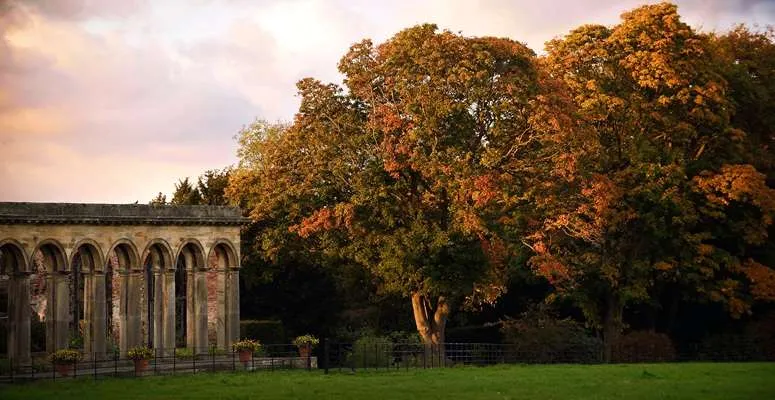
“Colour, contrast and confusion” could define autumn this year, say National Trust experts, as the effects of an exceptionally hot, dry summer create the prospect of vibrant colours alongside early leaf fall and unusual flowering, with the potential for striking differences across the country.
Luke Barley, senior national specialist in trees and woodland at the National Trust, says:
“The hot, sunny summer could still provide some of the ingredients for wonderful autumn colour, but the drought means the picture is likely to be more varied than usual. The coming weeks will be crucial. Autumn colour always depends on a combination of factors, but after such an extraordinary summer the usual signals are much harder to read. Climate change is making our seasons more unpredictable and we’re going to learn more this year about the impact of drought on autumn colour.”
Another challenge for trees could come later this autumn, with a potentially record-breaking El Niño increasing the chances of wetter and stormier UK weather. If mild conditions prompt trees to hold onto their leaves later than usual, they could be more vulnerable to damage during high winds.
Graham Alderton, head gardener at Winkworth Arboretum in Surrey, says:
“El Niño most strongly affects countries around the Pacific and in the tropics. But in the UK it’s still likely to increase rainfall and storms that could be with us by November. That’s optimistic news for autumn colour but still a concern considering what the trees have been through already this year.”
Gardeners across the Trust’s 260 gardens have reported plants responding in different ways to the year’s extremes, with some effectively pausing during the hottest, driest conditions and responding to wetter weather with fresh growth or even a second flush of flowers.
What’s happening across the National Trust’s sites?
At Stourhead in Wiltshire, long celebrated for its autumn displays, established trees have fared relatively well through the drought, helped by their proximity to the lake. The garden has greened up quickly following recent rain, cooler nights and dewy mornings and with plenty of bright sun in the forecast the outlook for autumn colour is promising.
At Bodnant in north Wales, some birches and maples have dropped their leaves early, but head gardener Ned Lomax is still anticipating a “spectacular” autumn.
At Cotehele in Cornwall, head gardener Dave Bouch believes autumn could be three to four weeks later than usual, while at Mount Stewart in County Down, senior gardener Andy Dainty believes the season is running around three to four weeks ahead with morning mist, dew and abundant hawthorn and sloe berries already signalling the change of season.
At Cotehele, the North American ash, usually one of the first trees to turn and sometimes showing colour as early as August, only began developing hints of its distinctive pink-purple autumn colour in the third week of September.
Bodnant’s head gardener Ned Lomax adds:
“Many plants went into stasis over summer. If mild and wet conditions persist now, they might take advantage of the late opportunity to put on a growth spurt and to flower. We could get a second flush from our herbaceous plants, out-of-season flowering and unusual combinations, like rhododendrons in flower and maples in autumn colour at the same time.”
At Dyrham Park in South Gloucestershire, Garden and Outdoors Manager Piers Horry has observed drought-stressed horse chestnuts dropping their conkers prematurely, with a less abundant crop and many noticeably smaller than usual.

by Holly Chapman | 22 Jul 25 | Nature & Biodiversity, News
Craftsmen White Cottage Greenhouses has reinstated National Trust’s Benthall Hall’s walled kitchen garden Victorian greenhouse in Shropshire.
The reimagined greenhouse is just over 12m long and 4.3m wide, featuring new cold frames sitting on its original base wall, dated back to the 1900s.
Open to the public, the greenhouse will see an increase in the range of plants grown in the garden and revive the plant biologist and an original gardener George Maw’s Victorian plant collection from the 1860s.
In the pipeline for three years, Nick Swankie has been the gardener in charge determined to make this happen for over two decades.
The new design and build replicates the original Benthall glasshouses, fitting with White Cottage’s proprietary Victorian specification.
Tori Tomlin, director at White Cottage says, “we want our greenhouses to feel like they’ve always been there”.
The National Trust also comments:
“The general aesthetic is consistent and recognisable to visitors of National Trust properties and their glasshouses but with the intricacies of Benthall Hall intertwined.”
Visitors can experience how George Maw was using his greenhouses over 150 years ago.

by Bethany Vann | 10 Jul 25 | Commercial Landscaping, Garden Design, Nature & Biodiversity, News, Sustainability
A new Garden for the Future has opened at Sheffield Park and Garden in East Sussex, marking the Grade-I listed landscapes first ‘major’ land-based regeneration in over 70 years.
The new garden, designed by landscape architect and garden designer, Joe Perkins, will be used to observe and track how new and old species respond together in their new environment.

One of the Garden for the Future’s flat dry exotic beds. Key plants include Maytenus boaria (foliage just visible, far left), Chamaerops humilis (centre), Aloe striatula (centre-right) and Tulbaghia violacea. © National Trust Images / James Dobson
“It’s a kick starter for how we can adapt historical gardens to be able to cope with the challenges we’re going to face in the future climatically”, says Perkins.
With the intention to influence future design adaptations in the surrounding 120-acre garden, which has resided in the National Trust’s care since 1954.
At an exclusive tour of the new climate mitigation garden, Perkins notes that the design, while respectful of the site’s heritage, is progressive in nature, with a strong theme of sustainability and climate resilience.
Head gardener Jodie Hilton says the garden, which is full permeable, “provides an opportunity to engage visitors with a different style of planting, adapted to a different climate and planting environment, than they might see in the rest of the landscape at Sheffield Park, while taking inspiration from the garden surrounding it.”
Adding that she hopes visitors will “take a moment to pause and reflect in nature, in a corner of the landscape that was often overlooked until now.”
The garden is designed into distinct zones – linked by meandering paths made from reclaimed wood – adorned with distinguishing planting schemes.
“A core principle of the planting scheme is resilience”, says Perkins.
“Early on, we identified the need for plants which can tolerate both extended periods of drought, and potentially heat, as well as cold winter temperatures. We’ve created different planting habitats which will allow the team to explore plants from around the world that could be better adapted to future conditions.”
The Trust has consulted with internal and external sources, from specialists, staff, volunteers, visitors, supporters, and community partners to develop the garden, which broke ground back in January 2024.
The Landscape build for Garden for the Future was delivered by The Landscaping Consultants, with plants supplied by Kelways nursery in Somerset.

by Holly Chapman | 29 May 25 | Garden Design, News
The National Trust’s first-ever horticultural scholarship now offers a position in Bodnant Garden in North Wales, as well as the initial Sissington Castle Garden in Kent.
The scholarship programme develops gardeners and head gardeners of the future, giving hands-on experience, made possible by funding from donations and legacies.
Successful candidates will work under the tuition of Sissington’s head gardener Troy Scott-Smith or Bondant’s head gardener Ned Lomax.
Scott-Smith says he is ‘delighted’ at the announcement of the horticultural scholarship expansion, commenting:
“It was always my ambition that we could enable more people to grow their careers in horticulture within the National Trust. Bodnant is without doubt a world-class garden.”
Situated in the Conwy Valley, Bodnant Garden holds a vast collection of trees and shrubs amongst its 80 acres of land.
Lomax also comments:
“The Scholarship Programme at Bodnant will be a fantastic opportunity for a keen, aspiring Head Gardener to see firsthand and learn from the accumulated knowledge of generations of Bodnant gardeners.”
Applications opened on 25 May, and will run until 15 June, available here.
There is also an opportunity for a drop-in open day at Sissinghurst Castle Garden on Thursday 5 June 2 – 5pm.

by Aidan Williams | 02 Oct 24 | Grounds Maintenance, News
The National Trust has appointed Sheila Das as the charity’s head of gardens and parks, to replace Andy Jasper who left the role in September.
Das will begin her new role in early January of next year, while Jasper left the role last month to take up a new role as group chief executive officer at the Eden Project.
Having changed career in the early 2000s, Das studied at Kew Gardens, worked for English Heritage, and has been a garden manager at RHS Garden Wisley with responsibility for education, edibles, seed and wellbeing since 2015.
“I am so excited to be joining the National Trust as head of gardens and parks. Horticulture is in an exciting phase at present that offers so many opportunities to improve our relationship with our wider environment as well as enhancing quality of life for every one of us,” says Das.
“I look forward to working with the team of talented gardeners in such a huge range of gardens and parks and sharing the joy of gardening through these special places.”
Her time at Wisley has included major investment projects including the development of the Hilltop landscape which features gardens for wildlife, wellbeing and food.
Sheila is passionate about growing food in sustainable ways to support planetary and human health and interpreting the gardener’s role as a custodian of place from past to present to future.
She has also been instrumental in establishing Wisley’s Planet-Friendly Gardening Campaign to increase biodiversity and sharing knowledge around sustainability and resilience in horticulture and is well known for being committed to soil health.
Tarnya Cooper, Conservation & Curation Director at the National Trust, says: “We are delighted Sheila will be joining the National Trust as Head of Gardens and Parks, the Trust’s most senior horticultural role. Her background, expertise and passion will be invaluable as we put audiences at the centre of our work, build increased sustainability and climate resilience across Trust gardens, and continue to invest in our skilled horticulturists.”

by Aidan Williams | 06 Sep 24 | Grounds Maintenance, News
After 10 years of planning, groundworks have begun on a flower garden at Berrington Hall, taking inspiration from a 19th-century historic map.
The landscapes of the estate were designed by ‘Capability’ Brown and his son in law, Henry Holland, to harmonise with the mansion house and Triumphal Arch, but over time some of the garden’s important heritage features have become obscured or hidden.
Now, following extensive research, and using funding from National Trust supporters and Blue Diamond Garden Centres, work has started to recall Berrington’s horticultural heyday.
National Trust landscape architect Ed Higgins and senior gardener David Thresher aim to create a sense of theatre with scent, colour, structure and depth, evoking the feeling of an 18th and 19th-century garden experience.
Three new wisteria ‘umbrellas’ will echo the Georgian love of spectacle and the historic wisteria walk will be restored and extended to run the southern length of the walled garden, while a new accessible path network will ensure everyone can enjoy exploring.
As work progresses, the path leading to the hall will be realigned so that visitors can move around the grounds as the Georgians did, enjoying views of the parkland as its designers intended.
An evergreen hedge will be planted to hide the new flower garden from arriving visitors, so that they discover it as a colourful surprise at the end of their circuit.
Ana Vaughan, Project Manager for the Flower Garden project says: “To be in a position where we are re-creating heritage and increasing plant species with the new flower garden is an amazing opportunity for visitors to see an almost completely lawned area become a beautiful flower filled site, teeming with pollinators.
“We cannot wait for people to be able to visit the garden together and hear what they think as the garden matures.
“In modern times, Berrington hasn’t been known as a garden with strong seasonal horticultural appeal but this transformation is set to make it an absolute must-see for garden lovers.”
The money from Blue Diamond will be going to a range of National Trust properties as it enters the third year of a funding commitment.

by Aidan Williams | 20 Aug 24 | News
The National Trust are trialling the new Navi Lens technology at Saltram in Plymouth, a digital navigation aid designed for partially sighted visitors.
The test will run until 25 October and The technology is already in use on transport systems across Spain and parts of the USA and UK.
NaviLens is a free app which can help give greater independence and freedom for users to navigate their way around places with less or even no aid.
The trial is funded by the National Lottery Heritage Fund and designed for people who are partially sighted, aiming to improve access to heritage and nature at Saltram.
Natalie Haly, project manager for the National Trust at Saltram says: “This trial is incredibly exciting as it marks a first for the National Trust, and we are thrilled that it’s happening right here in Plymouth.
“It allows us to explore how this innovative technology can enhance our visitors’ access to heritage and nature.
“This initiative is a significant step in our ongoing journey to ensure everyone feels truly welcome at Saltram.”
The app uses QR-style codes that users can detect on their phones and when users point their phones in the general direction the NaviLens app picks up the codes in the vicinity.
Each code has information loaded onto it, which is spoken out loud on the user’s phone, offering directions and warnings, and in this context, providing navigational and interpretative content relevant to Saltram.
A spokesperson for NaviLens says: “NaviLens is thrilled to work with the National Trust at Saltram to enhance the visitor experience for those who are blind or partially sighted. By integrating NaviLens’ innovative technology in this pilot, we are helping to make Saltram’s rich history, architecture, and grounds accessible to everyone.”
“NaviLens codes can be scanned from much further away than regular codes and can be detected from wide angles and while on the move. Additionally, the information is automatically translated into 37 different languages, benefiting global visitors as well.”
During the trial of the NaviLens technology, the RNIB user group expressed their enthusiasm and positive feedback. Both participants felt more confident and appreciated the reduced dependency on others for information, highlighting the potential of NaviLens to enhance their independence.

by Bethany Vann | 10 Oct 23 | Nature & Biodiversity, News, Sustainability
The National Trust is set to plant a new seven-hectare woodland on land at Lower Betton on the wider Attingham Estate, in a project the Trust cites as ‘the first steps towards delivering major improvements for nature by 2030’.
The new woodland creation, supported by funding from the Environment Agency will add to the almost 1,000 ha Estate, which already includes woodland, parkland, tenanted farms and farmland.
The project aims to ‘harness’ the power of trees to lock in carbon, create more space for wildlife and improve access to nature, while contributing to the Trust’s net zero and tree planting targets.
Naturalistic techniques such as deer and rabbit fencing will be used during the planting and aftercare stages, in place of individual tree guards.
A wildflower and grass meadow will be established beneath the trees to provide ground cover and protect from the impacts of drought.
The National Trust will use the data from this pilot woodland to inform future woodland projects around the country.

by Bethany Vann | 23 Jun 23 | News
National Trust’s Sissinghurst Castle, situated in Kent has opened applications for it’s 18-month scholarship programme for the second year.
The Sissinghurst Scholarship is aimed at cultivating capable gardeners and facilitating future career paths, while addressing the horticulture skill shortage.
The successful scholar will spend 18-months gaining practical hands-on experience in horticulture, under the tuition of Head Gardener Troy Scott Smith and his team.
Providing a deeper understanding of a myriad of topics including, soil management, rose pruning, garden design, hedge care and plant health, with the opportunity to focus on particular areas of interest.
Also covering non-traditional horticultural course topics such as project management and media relations.
Scholars will have the opportunity to work at other National Trust gardens, such as Hidcote, Bodnant and Mount Stewart, and other renowned gardens in the United States and Europe, including Chanticleer, Filoli and Giverny.

Sissinghurst Scholar Claire Margetts (C) National Trust Eira Mcintoch
Claire Margetts is last year’s successful candidate, selected from 59 candidates and is at present half-way through her scholarship.wart, and other renowned gardens in the United States and Europe, including Chanticleer, Filoli and Giverny.
She says: “The Scholarship’s hands-on experience in the art and craft of gardening at both Sissinghurst and our partner gardeners is superb. I’ve already chalked up invaluable experience at Bodnant, Beth Chatto’s Plants & Gardens, Giverny and Great Dixter.
“I recommend the inquisitive, ambitious and the driven gardener to apply and grasp the opportunity with both hands. It is a once in a lifetime career progression.”
Informal open days will be held at Sissinghurst Castle Garden on 24th and 26th June (1- 5 pm) and applications close 2nd July. First and second round interviews will be held on 10th July and 26th July respectively, with the successful candidate starting in early September.
For more information on the scholarship and how to apply, visit here.

by Nina Mason | 12 Apr 23 | Commercial Landscaping, Nature & Biodiversity, News, Topics
A project to improve the visitor experience at Fell Foot Park in the Lake District has been granted planning permission.
Chester based landscape architecture practice Land Studio has been working with the National Trust – which was given the property in 1948 – to design a series of more open and accessible paths through the Victorian park and to the visitor hub at the Grade II-listed boathouses on the shores of the lake.
The design plans have been approved by the Lake District National Park Authority and construction work is expected to start to take place on site later this year.
The lakeshore park sits at the southern tip of Lake Windermere. It was the first country park in the Lake District to be designated as such and is one of the few lakeside venues accessible to the public south of Bowness.
Land Studio founder Simon Richards says: “We’re delighted that planning permission has been approved for our project at Fell Foot Park, which is a much-loved tourist attraction in the Lake District.
“We specialise in designing within historic places and in ways that connect people to nature and are working with the National Trust on a number of projects across the North West.”

