by Rachael Forsyth | 20 Aug 26 | Commercial Landscaping, Domestic Landscaping, News, Sustainability
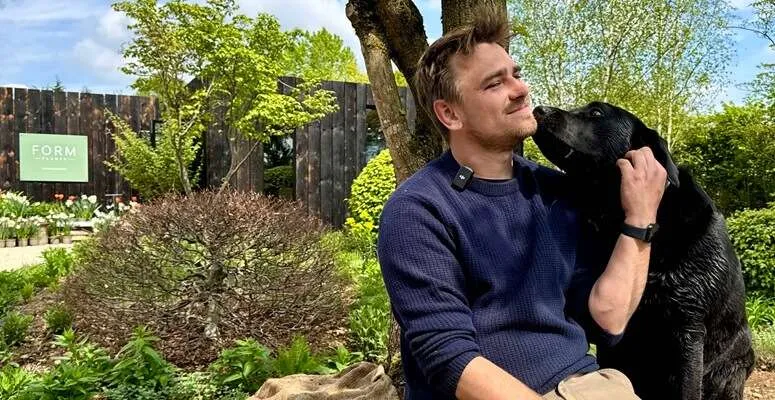
Led by managing director Jamie Butterworth, Form Plants is formalising its strict peat-free position for the first time, which will be coming into force for all new customers from 1 September 2026.
Butterworth has never sown or grown his plants in peat at Form Plants in Row Town, but as with most nurseries there hasn’t been a formalised policy, until now.
The new policy seeks to manage the external supply chain too. Adopting the Royal Horticultural Society’s definition of “No New Peat,” the nursery will require written confirmation from suppliers that incoming plants are either entirely peat-free or that any legacy peat present entered the production system on or before 31 December 2025.
Butterworth says:
”We do not use peat at Form Plants, and never have. The only peat that has ever reached this nursery came inside other plants potted elsewhere, years ago, before they were ever bought in by us, and we now buy nothing that contains it. This is not a policy we are starting from nothing. It is a line drawn under work that is largely done.
“There are a lot of designers and landscapers who want peat-free plants and are finding it very hard to get them, so I’m positive about the future.”
For Butterworth, someone who has avoided growing in peat, his recent personal move to Cumbria has underlined the importance of protecting the peatland.
While this policy targets the commercial supply chain Butterworth is keen to translate this message to home gardeners.

by Holly Chapman | 29 Apr 26 | Nature & Biodiversity, News, Sustainability
A new project has launched to demonstrate the use of wireless sensor technology for irrigation and nutrient management in peat-free ornamental crop production.
Funded by Accelerating Development of Practices and Technologies (ADOPT), the multi-year Defra Farming Innovation Programme is in partnership with Innovate UK.
The one-year project brings together the Horticultural Trades Association (HTA), Hillier Nurseries, The Farplants Group – Fleurie Nursery, the Royal Horticultural Society (RHS) and Van Walt.
Intended to enable more precise irrigation and feeding strategies in peat-free growing systems, the project will evaluate how wireless sensors can be used to monitor substrate moisture and nutrient status.
Wayne Brough, technical horticulture manager at the HTA comments:
“By monitoring growing media conditions in real time, growers can make better informed irrigation and nutrition decisions, improving product consistency, while reducing plant wastage and optimising resource use.
“The aim is to build confidence in adopting these tools across the sector.”
Hillier Nurseries will host a launch event on 30 April, while Fleurie Nursery will host another on 1 May.
Both two-hour sessions are free to attend and will outline the project’s objectives, the science underpinning the technology and how it is being applied.

by Holly Chapman | 03 Nov 25 | News, Supplier News, Sustainability
Surrey-based nursery Form Plants has announced that it has taken over wholesale plant nursery Jacksons of Chobham.
Established in 1936, the Jacksons site can grow 100,000 plants at any one time.
Form Plants has retained existing Jackson staff since taking over all operations on 1 November 2025.
Jamie Butterworth, Form Plants managing director says “we are incredibly excited to be doubling Form’s footprint, and to be able to supply our customers with homegrown perennials as part of our offering”.
With two sites now six miles apart, Form Plats’ Row Town showroom and specimen nursery will continue showcasing trees and topiary, whilst the Chobham site will specialise in perennials grown sustainability and peat-free.
Open for business from Tuesday 4 November, Butterworth and the team look forward to what’s to come in 2026.

by Holly Chapman | 11 Aug 25 | News
The Royal Horticultural Society (RHS) has released an update on its RHS Shows Peat Free Policy which provides nursery exhibitors transitional guidelines and support.
Whilst the RHS has said it won’t be changing its Peat Free Policy, it has reviewed the feedback and intends to offer more support and detail on transitional guidelines.
A new working group of exhibitors and RHS staff will help support the transitional arrangements through to 31 December 2028 and as a forum will review progress and discuss challenges and solutions through this period.
Helena Pettit, RHS director of shows, says the exhibitors have helped them by completing a survey to show where they were in peat-free growing. She adds:
“A number of important points were also raised in the survey regarding aspects of the guidance, which is why we are now providing additional clarity and further support for those transitioning and facing some specific challenges.”
The survey found that over 70% of exhibitors attending RHS Shows are already compliant with the transitional guidance, with another 15% very close.
Without government legislation on a Peat ban and official guidance, RHS announced earlier this year that concessions at its flower shows to support growers in the transition would be allowed.
This update follows a signed petition asking the RHS to review the policy from over 100 signatures.
In 2026, the RHS President’s Award for nurseries in the Great Pavilion at RHS Chelsea will only be open to growers who have transitioned to No New Peat Plants.

by Holly Chapman | 26 Jun 25 | News, Supplier News
G-Scapes of Lichfield Ltd and Fullbrook Nursery has announced it has secured the Boultons Nurseries site in Staffordshire to enable further growth and sustainable horticulture commitments.
Boultons Nurseries has been recognised for its expertise in nursery stock and shift to peat-free production since 2005.
Now under the G-Scapes Group umbrella, it intends to continue that legacy.
Daniel Gee, managing director of the G-Scapes Group says this step is a “continuation of shared values,” enabling them to “strengthen our ability to supply both trade and retail markets across the UK”.
The Boultons site will operate through the Fullbrook Nursery team, with production centred around key nursery lines for trade customers.
Investment is underway, says G-Scapes, through site branding and technology, all while preserving the expert knowledge and plant quality that Boultons have built up.

by Holly Chapman | 31 Mar 25 | Nature & Biodiversity, News
Amidst a legislation ‘black hole’, the Royal Horticultural Society (RHS) is allowing a concession on Peat Starter Plants for the next three years.
The RHS estimates that next year (2026), 40% of nurseries exhibiting in the Floral Marquee at RHS Shows will be allowed to sell Peat Starter Plants.
This refers to plants that began life in a small plug containing peat but have gone on to be grown peat free.
The charity says this decision is due to a “complex” horticultural supply chain where 60% of young plants are imported overseas, all of which are “vital” to Britain’s plant diversity.
RHS director general, Clare Matterson spoke at the RHS Spring conference on 31 March, commenting on charities commitment to becoming 100% peat free by 2026.
“We continue to ask the government to put more money into that work, and that is a great achievement, and it is showing a lot of promise. We’re almost there.”
She says it would be “damaging” to not support the nurseries currently still investing in their transitions to being peat free.
The RHS have invested £2.5m into peat free research, promising all five gardens will have 100% no New Peat Plants from June 2025.
While show gardens, judged floral displays, and trade stands at RHS Show will include No New Peat Plants (either 100% peat free plants or plants grown in an element of peat before Dec 2025).
The concession will be in place until 2028.

by Aidan Williams | 20 Sep 24 | Nature & Biodiversity, News
The HTA and RHS came together to provide a peat-free workshop featuring industry experts at the RHS Garden Hyde Hall on Wednesday.
It provided a forum for growers to share their knowledge and brought together experts to speak on various aspects of peat-free growing, along with insight from the RHS Transition to Peat-Free fellowship.
Topics covered research and development of peat-free propagation materials, nutrition for peat-free propagation, and insights from growers and researchers.
Speakers included Stephen Godfrey from Jiffy Group, Harry Downes of Wyevale Nurseries, Dr Raghavendra Prasad of the RHS, and Steve Chapman of ICL.
Wayne Brough, technical horticulture manager, HTA says: “Many of our members are conducting peat-free trials, much like WD Smith and Son, and the sharing of this information and data with others in the industry is helping generate a collective knowledge base.
“This avoids any unnecessary repetition of work, minimising the cycle of making the same mistakes and underpinning an informed policy position, which is crucial to a successful transition.
“Alongside the RHS, we will continue to provide workshops for our members, advocate for sustainable practices, and support them through their peat-free journeys, ensuring a sustainable future for British environmental horticulture.”
During the workshop, growers, growing media manufacturers, and industry peers discussed the latest insights into these areas and how they can be factored in to optimise peat-free propagation.
“The RHS were pleased to have partnered with the HTA for our latest grower’s workshop, discussing the optimisation of plant propagation and establishment in peat-free growing media,” says professor Alistair Griffiths, RHS director of science and collections.
“As part of our peat-free campaign, the RHS supports the industry’s transition to peat-free horticulture. This move will help conserve our precious peatlands, which will positively impact nature and the climate. We want to thank all the speakers for sharing their knowledge and helping create a successful event.”
After lunch, the attendees also then had a chance to join a guided tour of WD Smith and Son Nurseries, near Battlesbridge, with Mike Smith.
The RHS peat-free team will next be at the Southwest Growers Show on 2 October, and it recently launched a PhD to help advance peat-free efforts.

by Aidan Williams | 10 Sep 24 | News, Sustainability
The Peat-free Partnership has written an open letter to Prime Minister Keir Starmer, with over 100 signatories asking the government to end sales of peat.
The letter argues that despite strides in reducing the usage of peat, in 2022 there was enough peat sold to fill 380 Olympic sized swimming pools and has been signed by the likes of Chris Packham, the Royal Horticultural Society and the National Trust.
The letter says: “We are proof that peat is not required for British horticulture to flourish.
“Between us we grow, buy and sell millions of exceptional quality peat-free plants every single year.
“With a fair, well managed and supported transition, there is a bright, successful future ahead for a fully peat-free, proudly sustainable UK horticultural industry.”
It is the first time that environmental non-governmental organizations, key people from the horticultural industry have come together at this level to call for an end to peat sales.
The previous UK government pledged to end the peat sale but did not do so before the election earlier this year.
Peat-free Partnership is a a broad coalition of horticultural businesses and environmental NGOs, funded by Esmée Fairbairn Foundation and hosted by the wild plant conservation charity Plantlife.
The letter ends on a strong plea, as it says: “To bring an end to the business uncertainty which has plagued the UK’s horticultural industry for well over a decade now – legislation is needed.
“This is a popular and straightforward measure left as unfinished business by the previous government.
“We call on you to make this a priority for your government’s programme and legislate without delay to end the sale of peat.”
In response to the letter, the respective chairmen of the Horticultural Trades Association (HTA), James Barnes, and Garden Centre Association (GCA), Will Blake, issued a joint statement urging a more cautious approach.
The statement says: “We understand the concerns raised in the recent open letter about using peat in horticulture. However, the UK Environmental Horticulture sector is already progressing in moving away from peat without the need for new regulations.
“Transitioning away from peat is complex and not the same for everyone.
“No new areas of peatland are being used for extraction, and we believe that more progress can be made by working together, being innovative, and choosing sustainable practices voluntarily rather than through new laws.
“Imposing legislative mandates without properly considering their impact could inadvertently disrupt the progress already made, particularly for smaller businesses still adapting to peat-free alternatives.”
The debate surrounding peat is never quiet and only last week the RHS launched a new PhD, focused on advancing peat-free plug plant production systems.

by Aidan Williams | 05 Sep 24 | News, Sustainability
The Royal Horticultural Society (RHS) is launching a new PhD focused on advancing peat-free plug plant production systems.
The new PhD is a collaboration between the RHS, the Centre for Agroecology Water and Resilience, Coventry University, plug plant growers and growing media manufacturers.
It comes after a survey of growers and garden centres in 2023, which cited limited availability of peat-free plant plugs as a barrier.
It is hoped the PhD can help provide recommendations to help growers to optimise their practices.
“Our new PhD, focused on advancing peat-free production systems, is not only timely but essential, as it addresses a critical challenge faced by growers,” says Dr Mark Gush, RHS head of environmental horticulture.
“With a large majority of UK plug plant producers already anticipating the shift, this research will address a recognized knowledge gap and help unlock the complete transition to peat-free horticulture, ensuring that our industry can continue to thrive while protecting our precious peatlands for current and future generations.”
In addition to this, the RHS has found that 90% of respondents expect to be peat-free in the next three to five years.
It surveyed half of the plug plant producers in the UK among the biggest drivers for going peat-free were a desire to make the change before any horticultural trade ban, as well as customer demand.
Respondents referenced an increased demand for peat-free plugs but cost and concerns around performance of peat-free growing were the main issues.

by Bethany Vann | 16 Oct 23 | Commercial Landscaping, Landscape Architecture, News
Greenwood Plants is expected to exceed its transition to peat-free end of year target.
Trudy Harrison MP, parliamentary under secretary of state for Defra and Minister for natural environment and land use, visited Greenwood Plants to discuss its transition to peat-free growing.
Greenwood started its transition to peat-free in 2022, and currently grows 99% of its plants across all six of its nurseries using peat-free compost.
Trials are underway in the nurseries’ propagation area to transition the remaining 1% of the young plants into peat-free growing media.
Last week the nursery was named ‘Peat Free Grower of the year’ at the Horticultural Trade Association (HTA) awards 2023, and is expected to announce its 100% transition to peat-free growing in the coming weeks, ahead of its 2023 target.
Following its complete transition to peat-free, Greenwood expressed intention to focus on its supply chain, with several suppliers already committing to fulfilling their orders with plants grown in 100% peat-free media.

by Bethany Vann | 16 Oct 23 | Domestic Landscaping, Nature & Biodiversity, News
The RHS (Royal Horticultural Society) releases its list of 100% peat-free nurseries and growers, after surveying hundreds of nurseries and growers across the UK.
The survey provides a baseline from which to measure the horticultural industry’s progress towards being peat-free, and is designed to increase access to peat-free plants.
Almost a third of 427 respondents are growing peat-free across all plant ranges,(with the exception of young or plug plants), and a further 17% now verified as being 100% peat free across all operations.
Close to 100 growers, including several of the largest businesses in the horticulture industry were found to be at least 80% peat-free.
“Our survey provides a snapshot of the industry at this point in time and highlights the gathering momentum and desire for change within much of the sector, with many only using peat for more difficult areas to transition to, such as very young plug plants, which are often brought in from Europe, and ericaceous, or acid-loving, plants”, says Alistair Griffiths, director of science at the RHS.
The survey was carried out as part of a 2022 research fellowship co-funded by the RHS to accelerate the transition to peat-free with Defra.
The full list of peat-free nurseries and growers can be found here.

by Bethany Vann | 25 Aug 23 | Commercial Landscaping, Nature & Biodiversity, News, Sustainability, Topics
The HTA warns of the “significant environmental and economic impacts” across multiple industries, from bringing the peat ban forward by four years.
New data from independent economists at Oxford Economics, commissioned and released by the Horticultural Trades Association (HTA) shows that the fast-tracked peat ban could lead to a loss of over £500m in Gross Value Added (GVA) and over £100m in decline tax revenues.
More than half (68%) of garden centres are expected to cut staff in 2027 as a result of the expected 100 million plant and tree shortage immediately after the ban takes effect as the accelerated timeframe will “more than halve the number of growing seasons to complete extensive trialling to changes in crop production techniques,” says the HTA.
The new data shows the carbon saving benefits of bringing the peat removal forward is around 278,000t of CO2e in total, which is approximately the amount of carbon dioxide absorbed by half a million trees or 11 million small shrubs over its lifetimes.
James Barnes, chairman of the HTA, says: “It is clear that the environmental loss far outweighs the carbon savings benefit of advancing the peat removal timeline to 2026.
“The study underscores the need for a balanced and measured approach to ensure optimal environmental outcomes without penalising an industry already committed to transitioning from peat.”
The shortened timeframe, from 2030 to 2026, enacted by Defra (Department for Environment, Food and Rural Affairs), could also potentially result in the loss of 12,000 jobs across industries.
Over 30% (33) of commercial growers supplying plants or trees to amenities such as parks, forests and public green spaces, report they will likely be obligated to withdraw from or default on contracts due to the 2026 ban.
Barnes adds: “The complexities of finding suitable peat-free alternatives for different plants and crops, with varying irrigation methods and nutrient strategies required, is not to be underestimated. Quality and consistency also remain barriers, further exacerbated by incentives for energy companies for biomass energy generation, which puts pressure on supplies of wood-based materials available for growing media.”
The economic impact of the industry under ban conditions was compared to the original baseline economic impact.
Oxford Economics’ assessment is limited to the economic impact on the UK economy in the year immediately following a 2026 ban and does not quantify any ongoing economic impacts relative to the baseline for subsequent years.

by Bethany Vann | 13 Jul 23 | Nature & Biodiversity, News, Sustainability, Topics
The Royal Horticultural Society (RHS) has successfully grown two commercially favoured varieties of carnivorous pitcher plants using five different peat-free growing media. All final specimens were judged to be of superior quality to that of the control plants grown in 100% peat.
Carnivorous plants were considered to be ‘one of the most difficult’ plant groups to transition to peat-free with several variants can be found growing naturally in peatland habitats.
The pitcher plants used were a Sarracenia leucophylla hybrid and subspecies of Sarracenia purpurea1, known for ensnaring their animal prey through ornate pipes (or pitchers), providing them the nutrients not naturally found in the nutrient-poor soils of their typical habitat.

Photo credit to the RHS.
Sarracenia plants established from peat-free propagules were grown under identical conditions in six different growing media combinations, including mixes of sustainably-grown sphagnum moss, pine bark and acidified biochar, commercially formulated peat-free media produced by Floralive and a control group grown in peat.
The plants grown in blends of sphagnum and other organic materials were all judged to be of superior quality to those grown in peat, with the two cultivars performing best with different peat-free medias.
Professor Alistair Griffiths, RHS director of science, says: “This research is a positive step forwards in delivering the RHS Sustainability Climate Positive Target and in the RHS transitioning to peat free by the end of 2025.
“Moving away from peat in horticulture has a key role in meeting net zero through protecting and restoring peatlands, turning them from carbon sources to carbon sinks and preventing further loss of these vital habitats. Our research comes at a critical point in the UK’s response to the climate crisis, when it is more important than ever that all possible reductions in emissions are made.”
The RHS banned the sale of peat containing media in 2018 and are at present 98% peat-free with projections for 100% by the end of 2025, following the establishment of a £1m co-funded five-year peat-free research project.
Following the success of the Sarracenia experiment, the RHS will now be actioning plans to grow other commercially popular carnivorous plants without peats, including Venus flytraps (Dionaea muscipula), as well as testing a wider range of ingredient mixes and growing protocols to aid the UK horticulture industry in transitioning profitably away from peat.
A selection of the peat-free Sarracenia will be planted out at RHS Garden Wisley, with others set to be made available for purchase.
Discover more peat related news here:
Prioritising going peat-free
HTA urges Defra to reconsider peat timeline due to plant shortage fears
The HTA calls on the Scottish Government to deliver a sustainable and realistic transition to peat-free

by Bethany Vann | 16 May 23 | Nature & Biodiversity, News, Sustainability, Topics
The Horticultural Trades Association (HTA) has set out a detailed response to the Scottish Government Consultation on Ending the Sale of Peat, representing the views from the breadth of its 1,400-strong membership.
In a consultation that ran from February to May 12th, the Scottish Government put forward a multi-stage proposal to ban the sale of peat, beginning with the retail horticulture sector, which accounts for around two thirds of all peat used in UK horticulture.
The Scottish consultation follows the 2022 UK government consultation.
Scotland’s peatlands play a critical role in responding to the twin crises of the global climate emergency and loss of biodiversity. They hold around 1.8 billion tonnes of carbon; this is equivalent to around 145 years’ worth of Scotland’s total net carbon emissions.
Peatlands support important ecosystems and biodiversity, improve water quality, and reduce flood risk. However, when degraded or in poor condition these benefits are mitigated, and peatlands become a net source of carbon emissions.
It is a critical issue for an industry that supports nearly 700,000 jobs, has a national GDP of almost £28bn, mitigates climate change and benefits the health and well-being of 30 million gardeners in the UK.
In Scotland this equates to over 64,000 jobs and a contribution of £2.8bn towards GDP, with the potential to see significant increase by 2030 if the industry and key stakeholders work collaboratively.
The HTA responded to the consultation calling for the Scottish Government to deliver a sustainable and realistic transition to peat-free, respecting that the use of peat in horticulture is a complex and vital issue, that has significant consequences and risks for the present and future of the industry.
The HTA response in summary:
- Work with horticulture experts to deliver a sustainable and achievable peat ban roadmap that delivers on sector growth
- Any regulation or policy on ending the sale of peat must have a comprehensive and open economic impact assessment looking at the environmental and economic consequences, informed by industry and sector expertise
- Industry supports a transition to peat-free
- Alternatives to peat need to deliver on the quality and variety of plants and products that can be produced that are so valued by gardeners, green spaces and Scottish biodiversity
- Time is needed for transition – seasonality is key
- Too early an end-date for professional uses hugely risks UK plant and tree production
- Each business is important and unique in its journey to peat-free, and we must sustain the whole sector so they can grow for Scotland
James Barnes, HTA chairman comments:
“We welcome having the opportunity to feed our expert view into the Scottish Government consultation on ending the sale of peat in Scotland. This is a critical issue for HTA members. It has taken hard work and investment, and many businesses are still on the journey. The sector’s progress to date in reducing peat use must be celebrated.
The arbitrary bringing forward of the date for peat removal from the professional sector from 2030 to 2026 by DEFRA remains an existential threat to the size and scale of the Scottish Industry. The industry is on target to meet this deadline with certain specialist exemptions. However, reducing the number of growing seasons from 7 to 3 will seriously curtail the ability to trial new mixes effectively, leading to supply shortages. Moreover, banning all imports containing any peat will substantially curtail choice for consumers, leading to both inflation and potential rationing.
We urge the Scottish Government to refrain from following this example. To understand the required timeframes and support horticulture businesses with R&D funding to fully transition from using peat. We want to engage fully with the Scottish Government to ensure we can deliver growth for horticulture and increase gardening and greenspaces with the mass benefits it brings. Our commitment and ambition for the sector in Scotland have been set out in our recent Scottish Environmental Horticulture Growth Strategy, which we are eager can be delivered.”

by The Pro Landscaper Team | 05 Apr 23 | Long Reads, Nature & Biodiversity, Topics, Website Exclusive
Professional horticulture might be exempt for now, but a ban on using peat is looking ever more likely by 2030. The government announced last August that sales of peat to amateur gardeners in England will be banned from 2024, and it pledged to help the professional horticulture sector speed up its transition to peat-free alternatives, recognising that it faces “additional technical barriers that will take longer to overcome.”
There are growers, though, which are already taking the leap. Take Greenwood Plants, which says it is on track to be fully peat free by the end of this year. One in four plants are already potted in peat-free compost, which managing director Melanie Asker says the nursery plans to ramp up as it enters the growing season. “As growers of around six million plants a year, this is a huge undertaking, but we are fully embracing the peat-free challenge.”
As is Kent-based How Green Nursery, which managing director Simon Sutcliffe says is “well on [its] way to achieving peat-free status.” Whilst the majority of its home-grown and bought-in plants continue to be grown in peat, it is currently ‘growing on’ in peat-free alternatives. It has been trialling these for the last 15 years before settling on its “current recipe” 18 months ago.
“We are now really happy with the quality of the plants and losses are minimal,” says Sutcliffe. “Importantly, water consumption has not increased from the days of using peat. Our growing media contains mainly bark fibre which has the ability to retain water during the summer months.
“A lot of peat-free compost is based around coir fibre that isn’t great at holding water – water being a valuable and sometimes scarce commodity with extremes of weather. Coir is also shipped halfway around the world, so the carbon footprint is not good.”
And carbon is, after all, one of the biggest reasons the industry is looking to address its use of peat. Peatlands are the UK’s largest carbon store and extraction releases carbon dioxide into the atmosphere, contributing to climate change. Not only that but it also disturbs habitats in the wider landscape and reduces the peatland’s ability to mitigate flooding. As such, the government’s goal is to restore 35,000ha of peatlands by 2025, with only 13% in a near-natural state at the moment.
Following government proposals back in 2011 to address the degradation of peat bogs, Nicholsons – a landscape company in Oxfordshire which has its own 22-acre nursery – started incrementally trialling peat-free alternatives on all its crops. Last year, it accomplished growing all its production potting in peat-free compost.
One of the challenges in switching has been around managing water and nutrition. There have also been some “rooting ‘issues’” and a “difference in crops”, which plants director Merlin Brooke-Little says “have not always been to the crop’s detriment but have been different to the peat standard.”
By slowly switching over to peat and monitoring the process, Nicholsons has developed a better understanding of how different crops require various levels of water and nutrition, but Brooke-Little says that managing the compost and the feed in extremely hot weather is still a “learning process”. “Finding the sweet spot of enough water at regular intervals over leeching nutrient does require constant attention.
“The compost mix will have been adjusted several times over the years to account for wetting agent, base fertiliser and amount of CRF (controlled release fertiliser) per m3. We have had concerns over the heating of the compost when held in bulk bags and when tipped loose – sometimes the heat would be such that the CRF would have been activated. Regular turning and cooling of the compost have helped.”
To tackle rooting being poor and more noticeable in the top five to 10cm of its pots, where the crop tends to dry out the most, Nicholsons now puts bark mulch on its crops to help maintain a better equilibrium in that layer.
It’s a series of trial and error for these nurseries, and Bernhards Nurseries is arguably ahead of the curve. The nursery, situated in Rugby, switched to producing all its plants peat free 10 years ago, having felt the need to change from its customer base. It swapped peat for Melcourt Silvamax, which managing director John Marsden had years of experience with and felt would be best suited for the wide range of plants and trees grown at Bernhards.
“Working with Melcourt, we selected the right mix, CRF content and any additives to suit, and got to work,” explains Marsden. “The first few years we had some small issues, but it was simply a learning curve. [Scottish minister] Neil Gray was a great support, really helping us to tweak our production to suit. The overall technical backup was a great help, and over the past decade the professional Silvamix media has continued to improve, to the excellent blend we have today.”
Bernhards’ water usage has reduced, perhaps surprisingly, as a result. It waters more frequently but for shorter periods, reducing its water usage by on average 7% each year. “The media feels ‘more open’ due to having a higher ‘air-filled porosity’ (AFP) than peat,” says Marsden. “We have also noticed that we get fewer losses from water logging, reducing wastage due to this. In some cases where we know we will be potting hungrier plants that may be in the pot longer – such as some evergreen shrubs – we may ask for a slightly higher amount of CRF to be added to the blend.”
The biggest problem for nurseries at the moment, though, is finding suitable peat-free compost for seedlings, explains Sutcliffe. “We and other growers are finding this the ultimate challenge as heavy losses are being incurred at the moment. Once we nail this issue, our status will be totally peat-free.”
Then there’s also the “hesitance of other growers both here and especially abroad to make the switch,” he adds. “We outsource plants for our clients, and all but one supplier is still growing in peat.”
For Asker, the challenge Greenwood Plants expects to face as a commercial grower is getting a reliable and consistent supply of peat-free growing media that is economically viable. “Our trials involve exploring new types of growing media to support our annual production – we are trying different commercially available peat-free growing media. The trials allow our production team to tweak the growing media composition to get the pH, nutrient levels and structure right, as well as alter the irrigation programmes to compensate for the lack of moisture-retaining peat” – all of which seems fruitless if the suitable alternative is not available in vast quantities.
This is potentially where the RHS’ new £1m five-year to research sustainable alternatives to peat in large-scale commercial settings comes in. It has appointed peat-free postdoctoral fellow Dr Raghavendra Prasad to help the horticultural trade transition to sustainable growing media by working with five growers which collectively produce more than 46 million plants each year.
Professor Alistair Griffiths, director of science and collections at the RHS, says: “It’s vital that the RHS works collaboratively with industry and government to research new, peat-free growing media technologies. We know there are already many peat alternatives out there, and even more as yet untapped, so we need to collaborate to develop and share best practice guidance to ensure that peat – which when intact can store carbon for thousands of years – stays in the ground.” And ensure the government’s target of restoring 35,000ha of peatlands by 2025 seems more within our reach.

