by Rachael Forsyth | 20 Aug 26 | Commercial Landscaping, Domestic Landscaping, News, Sustainability
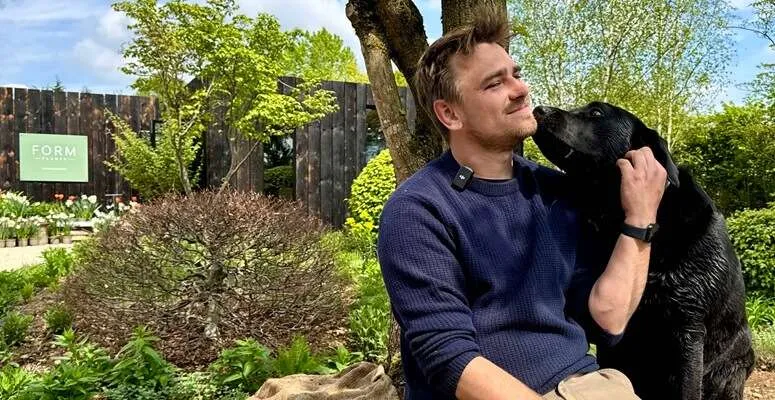
Led by managing director Jamie Butterworth, Form Plants is formalising its strict peat-free position for the first time, which will be coming into force for all new customers from 1 September 2026.
Butterworth has never sown or grown his plants in peat at Form Plants in Row Town, but as with most nurseries there hasn’t been a formalised policy, until now.
The new policy seeks to manage the external supply chain too. Adopting the Royal Horticultural Society’s definition of “No New Peat,” the nursery will require written confirmation from suppliers that incoming plants are either entirely peat-free or that any legacy peat present entered the production system on or before 31 December 2025.
Butterworth says:
”We do not use peat at Form Plants, and never have. The only peat that has ever reached this nursery came inside other plants potted elsewhere, years ago, before they were ever bought in by us, and we now buy nothing that contains it. This is not a policy we are starting from nothing. It is a line drawn under work that is largely done.
“There are a lot of designers and landscapers who want peat-free plants and are finding it very hard to get them, so I’m positive about the future.”
For Butterworth, someone who has avoided growing in peat, his recent personal move to Cumbria has underlined the importance of protecting the peatland.
While this policy targets the commercial supply chain Butterworth is keen to translate this message to home gardeners.

by Holly Chapman | 28 Aug 25 | News
The Wildlife Trusts has released a statement calling on the UK government to put a ban on the use of peat in horticulture into law, exactly three years after it promised to ban the sale of horticultural peat by 2024.
Legislation is yet to be passed, and The Wildlife Trusts has calculated that 859,660m3 of peat was dug up to supply amateur gardeners from 2022 to 2023.
Joan Edwards, director of policy and public affairs at The Wildlife Trusts says the ban is “absurdly overdue,” adding:
“The dither and delay over its implementation puts the UK’s climate and nature targets at risk and has entirely avoidable consequences for emissions, wildlife and water quality.”
Peatlands are an effective natural tool in managing the impacts of climate change and extreme weather events such as flooding and wildfires. Extracting peat from these areas releases huge quantities of carbon dioxide.
Sarah Dyke will be conducting her second reading of the private member’s bill, the Horticultural Peat (Prohibition of Sale) Bill on 12 September.

by Bethany Vann | 31 Mar 25 | Nature & Biodiversity, News
In an effort to protect England’s natural capital, the government has put forward a proposal to ban heather burning on peatlands in the uplands.
Known for their ability to capture and store carbon, peatlands are also home to some of the richest habitats of insect species in the country.
Even with their value, 80% of England’s peatlands are currently regarded as ‘degraded’.
Burning heath, specifically on peatland, is primarily done to encourage new heather growth, which in turn dries out the peatland; this can lead it to emit carbon instead of storing it.
Nature minister Mary Creagh says the ban will “benefit communities by improving air and water quality”, as well as protect homes and businesses from flood damage.
“Our peatlands are this country’s Amazon Rainforest – home to our most precious wildlife, storing carbon and reducing flooding risk. The UK has 13% of the world’s blanket bog. A rare global habitat, it is a precious part of our national heritage, and that is why we‘re announcing a consultation on these measures to ensure deep peat is better protected.”
If implemented, these changes will increase the area currently protected from 222K to more than 368K hectares of England’s total 677,250 hectares of deep peat.
Further changes include the revision in deep peat depth. Anything over 30cms will be counted as deep peat, opposed to the current 40cms criteria.
This ban comes as part of wider government plans to support nature recovery as well as improve the country’s air quality, wellbeing, and natural environment.

by Aidan Williams | 20 Sep 24 | Nature & Biodiversity, News
The HTA and RHS came together to provide a peat-free workshop featuring industry experts at the RHS Garden Hyde Hall on Wednesday.
It provided a forum for growers to share their knowledge and brought together experts to speak on various aspects of peat-free growing, along with insight from the RHS Transition to Peat-Free fellowship.
Topics covered research and development of peat-free propagation materials, nutrition for peat-free propagation, and insights from growers and researchers.
Speakers included Stephen Godfrey from Jiffy Group, Harry Downes of Wyevale Nurseries, Dr Raghavendra Prasad of the RHS, and Steve Chapman of ICL.
Wayne Brough, technical horticulture manager, HTA says: “Many of our members are conducting peat-free trials, much like WD Smith and Son, and the sharing of this information and data with others in the industry is helping generate a collective knowledge base.
“This avoids any unnecessary repetition of work, minimising the cycle of making the same mistakes and underpinning an informed policy position, which is crucial to a successful transition.
“Alongside the RHS, we will continue to provide workshops for our members, advocate for sustainable practices, and support them through their peat-free journeys, ensuring a sustainable future for British environmental horticulture.”
During the workshop, growers, growing media manufacturers, and industry peers discussed the latest insights into these areas and how they can be factored in to optimise peat-free propagation.
“The RHS were pleased to have partnered with the HTA for our latest grower’s workshop, discussing the optimisation of plant propagation and establishment in peat-free growing media,” says professor Alistair Griffiths, RHS director of science and collections.
“As part of our peat-free campaign, the RHS supports the industry’s transition to peat-free horticulture. This move will help conserve our precious peatlands, which will positively impact nature and the climate. We want to thank all the speakers for sharing their knowledge and helping create a successful event.”
After lunch, the attendees also then had a chance to join a guided tour of WD Smith and Son Nurseries, near Battlesbridge, with Mike Smith.
The RHS peat-free team will next be at the Southwest Growers Show on 2 October, and it recently launched a PhD to help advance peat-free efforts.

by Aidan Williams | 20 Aug 24 | News, Sustainability
McClaren’s Nurseries in Glasgow, hosted a visit and tour for Jim Fairlie MSP, at a crucial time for the debate surrounding peat.
The family-run firm, based in Glasgow got to show off their operation and dedication to horticulture to the agriculture minister in the Scottish Parliament.
The nursery has taken to trying to transition to peat-free growing, but this has been a complex process although they are committed to sustainable solutions.
Adam McGowan, director at McLaren’s Nurseries, says: “As one of Scotland’s largest growers, we’ve long been committed to sustainable solutions.
“We feel that there is still a long way to go for Ministers, in terms of setting out a clear pathway to a peat-free future.”
The use of peat in horticulture is a complex issue with significant consequences for the industry’s future outlook.
However, extracting peat for horticulture releases a lot of CO2 into the atmosphere, making it very damaging to the environment.
The industry has used peat for decades due to its unique nutritional and moisture retention qualities and as a growing medium for flora of all kinds.
Some plant types and species will not perform well without the substance.
Jim Fairlie, MSP and minister for agriculture and connectivity, says: “I am mindful of the challenges with phasing out peat and learning from those with first-hand experience is always valuable.
“We will continue to maintain an open dialogue with the sector representatives as we navigate towards a sales ban.
“The development of our approach will be informed by stakeholder consultation and industry-focused research. We are continuing to explore the potential of alternatives.”
The Scottish Government is working on a proposal to ban the sale of peat in horticulture but the Horticulture Trade Association and its members have stressed the importance of engagement within the sector.
Horticulture businesses crucially need time, support, and certainty to fully transition to a peat-free future.
Horticulture businesses have significantly reduced peat use in recent years, with levels now at record lows.

by Bethany Vann | 01 Sep 23 | Nature & Biodiversity, News, Sustainability, Topics
Thousands of hectares of peatland in the UK are set to be restored to help tackle climate change and recover biodiversity.
Over £16m of government funding has been submitted to 12 restoration projects, from the Great North Bog to the Norfolk Broads, including projects from Somerset to County Durham.
The government is investing more than £50m to peat restoration as part of its commitment to restore approximately 35,000ha of peatland in England by the end of this parliament.
“Our peatlands hold over half of our terrestrial store of carbon,” says environment minister Rebecca Pow. “With just 1% in a near natural state and soils drying out we must take urgent action to prevent further carbon from being emitted into the atmosphere.”
A new £2m Lowland Agricultural Peat Water Discovery Pilot has been launched by the government, in support of its net zero commitment and sustainable agriculture promise.
A list of all current projects can be found here.

by Bethany Vann | 25 Aug 23 | Commercial Landscaping, Nature & Biodiversity, News, Sustainability, Topics
The HTA warns of the “significant environmental and economic impacts” across multiple industries, from bringing the peat ban forward by four years.
New data from independent economists at Oxford Economics, commissioned and released by the Horticultural Trades Association (HTA) shows that the fast-tracked peat ban could lead to a loss of over £500m in Gross Value Added (GVA) and over £100m in decline tax revenues.
More than half (68%) of garden centres are expected to cut staff in 2027 as a result of the expected 100 million plant and tree shortage immediately after the ban takes effect as the accelerated timeframe will “more than halve the number of growing seasons to complete extensive trialling to changes in crop production techniques,” says the HTA.
The new data shows the carbon saving benefits of bringing the peat removal forward is around 278,000t of CO2e in total, which is approximately the amount of carbon dioxide absorbed by half a million trees or 11 million small shrubs over its lifetimes.
James Barnes, chairman of the HTA, says: “It is clear that the environmental loss far outweighs the carbon savings benefit of advancing the peat removal timeline to 2026.
“The study underscores the need for a balanced and measured approach to ensure optimal environmental outcomes without penalising an industry already committed to transitioning from peat.”
The shortened timeframe, from 2030 to 2026, enacted by Defra (Department for Environment, Food and Rural Affairs), could also potentially result in the loss of 12,000 jobs across industries.
Over 30% (33) of commercial growers supplying plants or trees to amenities such as parks, forests and public green spaces, report they will likely be obligated to withdraw from or default on contracts due to the 2026 ban.
Barnes adds: “The complexities of finding suitable peat-free alternatives for different plants and crops, with varying irrigation methods and nutrient strategies required, is not to be underestimated. Quality and consistency also remain barriers, further exacerbated by incentives for energy companies for biomass energy generation, which puts pressure on supplies of wood-based materials available for growing media.”
The economic impact of the industry under ban conditions was compared to the original baseline economic impact.
Oxford Economics’ assessment is limited to the economic impact on the UK economy in the year immediately following a 2026 ban and does not quantify any ongoing economic impacts relative to the baseline for subsequent years.

by Bethany Vann | 13 Jul 23 | Nature & Biodiversity, News, Sustainability, Topics
The Royal Horticultural Society (RHS) has successfully grown two commercially favoured varieties of carnivorous pitcher plants using five different peat-free growing media. All final specimens were judged to be of superior quality to that of the control plants grown in 100% peat.
Carnivorous plants were considered to be ‘one of the most difficult’ plant groups to transition to peat-free with several variants can be found growing naturally in peatland habitats.
The pitcher plants used were a Sarracenia leucophylla hybrid and subspecies of Sarracenia purpurea1, known for ensnaring their animal prey through ornate pipes (or pitchers), providing them the nutrients not naturally found in the nutrient-poor soils of their typical habitat.

Photo credit to the RHS.
Sarracenia plants established from peat-free propagules were grown under identical conditions in six different growing media combinations, including mixes of sustainably-grown sphagnum moss, pine bark and acidified biochar, commercially formulated peat-free media produced by Floralive and a control group grown in peat.
The plants grown in blends of sphagnum and other organic materials were all judged to be of superior quality to those grown in peat, with the two cultivars performing best with different peat-free medias.
Professor Alistair Griffiths, RHS director of science, says: “This research is a positive step forwards in delivering the RHS Sustainability Climate Positive Target and in the RHS transitioning to peat free by the end of 2025.
“Moving away from peat in horticulture has a key role in meeting net zero through protecting and restoring peatlands, turning them from carbon sources to carbon sinks and preventing further loss of these vital habitats. Our research comes at a critical point in the UK’s response to the climate crisis, when it is more important than ever that all possible reductions in emissions are made.”
The RHS banned the sale of peat containing media in 2018 and are at present 98% peat-free with projections for 100% by the end of 2025, following the establishment of a £1m co-funded five-year peat-free research project.
Following the success of the Sarracenia experiment, the RHS will now be actioning plans to grow other commercially popular carnivorous plants without peats, including Venus flytraps (Dionaea muscipula), as well as testing a wider range of ingredient mixes and growing protocols to aid the UK horticulture industry in transitioning profitably away from peat.
A selection of the peat-free Sarracenia will be planted out at RHS Garden Wisley, with others set to be made available for purchase.
Discover more peat related news here:
Prioritising going peat-free
HTA urges Defra to reconsider peat timeline due to plant shortage fears
The HTA calls on the Scottish Government to deliver a sustainable and realistic transition to peat-free

by Bethany Vann | 08 Jun 23 | Nature & Biodiversity, News, Topics |
The horticultural industry warns UK gardeners of a potential plant shortage by 2027, if the ban on peat is brought forward with no sustainable transition employed.
The Horticultural Trades Association (HTA) says Defra’s plans to bring forward the ban on peat in commercial horticulture by four years could have a devastating impact on the industry.
Moving the ban on peat in commercial plant, tree, fruit, and vegetable production from 2030 to 2026 reduces the number of seasons commercial growers have to complete extensive trialling in their crop production techniques by over half.
A new HTA members survey highlights a projected shortage of 100 million purchasable plants and trees in the UK in the year immediately following the ban, resulting in a significant loss of greenery and biodiversity, depriving the nation of its natural archetypical landscapes, says the HTA.
The change in timeframe could ripple throughout the supply chain, with an estimated 68% of garden centres projected to reduce staff numbers too.
The UK is ahead of the rest of Europe in eliminating professional peat use, with current levels already 50% below previous data, and total removal on schedule for the original 2030 deadline.
New data from the HTA indicates a high likelihood of plant availability being severely impacted if the ban on professional peat use is brought closer by the outlined four growing seasons timeframe.
James Barnes, chairman of the HTA, says: “We urge the government to reconsider the timeline and ensure a manageable transition away from peat use, allowing adequate time for growers to successfully and sustainably trial and adapt their methods and materials. By doing so, we can protect jobs, preserve biodiversity, and continue to enjoy the physical and mental health benefits that arise from our connection with nature.
“Given these statistics and the impending threat of a shortage of plants and trees, it is crucial to reassess the accelerated peat ban. The HTA calls for collaborative and responsive engagement with Defra to gain clarity on the policy shift and seek alternative solutions that strike a balance between environmental goals and the wellbeing of the horticultural industry, as well as the wellbeing of the nation.”
The HTA has already called on the Scottish Government back in May to deliver a sustainable and realistic transition to peat-free.

by Bethany Vann | 16 May 23 | Nature & Biodiversity, News, Sustainability, Topics
The Horticultural Trades Association (HTA) has set out a detailed response to the Scottish Government Consultation on Ending the Sale of Peat, representing the views from the breadth of its 1,400-strong membership.
In a consultation that ran from February to May 12th, the Scottish Government put forward a multi-stage proposal to ban the sale of peat, beginning with the retail horticulture sector, which accounts for around two thirds of all peat used in UK horticulture.
The Scottish consultation follows the 2022 UK government consultation.
Scotland’s peatlands play a critical role in responding to the twin crises of the global climate emergency and loss of biodiversity. They hold around 1.8 billion tonnes of carbon; this is equivalent to around 145 years’ worth of Scotland’s total net carbon emissions.
Peatlands support important ecosystems and biodiversity, improve water quality, and reduce flood risk. However, when degraded or in poor condition these benefits are mitigated, and peatlands become a net source of carbon emissions.
It is a critical issue for an industry that supports nearly 700,000 jobs, has a national GDP of almost £28bn, mitigates climate change and benefits the health and well-being of 30 million gardeners in the UK.
In Scotland this equates to over 64,000 jobs and a contribution of £2.8bn towards GDP, with the potential to see significant increase by 2030 if the industry and key stakeholders work collaboratively.
The HTA responded to the consultation calling for the Scottish Government to deliver a sustainable and realistic transition to peat-free, respecting that the use of peat in horticulture is a complex and vital issue, that has significant consequences and risks for the present and future of the industry.
The HTA response in summary:
- Work with horticulture experts to deliver a sustainable and achievable peat ban roadmap that delivers on sector growth
- Any regulation or policy on ending the sale of peat must have a comprehensive and open economic impact assessment looking at the environmental and economic consequences, informed by industry and sector expertise
- Industry supports a transition to peat-free
- Alternatives to peat need to deliver on the quality and variety of plants and products that can be produced that are so valued by gardeners, green spaces and Scottish biodiversity
- Time is needed for transition – seasonality is key
- Too early an end-date for professional uses hugely risks UK plant and tree production
- Each business is important and unique in its journey to peat-free, and we must sustain the whole sector so they can grow for Scotland
James Barnes, HTA chairman comments:
“We welcome having the opportunity to feed our expert view into the Scottish Government consultation on ending the sale of peat in Scotland. This is a critical issue for HTA members. It has taken hard work and investment, and many businesses are still on the journey. The sector’s progress to date in reducing peat use must be celebrated.
The arbitrary bringing forward of the date for peat removal from the professional sector from 2030 to 2026 by DEFRA remains an existential threat to the size and scale of the Scottish Industry. The industry is on target to meet this deadline with certain specialist exemptions. However, reducing the number of growing seasons from 7 to 3 will seriously curtail the ability to trial new mixes effectively, leading to supply shortages. Moreover, banning all imports containing any peat will substantially curtail choice for consumers, leading to both inflation and potential rationing.
We urge the Scottish Government to refrain from following this example. To understand the required timeframes and support horticulture businesses with R&D funding to fully transition from using peat. We want to engage fully with the Scottish Government to ensure we can deliver growth for horticulture and increase gardening and greenspaces with the mass benefits it brings. Our commitment and ambition for the sector in Scotland have been set out in our recent Scottish Environmental Horticulture Growth Strategy, which we are eager can be delivered.”

