
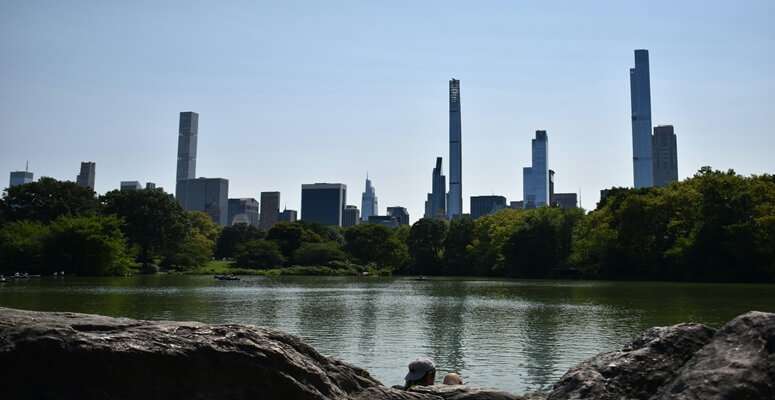
This month, outgoing New York mayor Eric Adams announced a $68m plan to construct Brooklyn’s first Bluebelt in Prospect Park, a nature-based project aimed at mitigating flash flooding in the park and surrounding neighborhoods. The initiative follows a year-long study by the city’s Department of Environmental Protection (DEP) that found the park’s 150-year-old lake and drainage systems are overwhelmed during intense storms, leading to overflow and street flooding.
“Today’s announcement marks a major step forward in protecting Brooklyn from the growing threat of climate-driven flash flooding,” comments Mayor Adams. “By investing up to $68m to create Brooklyn’s first-ever Bluebelt at the iconic Prospect Park, we’re harnessing the power of nature-based solutions to strengthen the park’s lake and wetlands.”
The plan allocates up to $50m from DEP for the Bluebelt, complementing a separate $20m lakeshore restoration led by the Prospect Park Alliance. Key interventions include upgrading the lake’s drainage to lower water levels in under 36 hours instead of three weeks, constructing rain gardens and a new pond along West Drive to capture runoff, and restoring a historic pond north of the zoo to reduce flooding on Flatbush Avenue.
“By using Prospect Park to manage stormwater, we’re turning one of Brooklyn’s most cherished public spaces into a powerful tool for climate resilience,” says DEP commissioner Rohit Aggarwala.
The project, which is slated to begin construction in 2029 and be completed by 2032, expands a Bluebelt model pioneered in Staten Island. It follows a $146m investment by the Adams administration to address chronic flooding in East New York’s Jewel Streets.
“Our public parks are more than just beautiful places to take in the scenery — they are also natural infrastructure making our city more resilient,” notes NYC parks commissioner Iris Rodriguez-Rosa.














0 Comments