
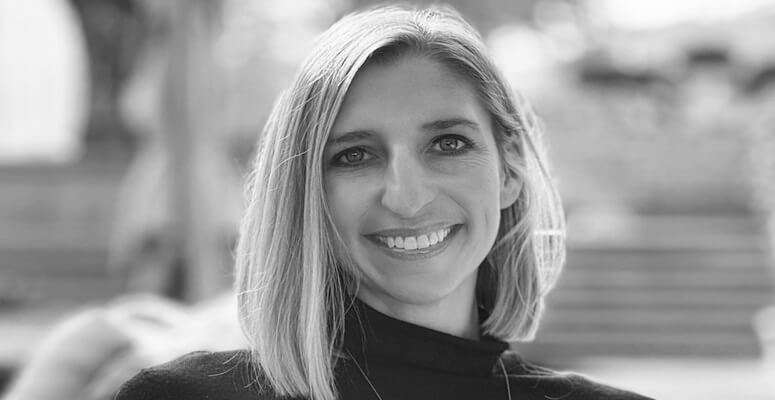
With the urban built environment responsible for 75% of global greenhouse gas emissions, landscape architect Pamela Conrad argues the profession must do more to quickly offset the carbon impact of their projects.
Through her nonprofit, Climate Positive Design, Conrad is building tools to turn that imperative into action. “Carbon neutral and net-zero are a zero-sum game,” she explains. “You can emit as much as you want as long as you offset it. Climate positive isn’t just about offsetting your own negative impacts—it’s about actively contributing a positive solution.”
A data-driven tool for real change
The catalyst for her work was a simple gap: practitioners lacked accessible, user-friendly ways to measure the climate impact of their designs. In 2019, Conrad launched the Pathfinder app, a free web-based tool that allows designers to input material quantities and plant types. The app then calculates a project’s embodied and operational carbon, alongside carbon sequestration from trees and soils. Within minutes, users receive a “climate positive” score and a timeline showing how soon the landscape can remove more CO₂ than it emits.
Today, Pathfinder has evolved beyond carbon. It now measures biodiversity net impact, water conservation, cooling efficiency, and equity efforts—giving designers a holistic dashboard for regenerative landscapes. More than 16,000 projects have been logged by thousands of professionals and students across nearly every country.
Ambitious targets, practical guidance
Complementing the app, Conrad’s Climate Positive Design Challenge sets performance targets that turn data into deadlines: five years to carbon positivity for parks and residential developments, 20 years for streetscapes, and 25 years for infrastructure. The collective goal is to remove one gigaton of CO₂ by 2050—a metric ranked among the top 80 global “Drawdown” solutions advocated by environmentalist Paul Hawken.
Despite advocating for carbon-positive landscapes, Conrad warns against perfectionism and greenwashing. “Don’t let perfection be the enemy of progress. Rough estimates done early have far more impact than getting lost in precision.” She urges caution around trendy features like living walls: “We have to be careful of creating something that ends up having more emissions, even though it looks green. Making a statement is not enough.” Instead, she champions creative reuse of existing materials—for instance, “a [leftover] pipe in the ground can become habitat for birds.”
Inspiration as action
Conrad’s message is one of inspired action. “Look at each project as an opportunity,” she says. “That’s when we can get people excited about how beneficial these landscapes can be. This is a moment to leverage our strengths and not just survive, but thrive.”
Read the full interview with Pamela Conrad in the June issue of Pro Landscaper USA.













0 Comments