
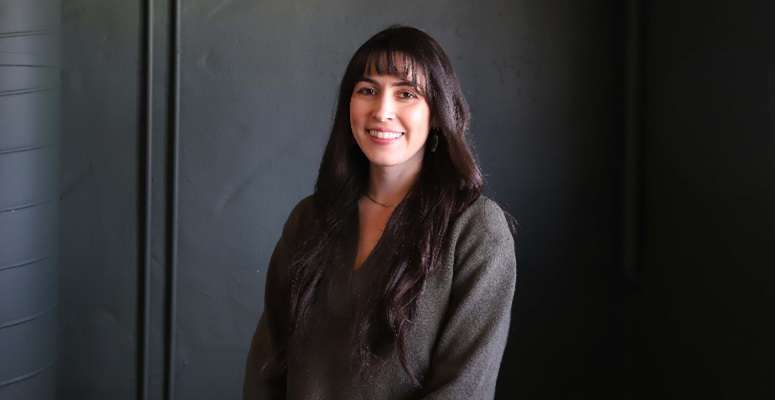
Melanie Buffa, newly appointed landscape director at Agency Artifact and president of the ASLA Southern California Chapter, spoke with Pro Landscaper USA about how the landscaping profession’s credibility depends on its ability to deliver built projects, not just compelling concepts.
Her professional philosophy has been shaped not by academic theory but by the grit of construction sites, the precision of nurseries, and the realities of urban planning. Her career reflects a deliberate effort to bridge the gap between vision and implementation. Early in her professional life, she identified a shortcoming in her own knowledge and sought to rectify it.
“Though I really love the design process, I didn’t know how anything was built,” Buffa admits. This realization sent her into the nursery industry to understand plant material sourcing, then to a design-build firm to learn construction mechanics. “For me, that’s the most important aspect of being a landscape architect—knowing how all of these things combine. We are sort of like the glue. It’s the grading, the drainage, the placement of the building. Not one thing is just one system; it’s all one system coming together.”
This holistic view is increasingly crucial as budgets shrink and timelines compress. Buffa argues that practical knowledge of lead times and material availability is not a secondary skill but a primary tool for client relations. “We need to bridge the gap between construction and landscape architecture. That’s how we actually deliver great designs for our clients.”
Expressing concern that academic programs prioritize “sexy” topics like artificial intelligence while neglecting construction fundamentals, she notes: “We are all taught big concept designs, and we don’t teach enough of the smaller construction. At the end of the day, that means nothing if you can’t actually build what you’re selling to the client.”
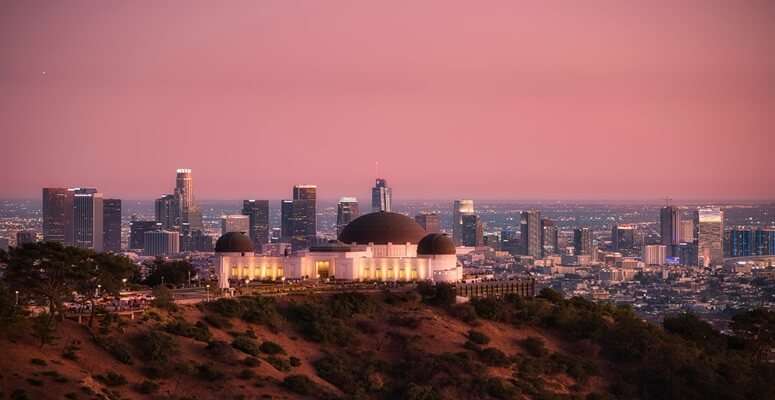
When discussing Southern California’s trajectory, Buffa highlights green infrastructure and water capture. “We get so little rain here and ensuring that water returns to the environment cleaner is something technology is increasingly enabling.” She also observes a shift away from PVC toward non-toxic materials.
She explains that Los Angeles’ recent World Cup hosting also provided valuable mobility data for Southern California, with it being benchmarked for LA28. “I do think some good will come out of the Olympics—particularly in how we think about moving people through the city.” She tempers optimism with realism: “Whether it all happens in time for the games is another question. But the real legacy, I think, will be the conversations we’re having now. People are paying attention.”
For those seeking their own voice, Buffa advises: “Find what you’re passionate about and become the expert. Be the smartest person in the room.” She urges young professionals to take research beyond the classroom and “take it to your local government.”
This commitment to grounded, inclusive design defines Buffa’s career. In a profession increasingly seduced by digital dazzle, her insistence on fundamentals—knowing how things are built and who they serve—serves as a reminder that landscape architecture’s ultimate purpose is to create lasting, buildable legacies for communities.
Read the full interview in the September issue of Pro Landscaper USA.











0 Comments