
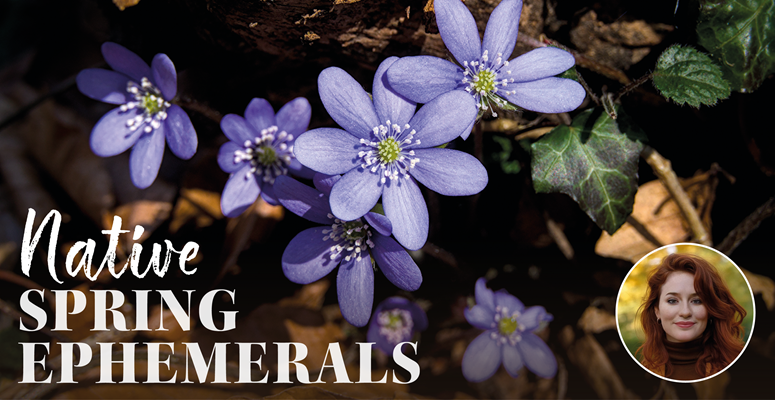
Rose Morrison details how native spring ephemerals create sustainable, low-maintenance commercial landscapes with stunning seasonal impact
Commercial landscaping has become more expensive over the years. Clients are either reluctant to invest as much as before or are seeking more sustainable commercial landscaping. Additionally, many want more for their greenery, a wow factor that can make people stop in their tracks and appreciate their surroundings. Native spring ephemerals are the solution for this, with their native woodland bloom and easy maintenance. Discover what makes native spring ephemerals great candidates for commercial landscape ecological design.
What are spring ephemerals? A primer for the landscape professional
Spring ephemerals are deciduous flowers that develop early in the spring, ahead of every other plant and tree. They bloom and produce seed in a short span of time. After that, they disappear as trees sprout leaves and block the sun from them. They store their energy in underground rhizomes, waiting to bloom again for the next spring.
Traditional imported bulbs, such as tulips and hyacinths, are mainly ornamental. Imported bulbs also require a lot of maintenance — resources such as water, fertilizer and annual replacement labor. On the other hand, spring ephemerals provide nectar and pollen to pollinators in early spring and enrich the soil. After commercial installation, these native plants are self-sustaining, making them low-maintenance landscaping options.
A perfect example is the wood anemone, which grows 2-10 inches from the ground1 and has charming white petals. Its whorled leaves with toothed edges provide an interesting detail for clients’ landscape storytelling.
Business benefits of biodiversity in commercial landscaping
Spring ephemerals are investments. The single best reason for them is that they require less cost than imported bulbs. Aside from shipping costs, ephemerals don’t need a lot of fertilizer and mulch. They also require less water, as they thrive on rainwater. This creates a significant savings opportunity, as 30% of U.S. household water consumption2 is used outdoors.
Another economic benefit is the elimination of replanting costs. This can be especially enticing for clients who want low-maintenance foliage for their places. In general, perennials take 3 years to establish3 a strong root system. Fortunately, spring ephemerals are incredibly resilient and can withstand replanting with minimal concern.
Additionally, spring ephemerals provide a unique and striking look that many polished, common landscapes lack. They provide a sense of continuity and unity with outside nature, which can help liven up the mood of employees and clientele. Besides, corporate clients are now more cognizant of reporting Environmental, Social, and Governance (ESG) metrics. Native plant commercial installation can boost ESG scores, providing an instant return on investment.
The complete spring ephemeral planting guide for commercial applications
For a successful native plant commercial installation, landscape gardeners need to go beyond filling a bed. The goal is to build a strong and long-lasting system that supports local ecology and client goals. Here are the steps to get started in sustainable commercial landscaping.
Strategic site assessment and soil amending
Commercial properties typically will have perfect spots where spring ephemerals can thrive. As a tip, these areas are usually where traditional bulbs are harder to grow, such as shaded sites and the understories of mature trees.
The best place to figure out where to plant them is to observe the area during early spring. Check areas where snow melts first. These are the perfect habitats for the native plants. Amend the soil by adding leaf mold or composted pine instead of using standard landscape topsoil.
Sourcing, staging and installation protocol
The most important part of this stage is to do due diligence. Make sure to ask native plant nurseries crucial questions, such as propagation methods. Avoid ones that collect these native flowers in the wild.
Commercial landscapes in lounge areas are typically 64-100 square feet4, perfect for four to eight people gathering. This leaves plenty of room for planting in communities or drifts rather than in traditional and formal rows when installing these native plants. These will give a more natural overall appearance. Map the planted areas for dormant times to prevent disturbance from maintenance crews.
Companion planting for a four-season landscape
Clients’ biggest concern is the disappearance of these native plants from the landscape after spring. If they are concerned about the area looking barren, explain successional planting, where a second layer of plants like native ferns or shade-loving perennials emerge to take the place of spring ephemerals. Discuss the potential of a lush, multi-layered and season-long display by doing this process.
For example, bluebells provide an early-spring bloom that enchants everyone who sees them. After they fade, ostrich ferns take their place, lasting until frost. The variety gives the landscape a sense of life and a reminder of the changing of seasons, all with minimal maintenance required.
How to apply regional considerations in client communication
A true expert in commercial landscaping is someone who cares for a local community’s biodiversity. Here are concrete examples of native flowers5 in specific regions:
- Northeast/ Mid-Atlantic: Mayapple, Jack-in-the-Pulpit
- Midwest: Prairie Trillium, Dutchman’s Breeches
- Pacific Northwest: Pacific Bleeding Heart, Western Trillium
Make sure to frame spring ephemerals as investments that will save clients maintenance costs in the coming years. Additionally, emphasize it as a way to restore a regional landscape to the property, giving it a unique edge over other places.
Designing the future of commercial landscapes
Spring ephemerals are a great way to boost ESG goals of clients, contribute to local ecology and provide a beautiful and unique landscape. It’s especially relevant as sustainability and water conservation are trends shaping the landscape industry at the moment. Supplement native plants when they vanish through successional planting, which provides a stunning and layered foliage all throughout the year. These tips will help landscape professionals become trusted ecological design consultants, creating high-value natural and resilient systems.
References
- Massachusetts State Government ‘Spring ephemeral flowers.’ mass.gov/info-details/spring-ephemeral-flowers
- Renovated.com, 6 Reasons to Use Native Plants in Your Landscaping, Rose Morrison, 8 June 2018. renovated.com/native-plants-landscaping-plans
- Greenscape Inc., ‘The Ultimate Guide to Choosing the Ideal Perennials and Annual Flowers for Your Commercial Property,’ greenscape.us.com/perennials-and-annuals-for-commercial-property
- University of Delaware, ‘Designing a Sustainable Landscape to Serve Your Needs’, Rebecca Pineo, Reviewed March 2025.
- U.S. Fish & Wildlife Service, ‘Highlighting spring ephemerals.’ fws.gov/story/highlighting-spring-ephemerals


















0 Comments