

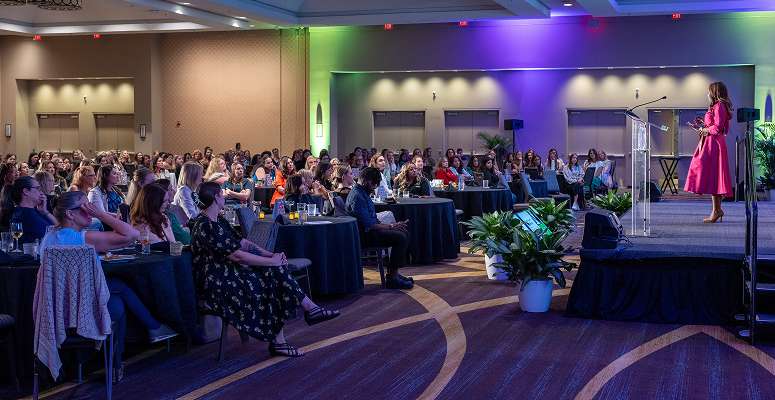
Speaking at the ‘Wellness Destination AI Tech Summit 2026’, WATG’s Toby Kyle conveyed the benefits of data-support biophilic design over superficial green scaping.
The integration of artificial intelligence into landscape architecture is offering new ways to quantify and enhance human wellness, according to Toby Kyle, studio director of landscape architecture at international luxury hospitality designer, WATG. Speaking at the January conference in Singapore, Kyle argued that the future of restorative design lies in data-supported, ecologically intelligent systems.
Kyle began by challenging the hospitality industry’s current focus on interior wellness trends like circadian lighting, asserting that landscape must play a central role. “Circadian rhythms, sleep quality, sensory activation and movement are not limited to interior environments,” he states. He explains that carefully designed microclimates—using shaded trails, filtered daylight and moderated soundscapes—can support a full spectrum of physiological states, from “early morning activation… to evening calm.”
He also introduced the concept of “interiorscapes,” where technology extends these biophilic rhythms indoors. By using AI to manage interior climates, designers can create seamless transitions between inside and out. “AI may also tailor climatic control systems to user preferences or mimic exterior weather conditions to reinforce circadian alignment,” Kyle notes, emphasizing continuity over artificial simulation.
Also addressing what he considers to be an overused industry term, ‘biophilia’, Kyle offers a critical distinction for practitioners. Richer mental health support, he notes, comes not from superficial greenery but from “biodiverse, functioning ecosystems.” He cited proven benefits like reduced mental fatigue and strengthened immune function, linking them directly to ecological complexity. “Complexity in planting, variation in light and texture and dynamic seasonal change create restorative sensory experiences,” he says.
In this context, Kyle positions AI as an essential analytical tool of future landscapes. By using data to demonstrate the “measurable impact of time spent in biodiverse landscapes,” AI can provide the hard evidence needed to justify ecological investment as a core wellness strategy, moving it beyond being regarded as a mere amenity.
Looking to the future, Kyle predicts that ecological networks will become the primary drivers of spatial planning. “Rather than being peripheral, ecological networks—water cycles, biodiversity corridors, microclimates—will inform spatial planning,” he remarks. AI provides the tools to model these complex relationships, allowing designers to test scenarios and “simulate long-term ecological consequences.”
As a baseline, Kyle distilled his design priority for the next decade down to a single word: connection. “Connection to nature, connection to community and connection to our own physical rhythms,” he concludes. “When ecological systems and intelligent tools work together, they can create environments that gently guide us toward healthier patterns of living. The challenge for designers is to ensure that intelligence serves life—not the other way around.”

















0 Comments