
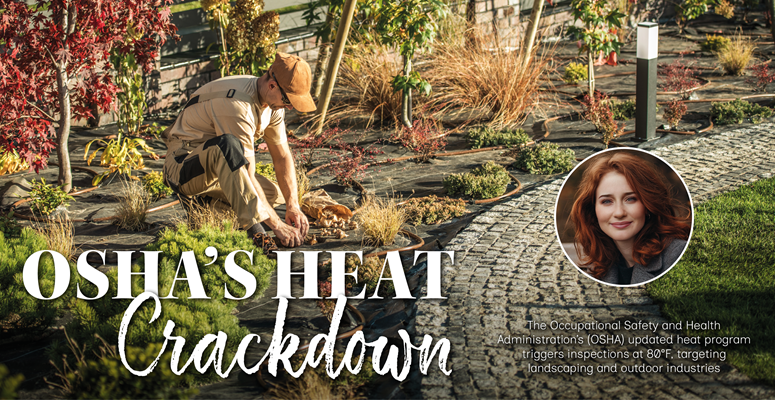
As temperatures rise across the country, employers in outdoor industries are facing increased scrutiny from OSHA. The agency’s updated National Emphasis Program (NEP) on heat hazards, effective April 10, 2026, expands enforcement efforts to prevent heat illness and improve compliance with OSHA heat regulations.
The updated directive will remain in effect for five years, giving OSHA compliance officers broader authority to evaluate workplace heat-safety practices during inspections. For employers in landscaping, construction, agriculture, transportation and other outdoor industries, understanding what triggers an inspection and what inspectors will be looking for is crucial.
If your crews work outdoors during the summer months, now is the time to review your compliance with OSHA heat regulations and strengthen your heat illness prevention program.
Understanding OSHA’s updated heat NEP
The updated NEP builds on OSHA’s previous efforts to reduce worker injuries and fatalities caused by excessive heat exposure. Using injury, illness and fatality data collected between 2022 and 2025, OSHA identified 55 high-risk industries where workers face elevated risks of heat-related illness.1
Among those industries, landscaping has been specifically targeted as a high-risk sector. Landscaping crews often perform physically demanding work for long hours in direct sunlight, making them especially vulnerable to heat hazards during the hottest months of the year.
The updated NEP allows OSHA compliance officers to assess heat-related safety measures during routine inspections, even when heat is not the primary reason for the inspection. This means employers can expect increased attention to their heat safety programs throughout the summer.
What triggers OSHA’s heat enforcement activities?
One of the most significant aspects of the updated directive is OSHA’s continued use of Heat Priority Days. Heat Priority Days occur whenever the heat index reaches 80° Fahrenheit or higher in a given area.2 During these periods, OSHA may increase enforcement activities and prioritize inspections of workplaces in high-risk industries.
While high heat conditions can harm workers, they can also contribute to broader operational risks. High summer temperatures can result in wildfires, especially in dry areas with dense vegetation.3
During Heat Priority Days, officers will evaluate whether employers have implemented adequate protections to prevent heat illness among workers. Compliance officers may conduct inspections triggered by:
- Heat-related complaints
- Worker hospitalizations
- Referrals from other agencies
- Fatality reports
- Programmed inspections in high-risk industries
- Routine inspections where heat hazards are observed
Understanding OSHA’s temperature thresholds
The updated NEP emphasizes two key temperature thresholds that employers should understand.
Initial Heat Trigger: Heat index of 80° Fahrenheit
Once the heat reaches 80° Fahrenheit, OSHA compliance officers will determine whether employers have implemented necessary measures to protect workers.4 An effective heat illness prevention program includes:
- Access to cool drinking water
- Access to shade or cooled rest areas
- Worker education on heat hazards
- Procedures for responding to symptoms of heat-related illness
- Acclimatization practices for new or returning workers
High Heat Trigger: Heat index of 90° Fahrenheit
When the heat index reaches 90° Fahrenheit or higher, OSHA expects employers to implement enhanced protections.5 Employers should be prepared to demonstrate that the following enhanced protections are being actively implemented, not merely written into company policies:
- More frequent rest breaks
- Increased monitoring of workers
- Buddy systems
- Supervisor observations for signs of heat stress
- Adjusted work schedules when feasible
- Emergency response procedures for heat-related illnesses
Why acclimatization is critical
One of the most important areas OSHA continues to emphasize is worker acclimatization. According to OSHA data, approximately 50% to 70% of heat-related fatalities occur during a worker’s first few days on the job.6 This statistic highlights the reality that new employees and workers returning after extended absences face significantly higher risks of serious heat-related illness.
Many workers assume that being physically fit automatically protects them from heat exposure. Unfortunately, this is not the case. The body requires time to adapt to working in hot environments. Humid days also carry a risk. Humidity means your body retains heat and feels hotter than the air around you, increasing the risk of heat-related illnesses.7
What inspectors will look for
During the summer months, compliance officers will typically evaluate:
- Water availability
- Rest break policies
- Shade or cooling areas
- Acclimatization protocols
- Emergency response procedures
- Worker and supervisor training
Inspectors may also interview employees and review records to determine whether heat illness prevention practices are being followed in the field.
Training and documentation requirements
Workers and supervisors should be trained to recognize symptoms of heat illness, understand heat exhaustion prevention and respond appropriately to emergencies. Employers should maintain documentation such as written heat illness prevention programs, training records, acclimatization schedules, heat index monitoring logs, incident reports and supervisor checklists. Proper documentation can help demonstrate compliance with OSHA heat regulations during an inspection.
Use the OSHA Heat Safety Tool App
OSHA also encourages employers to use its Heat Safety Tool App, which provides live heat index information, risk levels and recommended proactive actions. The app can support daily heat illness prevention efforts and help employers make informed decisions during periods of extreme heat.
Stay ahead of OSHA’s heat standard
The updated NEP sends a clear message that OSHA will continue increasing its focus on heat illness, heat prevention and enforcement of OSHA heat regulations during the summer months. Landscaping companies and other high-risk employers should review their programs, ensure workers have access to water, rest and shade, and document every aspect of their heat exhaustion prevention efforts. Taking these steps now can help protect workers and prepare your organization for future requirements under a federal OSHA heat standard.
Notes
- Occupational Safety and Health Administration, US Department of Labor updates national emphasis program to protect workers from indoor, outdoor heat hazards. U.S. Department of Labor, 10 April 2026.
- Occupational Safety and Health Administration, OSHA Region IX Regional Emphasis Program for Heat Illness. U.S. Department of Labor, 4 November 2022.
- Richard’s Tree Service, How to Prevent Forest Fires.
- National Federation of Independent Business, OSHA Heat Safety Rules for Small Businesses and Steps to Protect Your Workers. 8 May 2026.
- The HIPAA Journal, OSHA Updates Heat-Related Hazards National Emphasis Program. Steve Alder, 13 April 2026.
- Occupational Safety and Health Administration, Overview: Working in Outdoor and Indoor Heat Environments.
- Renovated, Top 10 Most Humid Cities in the U.S.: Is Your City on the List? Rose Morrison, 26 March 2026.
About
Rose Morrison is a landscaping and home improvement expert with a decade of experience in the industry. As managing editor of Renovated Magazine, she stays on top of the latest trends in outdoor design and sustainable practices. With a passion for creating beautiful and functional outdoor spaces, Rose brings her expertise to Pro Landscaper Magazine, offering insights and inspiration for landscape professionals looking to elevate their projects and businesses. roseamorrison.com
















0 Comments